
TL;DR:
- A thorough inspection checklist helps prevent unexpected repair costs when buying a used car.
- Reviewing vehicle history reports and documents reveals hidden problems and ensures legal ownership.
- Combining physical checks with intuition and professional inspections enhances confidence in the purchase.
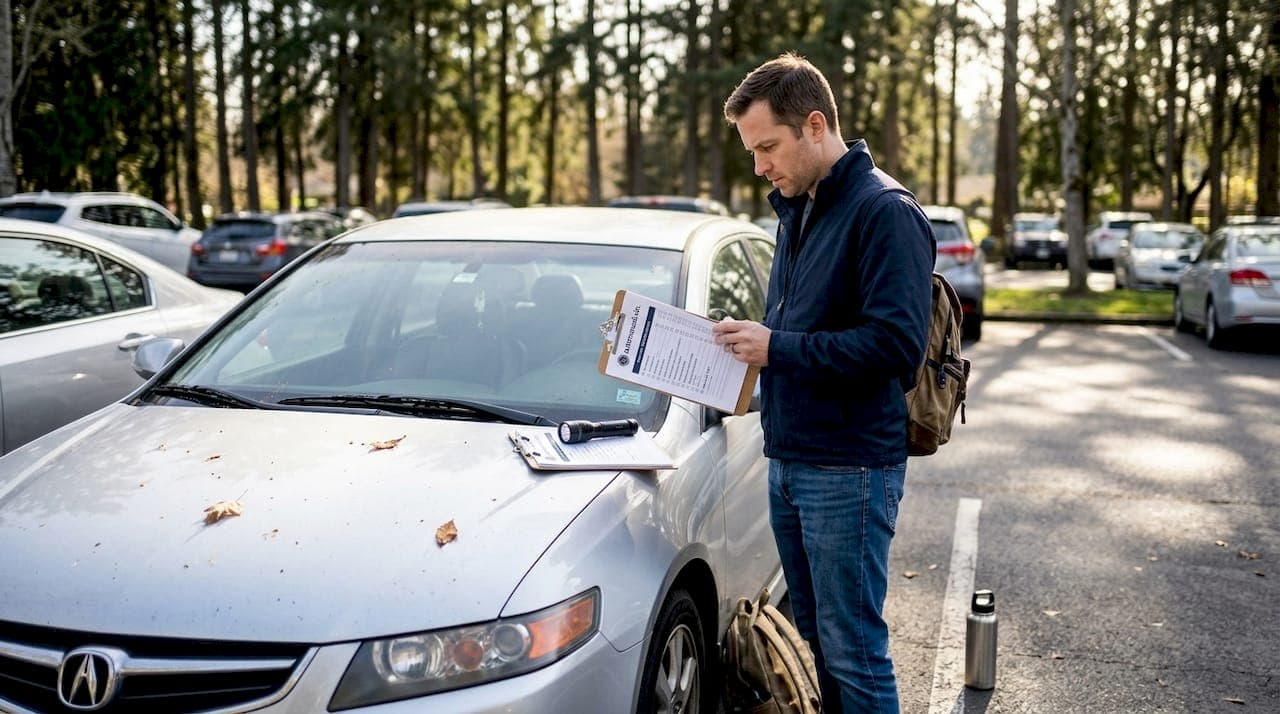
Buying a used car without a plan is like signing a contract you haven't read. The car looks great on the surface, the seller sounds convincing, and then three weeks later you're staring at a repair bill you never saw coming. The good news is that most surprises are preventable. A methodical checklist puts you firmly in control by covering every angle before money changes hands. This guide walks you through preparation, a full physical inspection, history verification, and the final checks that separate confident buyers from regretful ones.
Table of Contents
- What you need before starting
- Step-by-step car inspection checklist
- Evaluating vehicle history and documents
- Common pitfalls and final checks before buying
- Why most checklists fail—and what really works
- Take the guesswork out of buying—store your records with AutoManual
- Frequently asked questions
Key Takeaways
| Point | Details |
|---|---|
| Prepare thoroughly | Gather documents and tools before starting your used car inspection. |
| Inspect systematically | Follow step-by-step checks for the car’s exterior, interior, and engine. |
| Verify documents | Review all records and VIN information to ensure a clean history. |
| Avoid common mistakes | Don’t rush and watch for common pitfalls that might cost you later. |
| Consider digital recordkeeping | Storing your car’s history and records digitally provides lasting security and peace of mind. |
What you need before starting
Showing up unprepared to inspect a used car is one of the most common buyer mistakes. Before you even open the car door, you need the right tools and the right documents in hand.
Essential tools to bring:
- A bright flashlight to spot rust, leaks, and damage in dark corners
- Disposable gloves so you can check fluids and poke around without hesitation
- An OBD2 scanner if you have one (a borrowed one works fine) to pull any stored error codes
- A notepad or your phone to record findings on the spot
Documents to request from the seller:
- Government-issued ID that matches the name on the title
- The car title, free of liens or disputes
- All available maintenance records, receipts, and service logs
Block out at least two hours. Rushing through an inspection means missing things. Also, use this time to cross-reference the VIN against the car spec verification guide to confirm the specs match what the seller claims.
| Preparation item | Why it matters |
|---|---|
| Flashlight | Reveals rust, body damage, fluid stains |
| OBD2 scanner | Reads stored fault codes instantly |
| Maintenance records | Confirms the car was cared for |
| Seller's ID | Verifies legal ownership |
A good review of the maintenance checklist essentials before you go will help you know what service intervals to ask about.
Pro Tip: Bring a trusted friend. A second set of eyes catches things you miss, and sellers tend to be more straightforward when there are two people asking questions.
Step-by-step car inspection checklist
Now equipped and ready, move step-by-step through each part of the vehicle, guided by the checklist below.
-
Exterior check. Walk the full perimeter in good lighting. Look for mismatched paint, uneven panel gaps, and rust spots along the wheel wells, rocker panels, and door edges. Check all four tires for even tread wear. Uneven wear often signals alignment or suspension problems. Inspect every window and mirror for chips or cracks.
-
Interior check. Sit in every seat. Check seatbelts, all power windows and locks, the air conditioning, infotainment screen, and every warning light on the cluster. An unusual odor, especially mildew or burning, is a serious red flag for water damage or electrical faults.
-
Under the hood. Pop the hood and inspect fluid levels including oil, coolant, brake fluid, and transmission fluid. Look at hoses and belts for cracking or fraying. Check the battery terminals for corrosion. Scan the entire engine bay for wet spots or staining that signals an active leak.
-
Test drive. Drive at least 20 minutes covering city streets and a highway stretch. Listen for clicking, grinding, or rattling. Test the brakes firmly and notice any pull to one side. Accelerate through several speed ranges and make sure the transmission shifts smoothly.
| Inspection area | Red flag | Acceptable condition |
|---|---|---|
| Paint and body | Overspray, filler, mismatched panels | Minor stone chips only |
| Tires | Bald spots, sidewall cracks | Even tread above 3mm |
| Fluids | Dark, milky, or low | Clean and at proper levels |
| Brakes | Grinding, heavy pull | Firm pedal, straight stop |
| Transmission | Harsh shifts, slipping | Smooth, quiet gear changes |
Knowing the types of car maintenance helps you interpret what you find. Consistent oil change history, for example, tells a very different story than a car that shows no records at all. See how much benefits of maintenance tracking can reveal about a car's true condition.

Pro Tip: If something concerns you under the hood but you're not sure how serious it is, pay a trusted mechanic $100 to $150 for a pre-purchase inspection. It's the cheapest insurance you can buy.
Evaluating vehicle history and documents
Beyond physical checks, understanding the car's history is critical for avoiding hidden problems.
A physical inspection tells you what you can see. A vehicle history report tells you what someone might be hiding. These two sources of information work together, and skipping either one puts you at a real disadvantage.
Key history checks to run:
- Run a VIN check to look for reported accidents, title brands (salvage, flood, rebuilt), and odometer rollback flags
- Review every available service receipt and confirm the mileage matches the records
- Confirm the title is clean and that the seller's name matches the legal owner on the document
- Check for any open recalls using the NHTSA database, which is free and takes about two minutes
The vehicle history checklist walks through exactly what to look for in each document. Pay close attention to gaps. A car with two years of missing service records may have had significant work done that never got logged.
"A car with incomplete records may indicate skipped maintenance, which means the real cost of ownership is about to land on you."
Over 60% of used car issues trace back to poor recordkeeping, which is why a full paper trail matters as much as the physical condition of the vehicle. Understanding maintenance history importance is one of the most underrated skills in used car buying.
Use the service history guide to understand which service records add the most value and which ones are minimum expectations for a well-maintained vehicle.
Common pitfalls and final checks before buying
Even with preparation, buyers often miss subtle warning signs. Final diligence makes all the difference.
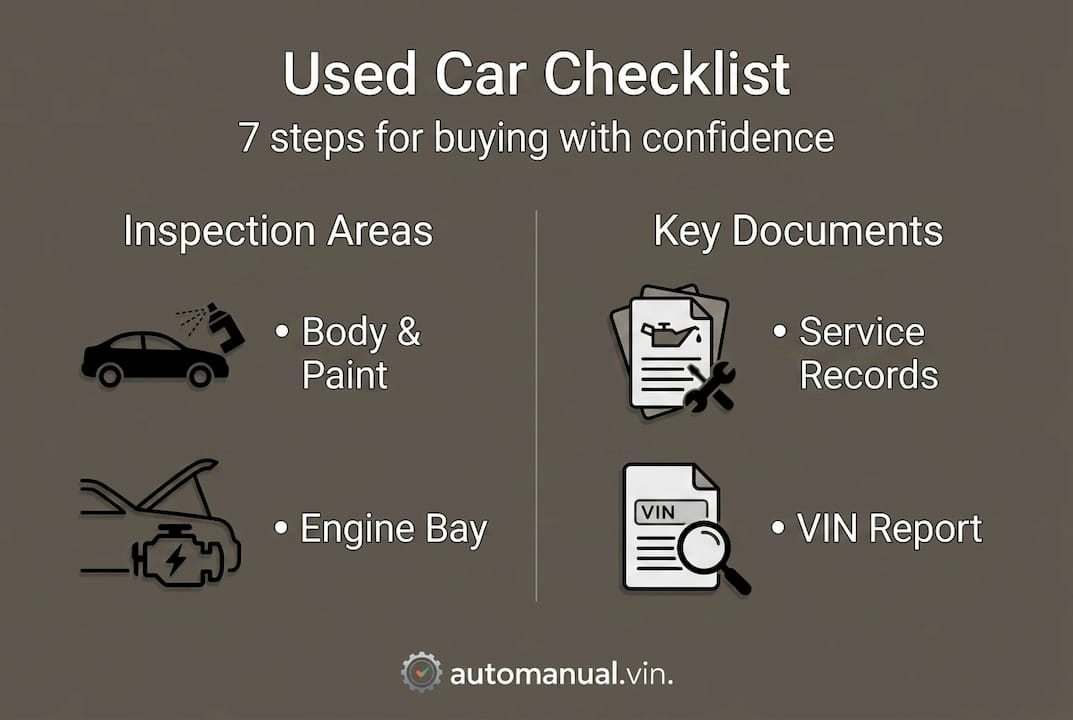
Some of the worst used car deals look completely fine on paper. That's precisely where buyers let their guard down. Here are the most common traps and how to sidestep them.
Watch out for these red flags:
- Odometer rollback. If the physical wear on the pedals, seat, and steering wheel looks far heavier than the mileage suggests, trust what you see over what you read.
- Forged or mismatched documents. The VIN on the dashboard, door jamb, and title must all match exactly.
- Outstanding liens. A lender may still have a legal claim on the vehicle even if the seller says it's paid off. Confirm with a title search.
- Open recalls. Unresolved safety recalls are the seller's problem to disclose but your problem to live with if you skip the check.
| Final check | Status |
|---|---|
| VIN matches all documents | Confirmed |
| Title is clean (no salvage/flood brand) | Confirmed |
| No outstanding liens | Confirmed |
| All recalls resolved | Confirmed |
| Test drive completed | Confirmed |
| Mechanic inspection done (if needed) | Confirmed |
Good digital car recordkeeping tips can help you organize everything you collect during this process. Once you buy, archiving car documents properly means you'll never scramble to find a record again.
Also confirm whether the used car inspection checklist items under the hood have been signed off, including all fluids, belts, and the battery.
Pro Tip: If something feels off but you can't put your finger on it, pause. Walk away for 24 hours. Most sellers who are honest will still be there tomorrow. The ones who pressure you to decide right now are usually the ones hiding something.
Why most checklists fail—and what really works
Stepping back, it's worth rethinking what a checklist actually achieves in used car buying.
Most people treat a checklist like a permission slip. They scan through it, tick the boxes half-heartedly, and then feel entitled to relax because they "did the checklist." That's exactly how buyers get burned.
The real value of a checklist is that it keeps your attention focused long enough to notice things that don't add up. A car can pass every box on paper and still feel wrong because the seller can't answer basic questions, or because the engine hesitates slightly at a specific RPM, or because the gaps around the trunk lid don't quite match. Those details don't fit neatly into a table.
Think like a detective, not an auditor. You're not just confirming that items exist. You're building a picture of how this car was actually lived with. Did the previous owner care about long-term maintenance value or just get by? A car with 80,000 miles and five oil changes tells a very different story than one with the same mileage and 16 documented services.
Your gut is a diagnostic tool. Use it alongside the paperwork.
Take the guesswork out of buying—store your records with AutoManual
You've done the inspection, reviewed the history, and ticked the final boxes. Now the question is: where does all that information live after you drive away?
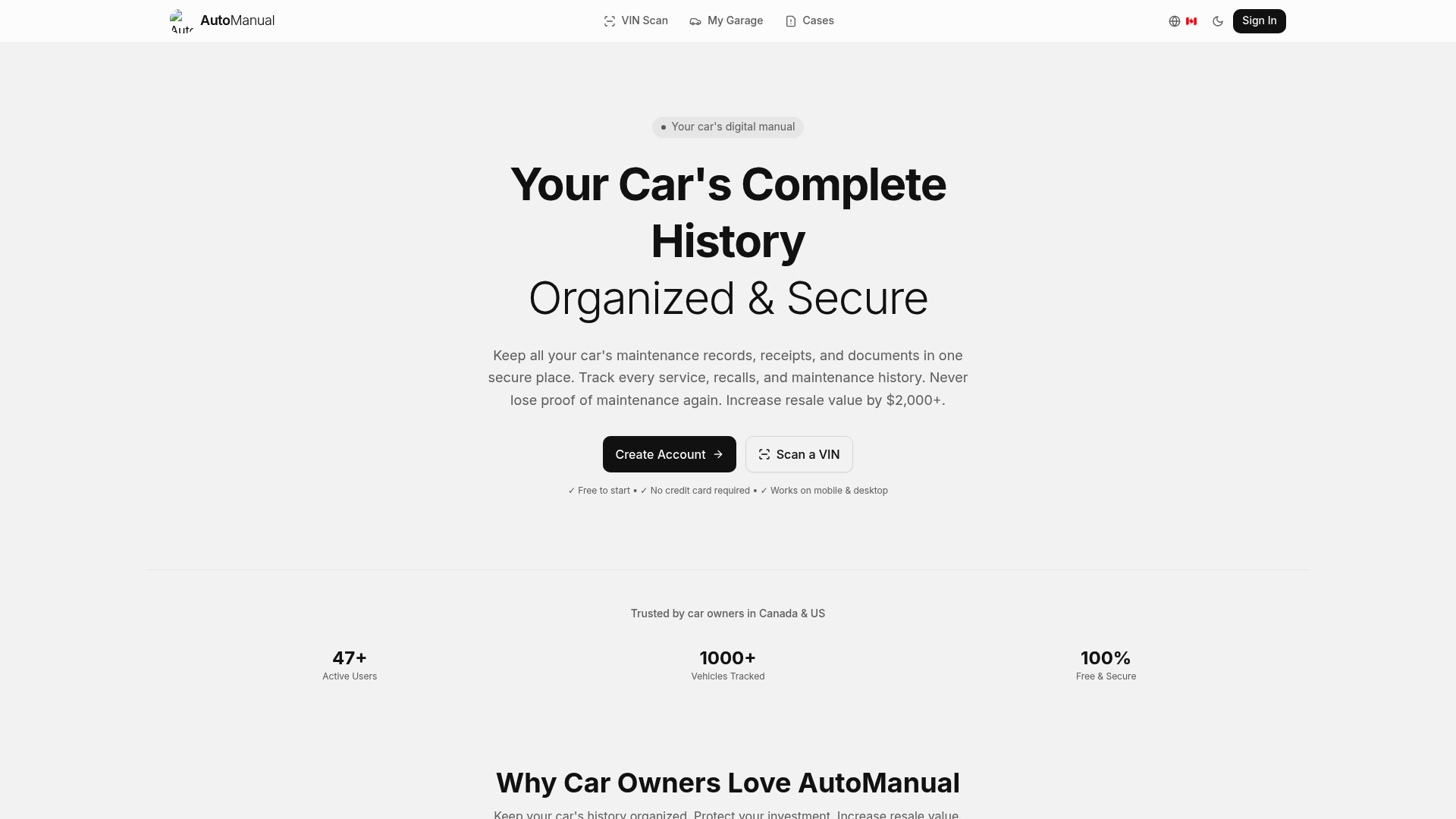
AutoManual makes it easy. Scan your VIN and get instant access to full technical specs, no signup needed. Then use the AutoManual digital vault to store service records, ownership documents, and inspection notes all in one place. Whether you're managing one vehicle or several, AutoManual keeps everything organized and accessible when you need it. It's the digital garage every car buyer should set up the day they get the keys.
Frequently asked questions
What should be checked under the hood during a used car inspection?
You should check all fluids, inspect hoses and belts for cracks, confirm the battery's condition, and look carefully for any signs of leaks.
How can I verify the car's history before buying?
Check the VIN through a history report service, review the car's title status, and examine all available service records to confirm consistent maintenance over time.
Is a professional mechanic inspection necessary when buying a used car?
It isn't required, but a pre-purchase mechanic inspection is one of the best ways to catch hidden mechanical problems before they become your expense.
What are common red flags to watch for in used cars?
Watch for inconsistent documents, visible fluid leaks, unusual noises during the test drive, mismatched VINs, and a complete absence of maintenance history.