
TL;DR:
- Proper car maintenance includes preventive, predictive, corrective, and scheduled services.
- Regular upkeep like oil changes and fluid checks significantly reduce costly repairs.
- Documenting maintenance history strengthens resale value and protects warranty coverage.
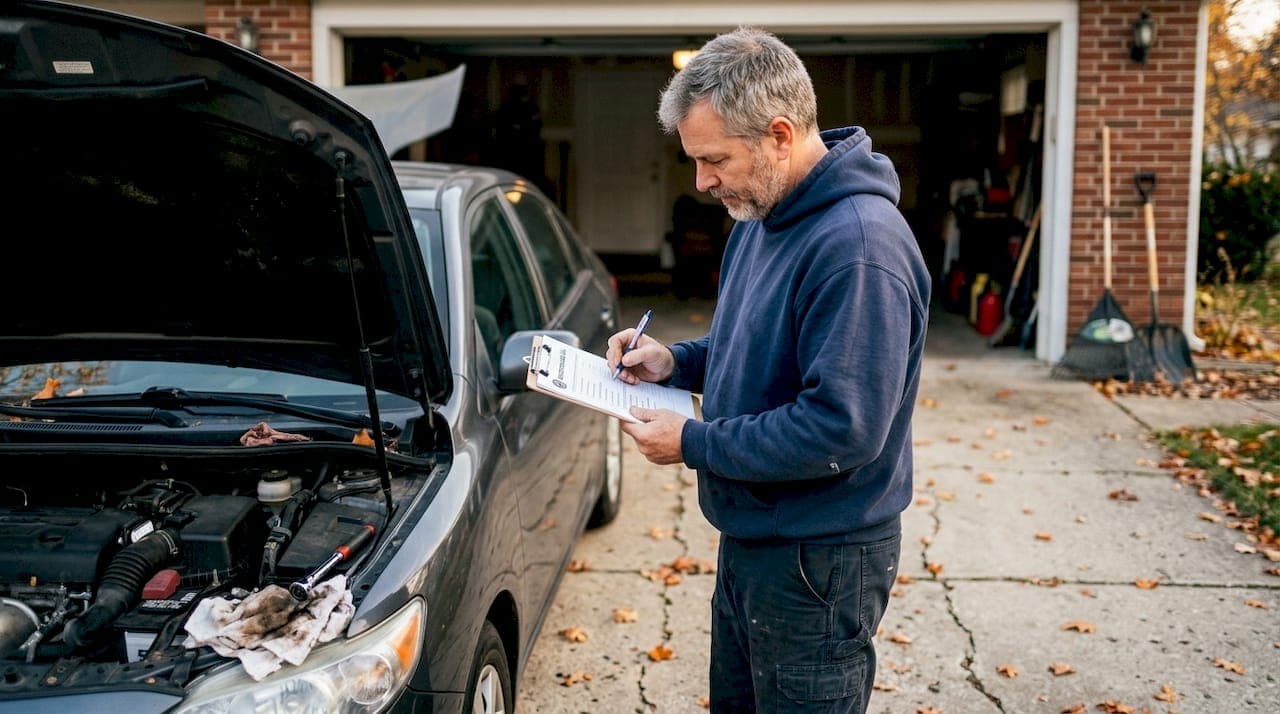
Most car owners treat maintenance as a chore they delay until something breaks. That approach is expensive. Catalytic converter repairs average $1,348, and that's just one repair on a long list of costs that pile up when you ignore the basics. The good news is that understanding the different types of car maintenance gives you a real framework for protecting your vehicle, your wallet, and your time. Whether you own a high-mileage daily driver or you're shopping for a used car, knowing what to do and when to do it is the single most powerful tool you have.
Table of Contents
- Understanding the main types of car maintenance
- Routine preventive maintenance
- Predictive and diagnostic maintenance
- Corrective and emergency maintenance
- How to choose and prioritize maintenance types
- The real reason smart owners invest in maintenance
- Get organized: The smart way to manage your car maintenance
- Frequently asked questions
Key Takeaways
| Point | Details |
|---|---|
| Know your maintenance types | Understanding different maintenance helps prevent breakdowns and save money. |
| Routine care pays off | Regular maintenance like oil changes and brake checks reduces repair costs long term. |
| Data and diagnostics matter | Early detection through predictive maintenance stops small issues from becoming costly repairs. |
| Track for resale value | Keeping clear maintenance records boosts your car’s value and eases sales or warranty claims. |
Understanding the main types of car maintenance
Car maintenance isn't one-size-fits-all. It breaks down into four distinct categories, and each one plays a different role in keeping your vehicle reliable.
Preventive maintenance is anything you do regularly to stop problems before they start. Think oil changes, air filter replacements, and fluid top-offs. Preventive maintenance catches issues like failing O2 sensors before they turn into four-figure repair bills. It's the foundation everything else is built on.
Predictive maintenance uses data and monitoring to anticipate when a part is likely to fail. This is more advanced, relying on diagnostic tools, sensors, and apps to read your car's condition in real time.
Corrective maintenance is what happens after something breaks or degrades below acceptable performance. It's reactive by nature, but it's not always avoidable.
Scheduled maintenance follows a fixed timeline set by your manufacturer, regardless of whether anything seems wrong. Timing belt replacements and spark plug swaps at specific mileage intervals are classic examples.
Here's a quick breakdown of what each type covers:
- Preventive: Oil changes, tire rotations, fluid checks, filter replacements
- Predictive: OBD-II diagnostics, sensor monitoring, telematics data
- Corrective: Brake pad replacement after wear, fixing a failed alternator
- Scheduled: Timing belt at 60,000 miles, transmission fluid at 30,000 miles
Using a solid maintenance checklist helps you stay on top of all four categories without letting anything slip.
"The owners who understand what type of maintenance they're doing are the ones who spend less money over the life of their vehicle."
Pro Tip: Your owner's manual is the most underused resource in your glove box. It lists every scheduled service interval your manufacturer recommends, and it's the best starting point for building your personal plan. If you don't have the physical copy, most automakers post digital versions online. You can also use a car manuals guide to find the right documentation for your specific vehicle.
When you track your maintenance consistently across all four types, patterns emerge. You start to see which parts of your car need more attention and when.
Routine preventive maintenance
Preventive maintenance is where most car owners should spend the majority of their attention. It's the least glamorous category, but it delivers the highest return.
Here are the critical routine tasks, in order of priority:
- Oil and filter change every 5,000 to 7,500 miles (or per your manual). Fresh oil reduces engine friction and prevents sludge buildup.
- Tire rotation every 5,000 to 7,500 miles. Even wear extends tire life significantly and improves handling.
- Brake inspection every 12,000 miles or once a year. Worn pads can damage rotors, turning a $150 job into a $400 one.
- Fluid checks at every oil change: coolant, brake fluid, power steering fluid, and transmission fluid all degrade over time.
- Air filter replacement every 15,000 to 30,000 miles. A clogged filter hurts fuel economy and engine performance.
- Battery inspection every two years. Batteries rarely give much warning before they fail completely.
Routine preventive maintenance significantly reduces the risk of facing repairs as costly as catalytic converter or O2 sensor replacements. Those repairs often trace back directly to neglected basics.
Skipping an oil change doesn't just risk engine wear. Dirty oil accelerates wear on components throughout the engine, and that damage compounds over time. The same logic applies to fluids. Brake fluid absorbs moisture and becomes less effective. Coolant breaks down and can cause overheating. None of these failures happen overnight, but they all start with skipped maintenance.
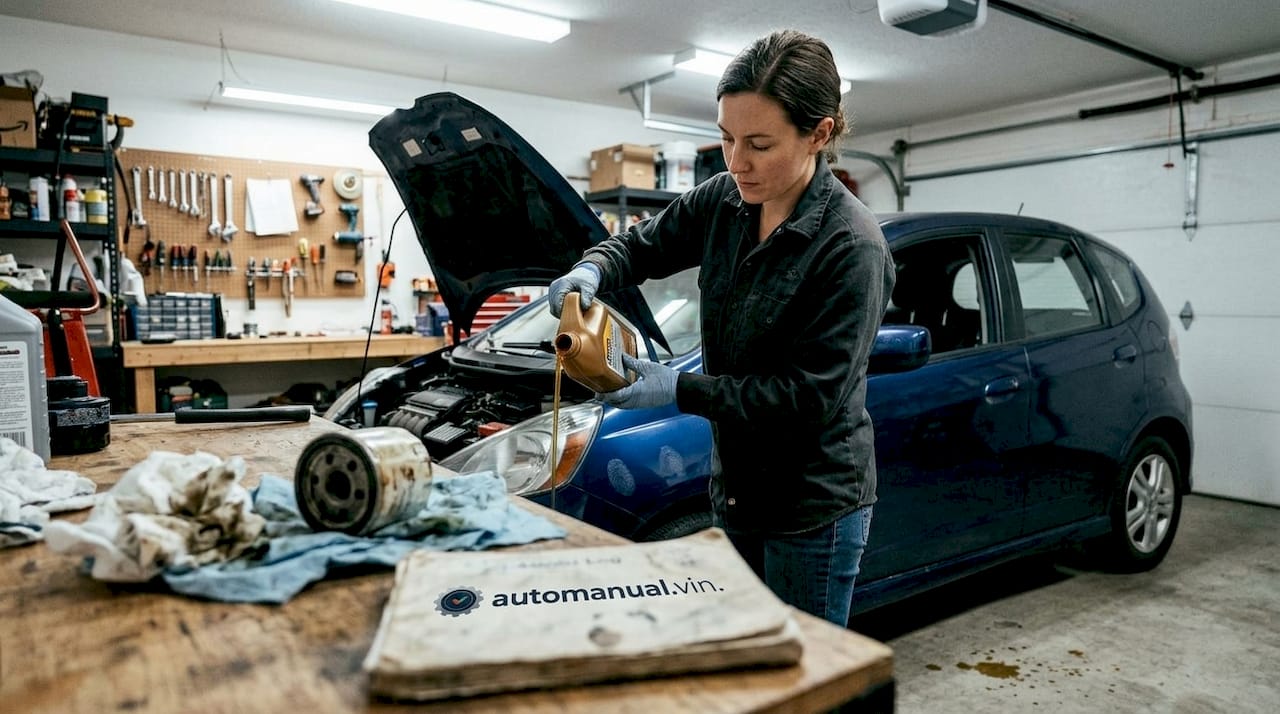
Pro Tip: Keep a running log of every service, even the small ones. A well-documented service history guide not only keeps you organized but also adds real negotiating power when you sell the car. Buyers pay more for vehicles with verifiable service records.
Predictive and diagnostic maintenance
Predictive maintenance is where technology changes the game. Instead of waiting for a symptom, you use data to catch problems early.
The most accessible tool for most drivers is the OBD-II port, a diagnostic interface built into every car made after 1996. A simple Bluetooth adapter and a free app can pull fault codes from your car's computer in seconds. That check engine light isn't just an annoyance. It's your car telling you something specific, and reading the code costs almost nothing.
Here's what predictive and diagnostic maintenance typically covers:
- Reading and clearing diagnostic trouble codes (DTCs)
- Monitoring live sensor data: O2 sensors, mass airflow sensors, coolant temperature
- Tracking fuel trim and emission readiness for smog tests
- Using telematics devices that log driving behavior and flag anomalies
Data-based diagnostics can identify failing catalytic converters early, reducing average repair costs significantly compared to waiting until the part fails completely.
Here's a comparison of common issues caught by diagnostics and their typical costs:
| Issue | Caught early | Caught late |
|---|---|---|
| O2 sensor failure | $150 to $300 | $400 to $700 (with cat damage) |
| Catalytic converter | $200 to $500 (upstream fix) | $1,000 to $1,500 |
| Coolant leak | $100 to $250 | $1,500 to $3,000 (head gasket) |
| Transmission slip | $150 to $400 (fluid/filter) | $2,000 to $5,000 (rebuild) |
The pattern is clear. Early detection is almost always cheaper. If you're buying a used car, reviewing the maintenance history for used cars tells you whether the previous owner used diagnostics proactively or just ignored warning lights.
Good digital recordkeeping makes predictive maintenance far easier to act on. When you have a log of past sensor readings and repairs, you can spot trends before they become failures.
Corrective and emergency maintenance
Even the most diligent owner will eventually need corrective maintenance. This is the category that covers repairs made after a failure or significant degradation has already occurred.
Corrective maintenance addresses known problems that aren't immediately dangerous but need fixing. A worn serpentine belt, a leaking valve cover gasket, or a failing wheel bearing all fall here.
Emergency maintenance is urgent and safety-critical. A blown tire on the highway, a seized brake caliper, or a sudden loss of steering all require immediate action. You don't schedule these. You respond to them.
Here's a comparison of maintenance types by cost, frequency, and impact:
| Type | Average cost | Frequency | Risk if delayed |
|---|---|---|---|
| Preventive | Low ($20 to $150) | Regular intervals | Moderate |
| Predictive | Low to medium | As needed | Low (if acted on) |
| Corrective | Medium ($200 to $800) | Occasional | High |
| Emergency | High ($500 to $2,000+) | Rare but unpredictable | Critical |
Catalytic converter repairs average $1,348, making reactive emergency work the most expensive type by far. That number alone makes the case for every other category on this list.
Common corrective and emergency repairs include:
- Brake caliper replacement ($300 to $800 per axle)
- Alternator failure ($400 to $700)
- Timing chain or belt failure ($500 to $1,500)
- Blown head gasket ($1,000 to $2,000)
Good ownership tracking tips help you document corrective work so you know what's been fixed, what's pending, and what to watch for next.
How to choose and prioritize maintenance types
Knowing all four types is useful. Knowing which ones your car needs right now is what actually saves you money.
Here's a step-by-step approach to building a personalized maintenance plan:
- Start with your mileage and age. A 10-year-old car with 120,000 miles needs a different plan than a 3-year-old car with 25,000 miles. High-mileage vehicles need more frequent inspections across all categories.
- Check for active warning signs. Any dashboard light, unusual noise, or performance change moves something to the top of the list immediately.
- Review your service history. If you don't know what's been done, assume nothing has. This is especially critical for used car buyers.
- Set a realistic budget. Prioritize safety-critical items first: brakes, tires, steering. Then move to high-impact preventive work like oil and fluids.
- Build a schedule. Use your owner's manual intervals as the baseline, then adjust based on your actual driving conditions.
Preventive and diagnostic work can drastically lower costs for used car buyers and extend car life well beyond average expectations.
For used car buyers specifically, always start with a full history review. The used car history checklist gives you a clear picture of what's been maintained and what's been ignored.
Pro Tip: Digital tools make this process far less overwhelming. A car portfolio management system lets you store all your vehicles, their service records, and upcoming maintenance reminders in one place. When everything is organized, you stop missing services and start making smarter decisions.
The real reason smart owners invest in maintenance
Most guides frame maintenance as a cost. We see it differently. Maintenance is leverage.
When you have a complete, documented service history, you walk into every negotiation with power. Selling your car? A verified maintenance record commands a higher price. Disputing a warranty claim? Your records are your defense. Taking a car in for service? You already know what's been done, so you can't be upsold on work that isn't needed.
The value of tracking maintenance goes beyond dollars. It reduces the anxiety of not knowing what your car needs. That uncertainty is what makes car ownership feel stressful for most people. When you follow a performance checklist and keep records, you replace guesswork with confidence.
The myth that maintenance is a money sink only holds up if you ignore the alternative: reactive repairs that cost three to ten times more, unplanned downtime, and vehicles that depreciate faster because their history is a mystery. Smart owners don't just maintain their cars. They document everything and use that documentation as a tool.
Get organized: The smart way to manage your car maintenance
Understanding the four types of maintenance is step one. Actually staying on top of all of them is where most people fall short, not because they don't care, but because they don't have a system.
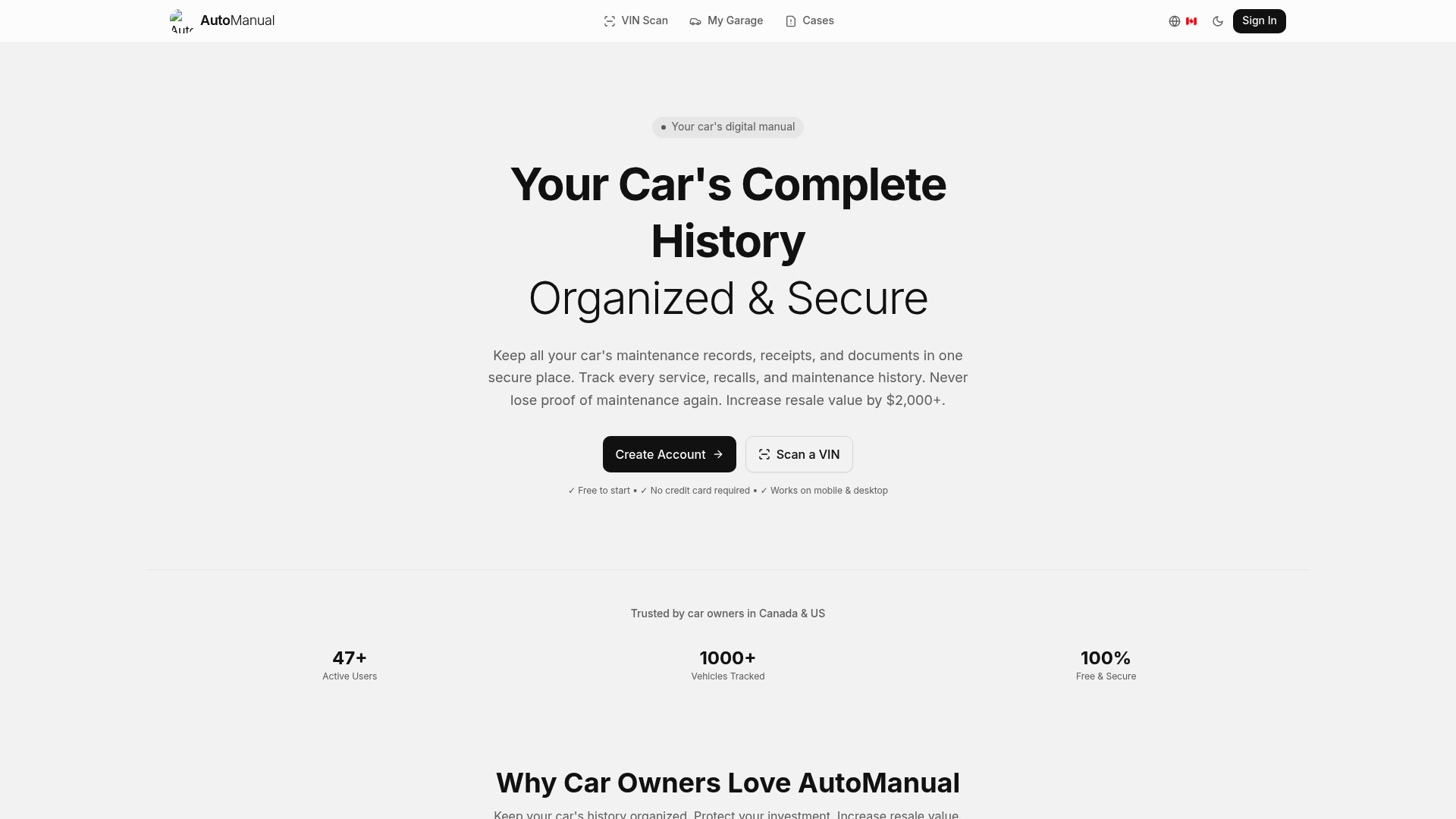
AutoManual gives you a free digital garage where you can track preventive, predictive, and corrective work across all your vehicles in one place. Enter any VIN at AutoManual's vehicle scanner to instantly pull full technical specs, no signup required. From there, you can log service history, store documents, set maintenance reminders, and keep everything organized for resale or warranty claims. It's the simplest way to turn good intentions into a real maintenance system that actually works.
Frequently asked questions
What is the difference between preventive and corrective maintenance?
Preventive maintenance is done on a regular schedule to keep your car in good shape before problems develop. Corrective maintenance fixes issues that have already occurred, and it almost always costs more than catching issues early.
How often should I perform routine car maintenance?
Most routine items like oil changes and tire rotations are recommended every 5,000 to 7,500 miles, but your owner's manual intervals are the most reliable guide for your specific vehicle.
What maintenance is most important when buying a used car?
Review the full service history for preventive, predictive, and corrective work. A well-documented maintenance history helps you avoid hidden problems and estimate upcoming repair costs before you commit.
Can skipping maintenance void my warranty?
Yes. Maintenance lapses may void warranty terms for critical repairs, so keeping dated records of every service is essential for protecting your coverage.