

Losing track of your car's maintenance history is more than just annoying. It can cost you money at resale, leave you stranded during a breakdown, or create legal headaches when transferring a title. Most car owners keep a mix of paper receipts, email confirmations, and vague memories scattered across glove compartments and kitchen drawers. That system fails at the worst possible moments. This guide walks you through a clear, practical process for setting up digital car ownership and maintenance tracking so you stay ahead of repairs, protect your investment, and never scramble for paperwork again.
Table of Contents
- Why car ownership tracking matters
- Gather necessary documents and set up your system
- Step-by-step: The car ownership tracking process
- Common pitfalls and edge cases in car ownership tracking
- Data ownership, privacy, and the future of connected cars
- Streamline your records with AutoManual
- Frequently asked questions
Key Takeaways
| Point | Details |
|---|---|
| Stay organized | Centralizing digital records saves time and prevents stressful searches. |
| Automate reminders | Use digital tools to never miss a service, renewal, or legal deadline. |
| Handle exceptions right | Understanding procedures for missing titles or special cases avoids costly mistakes. |
| Protect your data | Choose platforms that let you control and secure your vehicle information. |
Why car ownership tracking matters
Organized car records are not just a convenience. They are a financial and legal safeguard. When you track maintenance consistently, you catch small problems before they become expensive ones. A missed oil change logged nowhere is easy to forget. A missed oil change that triggers engine damage is impossible to ignore.
The numbers back this up. Fleet management benchmarks show GPS tracking and maintenance tools reduce fuel costs and unplanned downtime significantly, with some platforms reporting up to 10% savings on total maintenance spend. That same logic applies to personal vehicles. When you know exactly what was done and when, you make smarter decisions about what comes next.
Digital tracking tools also eliminate the paperwork errors that plague manual systems. Automated reminders mean you never miss a scheduled service. Timestamped records mean you can prove maintenance history to a buyer or mechanic without digging through a shoebox. The maintenance recordkeeping benefits extend well beyond convenience, touching resale value, warranty compliance, and even insurance claims.
Here is what consistent tracking protects you from:
- Missed oil changes, tire rotations, and fluid flushes that shorten engine life
- Lapsed registration or insurance that creates legal exposure
- Lower resale value from an incomplete service history
- Disputes with mechanics over what was already repaired
- Scrambling for documents during a title transfer or emergency
Stat to know: Proactive maintenance tracking can reduce unexpected repair costs by up to 10%, according to fleet management data. Even for a single personal vehicle, that adds up fast over a few years of ownership.
Gather necessary documents and set up your system
Before you build a digital system, you need the raw material. That means pulling together every piece of paper tied to your vehicle and getting it into a format you can actually use.
Legal car ownership is tracked through state DMV processes, and forms like REG 227 are required for title transfers. If you cannot locate your title, that is the first gap to fix. Understanding car titles and what they represent legally is essential before you start digitizing anything.
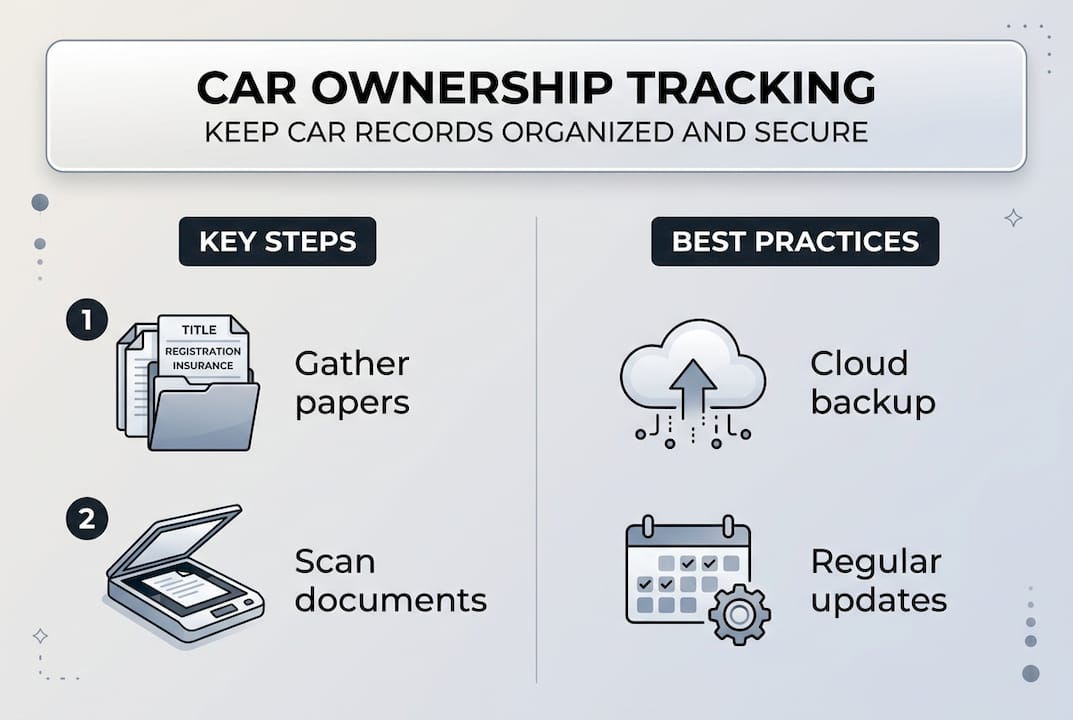
Here are the core documents every car owner should gather:
- Certificate of title (or replacement application if lost)
- Current registration and any renewal notices
- Insurance declarations page and policy number
- Recent maintenance records (oil changes, brake jobs, tire replacements)
- Smog or emissions certificate if required by your state
- Loan or lien documents if the vehicle is financed
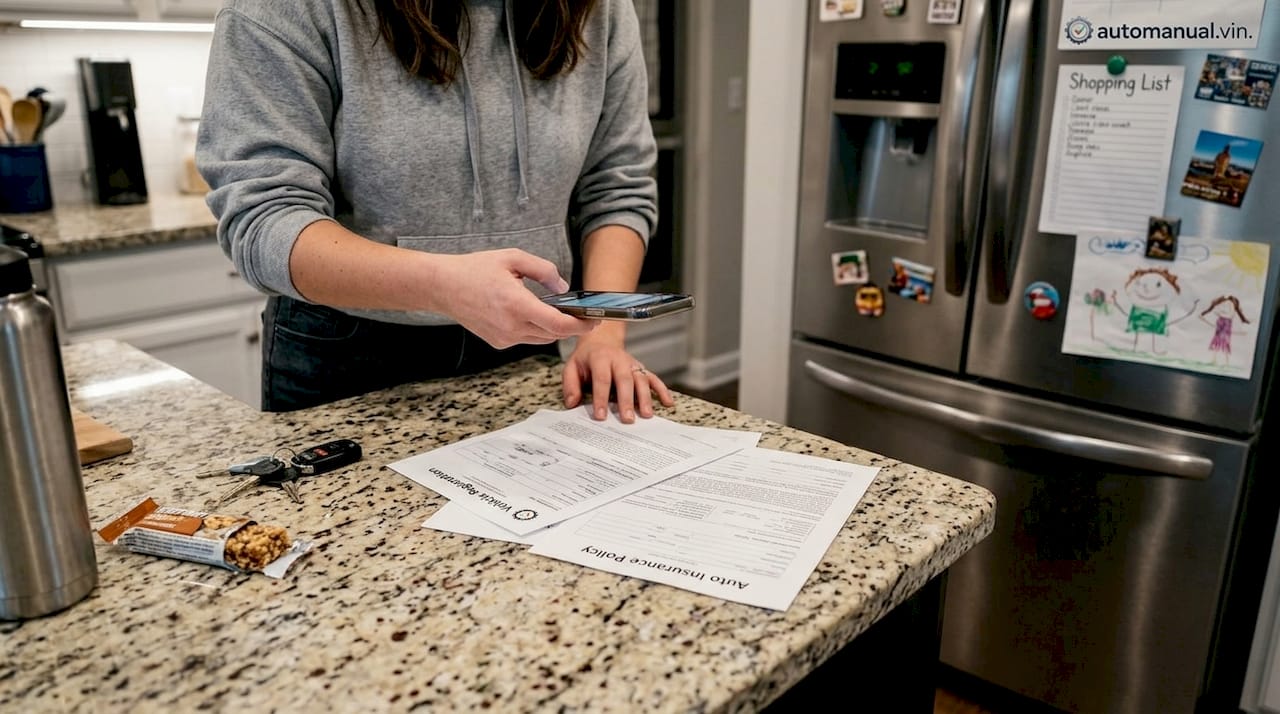
Once you have everything in hand, scan or photograph each document at high resolution. Most smartphones do this well. Store files in clearly labeled folders before uploading to your platform of choice. A solid vehicle history checklist can help you confirm nothing is missing.
| Task | Documents needed | Notes |
|---|---|---|
| Title transfer | Certificate of title, REG 227, ID | Required for buying or selling |
| Maintenance tracking | Service receipts, odometer logs | Scan and upload after each visit |
| Out-of-state move | Current title, new state registration form | Timelines vary by state |
| Insurance claim | Policy declarations, repair estimates | Keep digital copies accessible |
| Smog compliance | Emissions certificate, registration renewal | Required in CA and other states |
Pro Tip: Back up all digital copies to a cloud service like Google Drive or iCloud in addition to your car management platform. If your phone breaks or your account is inaccessible, you still have everything.
Step-by-step: The car ownership tracking process
With your documents digitized and your system chosen, here is how to put everything into motion. This process works whether you are starting fresh or catching up on years of scattered records.
-
Create your vehicle profile. Sign up on your chosen digital platform and add your vehicle. Use the VIN to pull accurate specs automatically. Platforms like AutoManual let you set up a digital car vault instantly without requiring a signup to get started.
-
Upload all digitized records. Start with the most critical documents: title, registration, and insurance. Then add maintenance records in chronological order. Label each file clearly with the date and service type.
-
Input key vehicle details. Enter your VIN, current odometer reading, purchase date, and any known service history. The more complete this baseline, the more useful your reminders and reports become.
-
Set up automated maintenance alerts. Configure reminders for oil changes, tire rotations, brake inspections, and any manufacturer-recommended intervals. Most platforms let you set these by mileage, time, or both.
-
Log every new service immediately. After each visit to a shop or DIY job, update your records the same day. Include the date, mileage, service performed, cost, and the shop's name. Consistency here is everything.
-
Track title and ownership changes. Any time ownership details change, such as paying off a loan, adding a co-owner, or transferring to a family member, update your digital profile and upload the relevant paperwork.
Pro Tip: Use notes or custom labels to flag unusual situations. If a title was replaced, a vehicle was inherited, or a repair used non-OEM parts, tag it clearly. When you sell the car or need to explain its history, those notes save you hours.
Edge cases like missing titles, inherited vehicles, and out-of-state moves each require specific forms and timelines. Tagging these in your digital system means you can find the relevant paperwork instantly instead of guessing.
Common pitfalls and edge cases in car ownership tracking
Even organized people make mistakes. Knowing where the process breaks down helps you avoid the most common traps.
| Scenario | Standard process | Edge case considerations |
|---|---|---|
| Buying a used car | Title transfer with seller signature | Missing title requires REG 227 replacement |
| Inheriting a vehicle | Probate or affidavit transfer | REG 256 needed; timeline varies by state |
| Moving out of state | Re-register in new state within deadline | Old title may need endorsement or replacement |
| Selling privately | Sign over title, bill of sale | Incomplete signatures void the transfer |
| Rebuilding a salvage car | Standard repair documentation | Parts and labor records required for compliance |
The most common mistakes car owners make with their records include:
- Missing signatures on title transfers, which can void the entire transaction
- Failing to update digital records after a repair or service visit
- Losing paper receipts before scanning them
- Not noting the odometer reading at each service, making interval tracking impossible
- Skipping the smog certificate when required, which blocks registration renewal
Warning: DMV deadlines for title transfers are strict. In California, you have 10 days to complete a transfer after a sale. Missing that window can result in penalties, back fees, and complications that take weeks to resolve. Check your state's specific rules and set a calendar reminder the moment a transaction happens.
For rebuilds or major repairs, document every part replaced and every labor hour logged. This protects your vehicle's value, satisfies car title requirements for rebuilt or salvage titles, and gives future buyers confidence in the vehicle's history.
Edge cases involving missing titles and inherited vehicles are handled through specific affidavits or replacement forms. Do not try to work around these steps. The paperwork exists to protect you as much as the next owner.
Data ownership, privacy, and the future of connected cars
As you move your car records online, a legitimate question comes up: who actually owns that data? The answer is more complicated than most people expect.
Data ownership in connected cars is actively contested between vehicle manufacturers, platform providers, and the drivers themselves. Automakers collect telematics data through onboard systems. Third-party apps collect usage and location data. And in most cases, the terms of service determine who controls what, not the driver.
Recent regulatory movement in both the EU and the US is pushing toward stronger user rights. The EU's GDPR gives drivers the right to access, correct, and delete personal data. In the US, the Right to Repair movement is pushing for laws that require manufacturers to share vehicle data with independent repair shops, which directly affects your ability to get competitive service quotes and maintain your own records independently.
Here is how to stay in control of your data when using digital car platforms:
- Read the privacy policy before uploading sensitive documents to any platform
- Choose platforms that store data on your terms, not theirs
- Avoid apps that sell your driving behavior to insurers or advertisers without clear disclosure
- Use platforms that let you export your data in a portable format
- Revoke app permissions for location and telematics when not actively needed
Independent repair shops need access to your vehicle's diagnostic data to compete with dealerships on service. When manufacturers lock that data, you pay more and have fewer choices. Supporting open data standards is not just a policy issue. It is a practical matter for your wallet.
For more on how connected accessories and gadgets interact with your vehicle data, car gadgets and data privacy is worth reviewing before adding new devices to your setup. Staying informed about user privacy and data control is part of being a smart car owner in 2026.
Streamline your records with AutoManual
You now have a clear process for tracking car ownership and maintenance digitally. The next step is putting it into practice with a platform built specifically for this purpose.
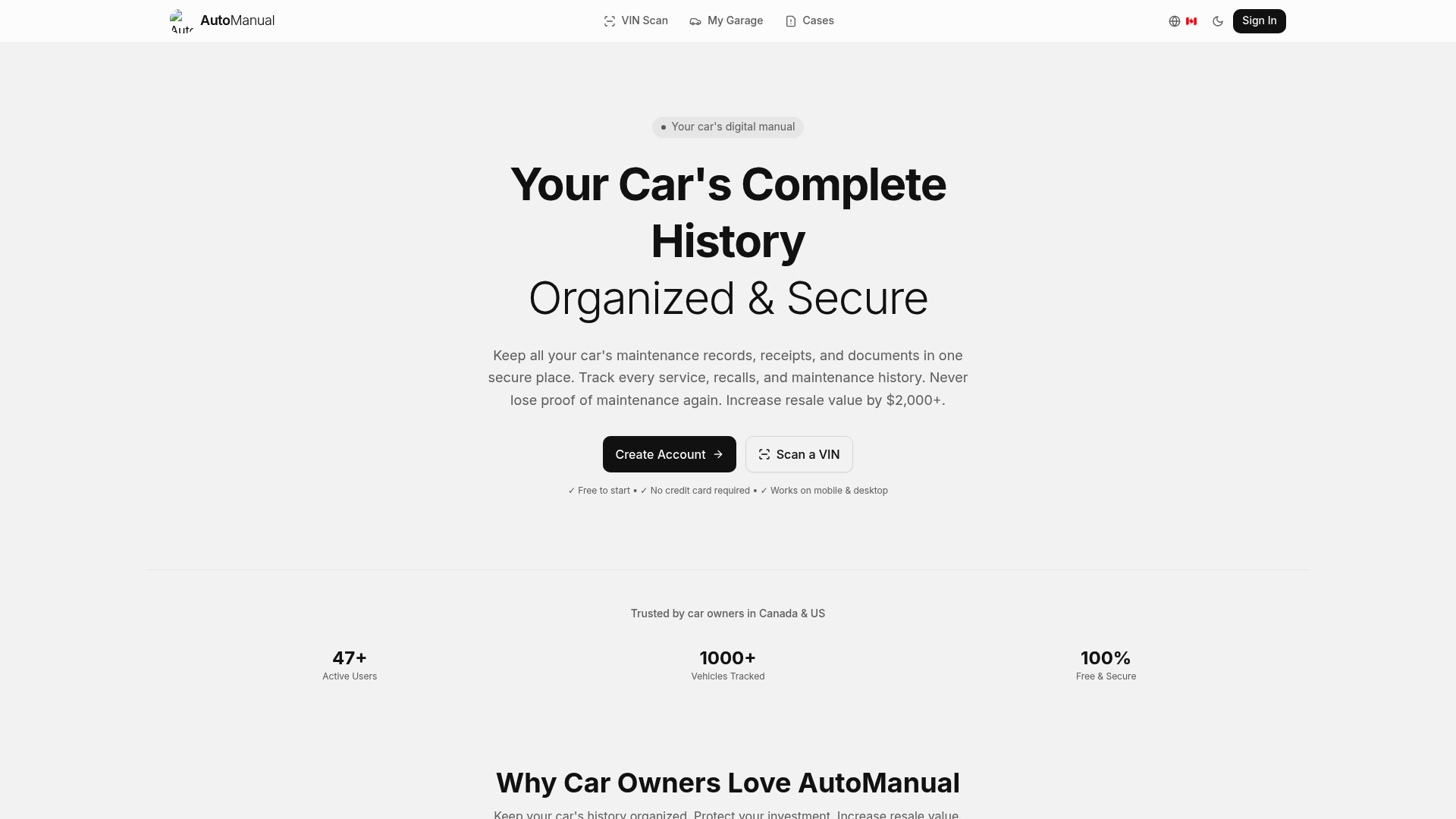
AutoManual is a free digital garage where you can store every document, log every service, and track every vehicle you own in one secure place. Enter any VIN and get full technical specs instantly, no account required. When you are ready to go deeper, scan your car documents and build a complete ownership profile that travels with you. Whether you are prepping for a sale, heading into a repair shop, or just staying on top of scheduled maintenance, AutoManual gives you everything in one place. Try the digital car tracking solution today and turn a scattered pile of paperwork into a system that actually works for you.
Frequently asked questions
What documents should I track as a car owner?
You should keep your title, registration, insurance card, maintenance records, and any transfer forms. DMV paperwork and forms are legally required for ownership changes, so those belong in your digital records too.
How can I digitize my car maintenance history?
Scan or photograph all paper records, then upload them to a platform like AutoManual for secure storage and easy access. Digital car recordkeeping improves both organization and your ability to prove service history when selling.
What if I lose my car title?
Apply for a replacement using official DMV forms such as REG 227 replacement forms; the exact steps vary by state but typically require a fee and proof of identity.
Are my digital car records private?
Modern platforms must comply with user privacy laws, and you can usually control who views your information. Data ownership in connected cars is still evolving legally, so always review a platform's privacy policy before uploading sensitive documents.
How do I handle inherited or gifted cars digitally?
Document the transfer with the appropriate affidavit such as REG 256 and documentation, digitize all related paperwork, and update your online vehicle profile with the new ownership details right away.