

Many used car buyers assume a clean title guarantees a perfect vehicle history. That's not always true. A car title is your legal proof of ownership, but understanding what it reveals and what it hides can save you thousands. This guide explains what a car title is, the different types you'll encounter, how to transfer ownership correctly, and how to protect yourself from title fraud when buying or selling a vehicle.
Table of Contents
- Key takeaways
- What is a car title and why is it important?
- Types of car titles and what they mean for buyers
- How to transfer car ownership and avoid common pitfalls
- How to verify and protect yourself from title fraud
- Simplify managing your car's title and documents with AutoManual
- FAQ
Key Takeaways
| Point | Details |
|---|---|
| Definition and purpose | A car title is the legal proof of ownership issued by the DMV and records who owns the vehicle. |
| Title types and value | Different title types such as clean, salvage, rebuilt, lien, bonded, and junk carry different implications for value, insurance, and financing. |
| Transfer requires lien release | You cannot transfer ownership until any existing lien is released and the title is clear of encumbrances. |
| Verify title to avoid fraud | Always verify VIN matches, current owner information, odometer accuracy, and check for liens or brands and review a VIN history report. |
What is a car title and why is it important?
A car title is a legal document issued by your state's DMV proving you own a specific vehicle. Think of it as the birth certificate for your car. It contains critical information including the vehicle identification number (VIN), make, model, year, owner's name and address, odometer reading at title issuance, any liens from lenders, and title brands that indicate damage history.
This document serves as your primary proof of ownership when selling, registering, or insuring your vehicle. Without it, you can't legally transfer ownership to another person. The title also protects you from fraud by creating an official government record of who owns the vehicle at any given time.
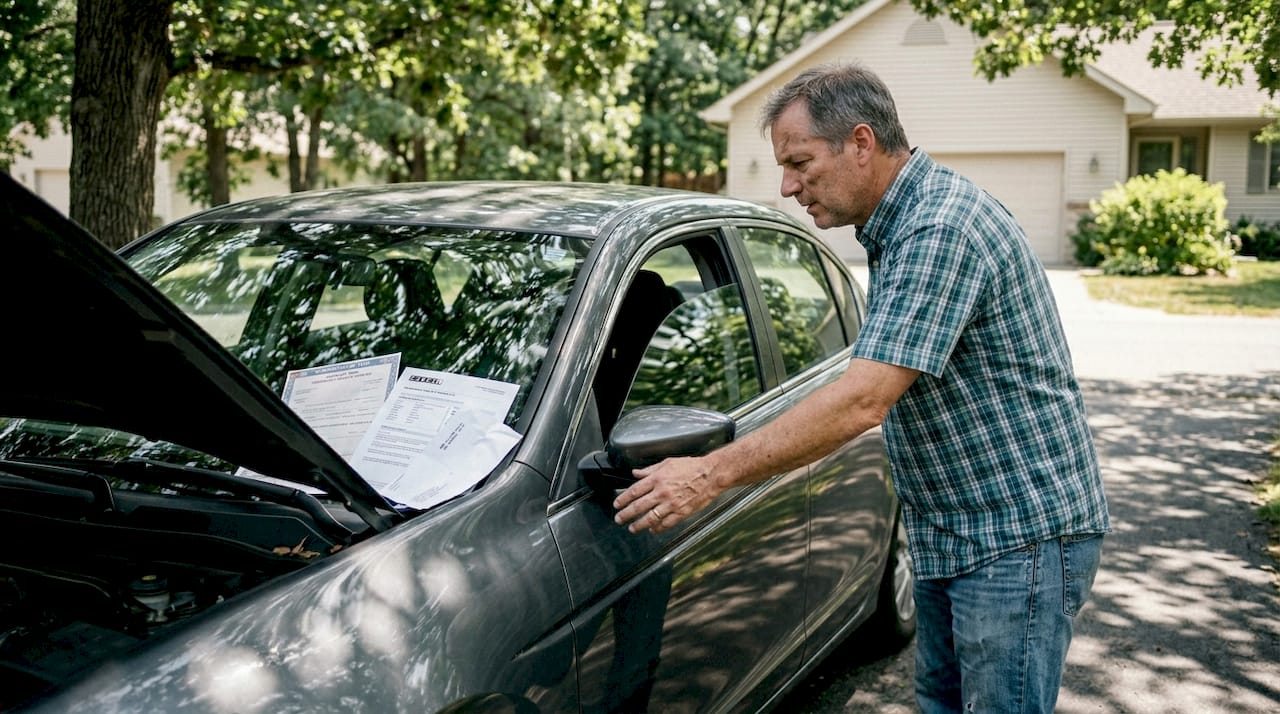
Understanding your car title matters for several practical reasons. When buying a used car, the title reveals whether the vehicle has been declared a total loss, rebuilt after major damage, or has outstanding loans. When selling, you need the title to complete the transfer and release yourself from liability. If you finance a vehicle, your lender holds the title until you pay off the loan completely.
Your digital car profile can help you track title information alongside maintenance records and vehicle specs. Keeping digital copies of your title and related documents makes ownership transfers smoother and protects you if the physical title gets lost or damaged.
Key details every car owner should verify on their title:
- VIN matches the number on your dashboard and door jamb
- Owner name and address are current and accurate
- Odometer reading is consistent with vehicle history
- No unexpected liens or title brands appear
- All previous owner signatures are present if title shows transfers
Types of car titles and what they mean for buyers
Not all car titles are created equal. Title types include clean or clear titles with no major damage history, salvage titles for vehicles declared a total loss, rebuilt titles for salvage cars that have been repaired and inspected, lien titles showing outstanding loans, bonded titles issued when the original is missing, and junk or certificate of destruction titles for vehicles beyond repair. Each type tells a different story about the vehicle's past and affects its current value.
| Title Type | Definition | Typical Value Impact | Insurance/Finance Difficulty |
|---|---|---|---|
| Clean/Clear | No major damage, total loss, or outstanding liens | None (full market value) | Easy to insure and finance |
| Salvage | Declared total loss by insurance; not street legal until repaired | 50-70% reduction | Very difficult; many insurers refuse |
| Rebuilt | Former salvage vehicle repaired and passed state inspection | 20-40% reduction | Challenging; higher premiums common |
| Lien | Outstanding loan or debt attached to vehicle | Varies (must clear lien) | Cannot transfer until lien released |
| Bonded | Issued with surety bond when original title is missing | 10-20% reduction | Slightly harder; bond required |
| Junk/Certificate of Destruction | Beyond repair; cannot be registered for road use | Parts value only | Cannot insure or finance |
Branded titles carry the most significant financial implications. A salvage title means the vehicle suffered damage costing more to repair than its pre-accident value, typically from collisions, floods, or theft recovery. These vehicles cannot legally drive on public roads until repaired and reinspected for a rebuilt title. Even after repairs, branded titles reduce vehicle value by 20-50% compared to identical clean title vehicles.
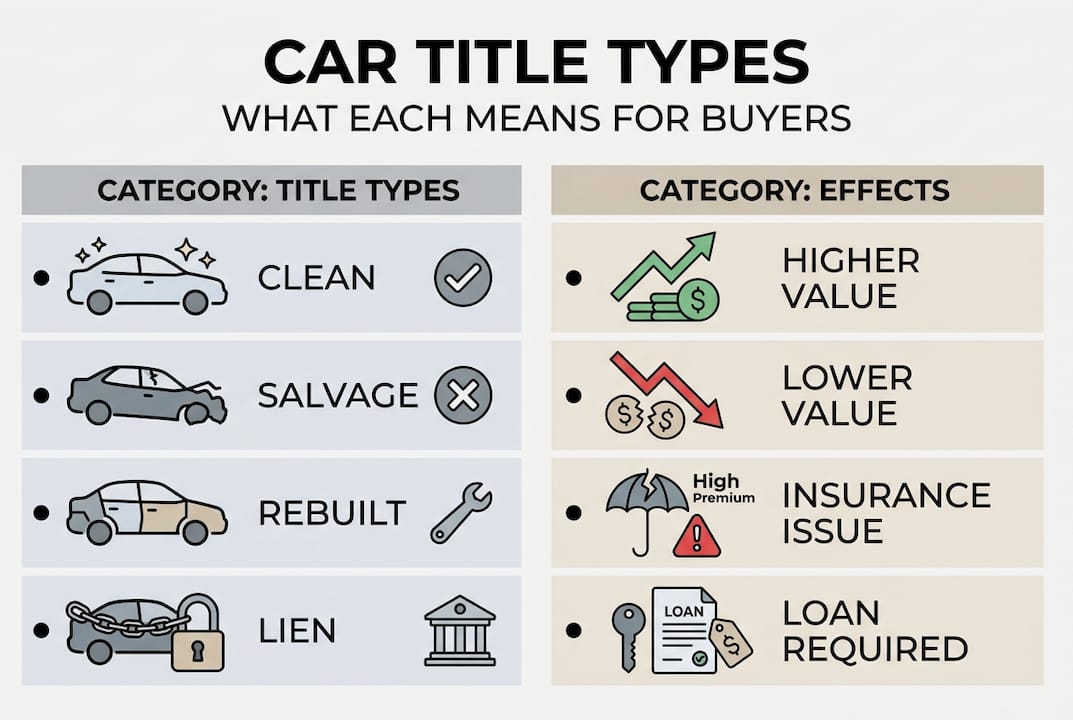
Rebuilt titles indicate the vehicle passed a state safety inspection after salvage repairs. While technically roadworthy, these cars often have hidden damage that surfaces later. Insurance companies frequently refuse full coverage on rebuilt title vehicles or charge substantially higher premiums. Financing can be nearly impossible, as most lenders won't approve loans for salvage or rebuilt vehicles.
Lien titles show an active loan or debt against the vehicle. The lienholder, usually a bank or finance company, legally owns the vehicle until the debt is paid. You cannot transfer ownership without releasing the lien first. Always verify lien status before purchasing any used vehicle.
Pro Tip: Request a comprehensive VIN history report and physically examine the title document before finalizing any used car purchase. Check for watermarks, raised seals, and consistent fonts that indicate authenticity. Cross-reference the VIN on the title with the VIN stamped on the vehicle's dashboard and door jamb.
Buyers should specifically watch for title washing, where dishonest sellers move vehicles across state lines to remove salvage or rebuilt brands. Your digital car profile can store VIN reports and title documentation to help you track a vehicle's complete history.
How to transfer car ownership and avoid common pitfalls
Transferring a car title correctly protects both buyers and sellers from legal and financial problems. The process requires the seller to sign the title with an accurate odometer reading and provide a bill of sale, while the buyer must submit these documents to the DMV within 10-30 days depending on state law. California requires transfer within 10 days, while other states allow up to 30 days. Missing these deadlines can result in penalties and leave sellers liable for violations committed by the new owner.
Follow these steps as a seller:
- Verify you have the physical title with no liens or obtain lien release from your lender
- Complete the seller section on the back of the title with buyer information, sale date, price, and exact odometer reading
- Sign the title in the presence of a notary if your state requires it
- Provide the buyer with a bill of sale showing vehicle details, price, date, and both parties' signatures
- Remove your license plates if required by your state
- File a Notice of Transfer and Release of Liability with your DMV within 5 days to protect yourself from future tickets or crimes
Buyers must complete these actions:
- Verify the seller's name on the title matches their identification
- Confirm the VIN on the title matches the vehicle's dashboard and door jamb
- Check for any liens that must be cleared before transfer
- Obtain a smog certificate if your state requires it for registration
- Submit the signed title, bill of sale, transfer fees, and required forms to your DMV within the state deadline
- Apply for new registration and plates
The Notice of Transfer and Release of Liability is critical for sellers. This document officially notifies the DMV that you no longer own the vehicle. Without it, you remain the registered owner in state records. If the buyer gets parking tickets, toll violations, or commits crimes with the vehicle before transferring the title, you could be held responsible.
Pro Tip: Make copies of all signed documents before handing them over. Keep your copy of the Notice of Transfer/Release of Liability and confirmation from the DMV that they received it. These records prove you completed your legal obligations if disputes arise later.
State-specific requirements vary significantly. Some states require notarized signatures, safety or emissions inspections, or additional forms for out-of-state transfers. Check your DMV website or call ahead to confirm exactly what documents you need. Arriving unprepared can delay the transfer and push you past legal deadlines.
Your digital car profile provides a secure place to store copies of your title, bill of sale, transfer receipts, and DMV confirmations. Digital backups ensure you can prove ownership and transfer completion even if physical documents are lost.
How to verify and protect yourself from title fraud
A clean title doesn't guarantee accident-free history. Clean titles only mean the vehicle was never declared a total loss, but inspection loopholes and title washing fraud can hide significant damage. Title washing occurs when dishonest sellers exploit differences in state title laws to remove salvage or rebuilt brands, making damaged vehicles appear clean.
Title fraud schemes work by moving a salvage vehicle to a state with looser title branding requirements. The seller applies for a new title in that state, which may not carry over the salvage brand from the original state. They then sell the vehicle as clean title, hiding its damage history from unsuspecting buyers. This practice is illegal but difficult to detect without thorough research.
Every buyer should perform these verification checks:
- Run a comprehensive VIN history report through CARFAX, AutoCheck, or the National Insurance Crime Bureau database to check for total loss claims, flood damage, and title brand history across all states
- Physically inspect the title document for signs of alteration, including mismatched fonts, white-out corrections, or missing security features like watermarks and raised seals
- Cross-reference the VIN on the title with the VIN stamped on the dashboard, driver's door jamb, and engine block
- Contact the DMV in the state that issued the title to verify it's authentic and check for any brands or liens not visible on the physical document
- Have a trusted mechanic inspect the vehicle for evidence of frame damage, flood exposure, or major collision repairs
Watch for these warning signs of potential title fraud:
- Odometer reading doesn't match service records or wear patterns
- Title shows multiple out-of-state transfers in a short period
- Seller cannot produce the original title or offers only a copy
- Title brand history shows salvage or rebuilt in one state but clean in another
- Vehicle price is significantly below market value for similar clean title cars
- Seller pressures you to complete the sale quickly without proper inspections
The physical title itself contains security features that help prevent forgery. Legitimate titles include watermarks visible when held to light, microprinting that appears blurry when photocopied, color-shifting ink or holograms, and raised seals or stamps from the issuing DMV. If any of these features are missing or look suspicious, request verification directly from the DMV before purchasing.
Pro Tip: Always insist on seeing the original paper title before finalizing any purchase. Never accept a photocopy or digital image as proof of ownership. Cross-check the title information with official DMV records and a comprehensive VIN history report. If the seller cannot produce the original title or their story doesn't match public records, walk away from the deal.
Your digital car profile lets you store VIN reports, inspection records, and title documentation in one secure location. Keeping these records organized helps you verify a vehicle's history and protects your investment.
Simplify managing your car's title and documents with AutoManual
Keeping track of your car title, registration, insurance cards, and maintenance records can be overwhelming. AutoManual offers a digital vault where you can securely store and access all your vehicle documents in one place. Upload photos or PDFs of your title, and they're available whenever you need them, whether you're selling your car, filing insurance claims, or proving ownership.
AutoManual's digital car profile helps you organize ownership documents alongside your vehicle's complete maintenance history and technical specifications. When it's time to transfer ownership, having digital copies of your title and supporting documents makes the process faster and reduces the risk of losing critical paperwork. You can share documents instantly with buyers, insurance companies, or mechanics without searching through filing cabinets.
Get started by visiting AutoManual's scan page to digitize your car title and other important documents. Store everything securely in the cloud and access it from any device whenever you need it.
FAQ
What is a car title?
A car title is a legal document issued by your state's Department of Motor Vehicles proving you own a specific vehicle. It contains essential information including the VIN, make, model, year, owner details, odometer reading, any liens, and title brands indicating damage history. You need this document to legally sell, register, or transfer ownership of your vehicle.
How can I check if a car has a lien?
Check for liens by examining the title document itself, which lists any lienholders in a dedicated section. You can also run a VIN history report through services like CARFAX or contact the DMV in the state that issued the title to verify lien status. Never complete a purchase until all liens are released, as you cannot legally transfer ownership with an active lien.
What happens if a seller doesn't transfer the title on time?
Sellers remain liable for tickets, toll violations, and even crimes committed with the vehicle until the title transfer is officially filed. State deadlines vary, with some requiring transfer within 10 days and others allowing 30 days. Late transfers may result in fines for both parties. Sellers should immediately file a Notice of Transfer and Release of Liability with their DMV to protect themselves from ongoing liability.
How do branded titles affect car value?
Branded titles like salvage or rebuilt reduce vehicle value by 20-50% compared to identical clean title vehicles. Insurance companies often refuse full coverage on branded title cars or charge significantly higher premiums. Financing is extremely difficult, as most lenders won't approve loans for salvage or rebuilt vehicles. Resale value remains permanently impacted even after quality repairs.
Can I register a car without a title?
You cannot register a vehicle without a title in most states. If you've lost your title, you must apply for a duplicate through your state's DMV before completing registration or sale. Some states offer bonded title options when the original is missing, requiring you to purchase a surety bond and pass additional inspections. The bonded title process takes longer and costs more than standard registration.