
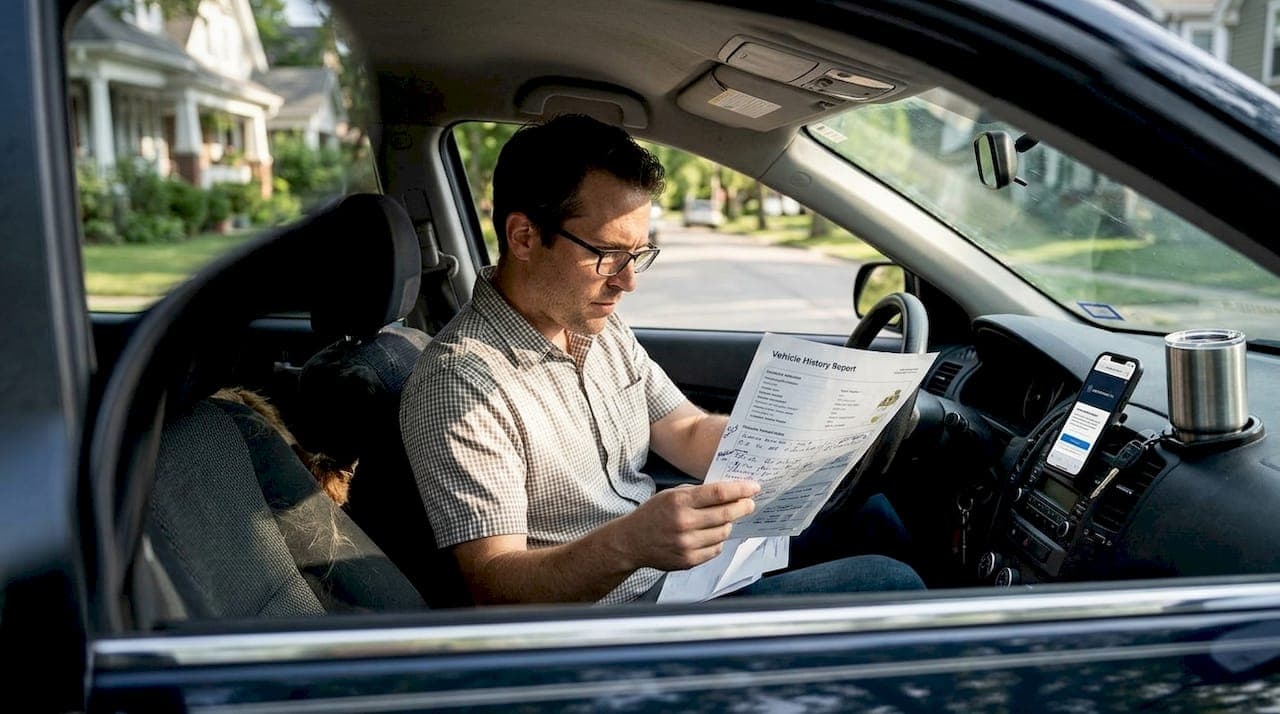
Buying a used car can feel like navigating a minefield of hidden problems. Many vehicles on the market conceal costly issues that standard reports alone fail to uncover. A detailed vehicle history checklist protects your investment by revealing what sellers prefer to keep quiet. This guide covers essential criteria and systematic checks that empower you to evaluate any used car thoroughly. You'll learn how to combine VIN-based reports with hands-on inspections, spot common frauds, and choose the right verification tools for confident purchasing decisions.
Table of Contents
- Key Takeaways
- Establishing essential vehicle history criteria
- Comprehensive 15-step checklist for physical and report inspections
- Recognizing common frauds and hidden damages
- Choosing the right vehicle history report services
- Explore your digital car profile with AutoManual
- FAQ
Key Takeaways
| Point | Details |
|---|---|
| VIN cross checks | Obtain detailed VIN based reports from at least two providers to confirm data and reveal coverage gaps. |
| VIN consistency | Verify that the VIN matches the dashboard, door jamb, and title documents to detect fraud. |
| Title and odometer | Review title history for clean status and flag salvage or flood brands while cross checking odometer readings across sources. |
| Thorough physical inspection | Perform hands on checks for rust, water damage, leaks, and test electrical systems to uncover issues that reports miss. |
| Organize verification | Create a digital car profile to store verification documents, inspection photos, and report findings for negotiations. |
Establishing essential vehicle history criteria
Before you examine any used car, establish clear criteria that separate reliable vehicles from problem purchases. Start with VIN verification to ensure the report matches the actual vehicle you're inspecting. The 17-character VIN appears on the dashboard, driver door jamb, and title documents. Any mismatch signals potential fraud or administrative errors that complicate ownership.
Next, check title status carefully. Key checks include verifying VIN matches, title status, odometer consistency, accident history, service records, ownership count, recalls to build a complete picture. Clean titles indicate no major damage history, while salvage, flood, or rebuilt flags warn of serious past incidents. Verify odometer readings across multiple sources to detect inconsistencies that suggest rollback fraud. A car showing 60,000 miles today but 75,000 miles in last year's service record raises immediate red flags.
Ownership count and service records reveal how well previous owners maintained the vehicle. Frequent ownership changes within short periods often indicate persistent mechanical problems. Complete service records demonstrate regular maintenance and transparency. Review recall history through manufacturer databases to identify unresolved safety issues. Accident history shows the severity and frequency of collisions, helping you assess structural integrity and future reliability.
Pro Tip: Create a digital car profile and vault to organize all verification documents, inspection photos, and report findings in one secure location for easy reference during negotiations.
- Verify VIN consistency across dashboard, door jamb, and documents
- Confirm title status shows clean history without salvage or flood brands
- Cross-reference odometer readings from multiple report sources
- Request complete service records to evaluate maintenance patterns
- Check manufacturer recall databases for outstanding safety campaigns
- Review accident reports for collision severity and repair quality
Comprehensive 15-step checklist for physical and report inspections
Systematic inspection combines digital verification with hands-on evaluation. Vehicle history checklists include obtaining VIN reports, plus thorough physical inspections in specific vehicle areas to catch issues databases miss. This methodical approach protects you from expensive surprises after purchase.
- Obtain detailed VIN-based reports from at least two providers to cross-verify data accuracy and coverage gaps
- Inspect exterior panels for mismatched paint, uneven gaps, or overspray indicating previous collision repairs
- Check for rust around wheel wells, door bottoms, and rocker panels that signal corrosion problems
- Examine weather stripping and door seals for deterioration or replacement suggesting flood exposure
- Look under floor mats and in the trunk for water stains, rust, or musty odors indicating water damage
- Test all electrical components including windows, locks, lights, and infotainment systems for proper function
- Verify interior wear matches reported mileage; excessive seat wear on a low-mileage car suggests odometer fraud
- Open the hood to inspect engine compartment for leaks, corrosion, or aftermarket modifications
- Check fluid levels and conditions; dark oil or pink-tinged coolant indicate poor maintenance or head gasket issues
- Examine belts and hoses for cracks, fraying, or unusual wear patterns
- Inspect undercarriage using a lift or creeper for frame damage, leaks, or fresh undercoating hiding problems
- Test drive on various road surfaces to detect alignment issues, brake problems, or transmission hesitation
- Listen for unusual noises during acceleration, braking, and turning that indicate mechanical wear
- Review all vehicle documents including title, registration, and maintenance receipts for accuracy and completeness
- Have a trusted mechanic perform a pre-purchase inspection covering compression, diagnostics, and safety systems
Pro Tip: Use a digital car history scan before the physical inspection to identify specific areas requiring extra attention based on report findings.
| Inspection area | What to check | Red flags |
|---|---|---|
| Exterior | Paint consistency, panel gaps, rust | Mismatched colors, uneven gaps, corrosion |
| Interior | Upholstery wear, electronics, odors | Excessive wear, malfunctions, musty smell |
| Engine | Leaks, fluid condition, belt wear | Oil leaks, dark fluids, cracked belts |
| Undercarriage | Frame integrity, exhaust, suspension | Bent frame, rust holes, worn components |
| Test drive | Handling, braking, acceleration | Pulling, grinding, hesitation |
Recognizing common frauds and hidden damages
Dishonest sellers employ sophisticated tactics to conceal serious problems. Flood cars often cleaned to pass visual; odometer fraud affects value; 16% used cars have undisclosed issues that surface only after purchase. Understanding these deceptions helps you avoid costly mistakes.
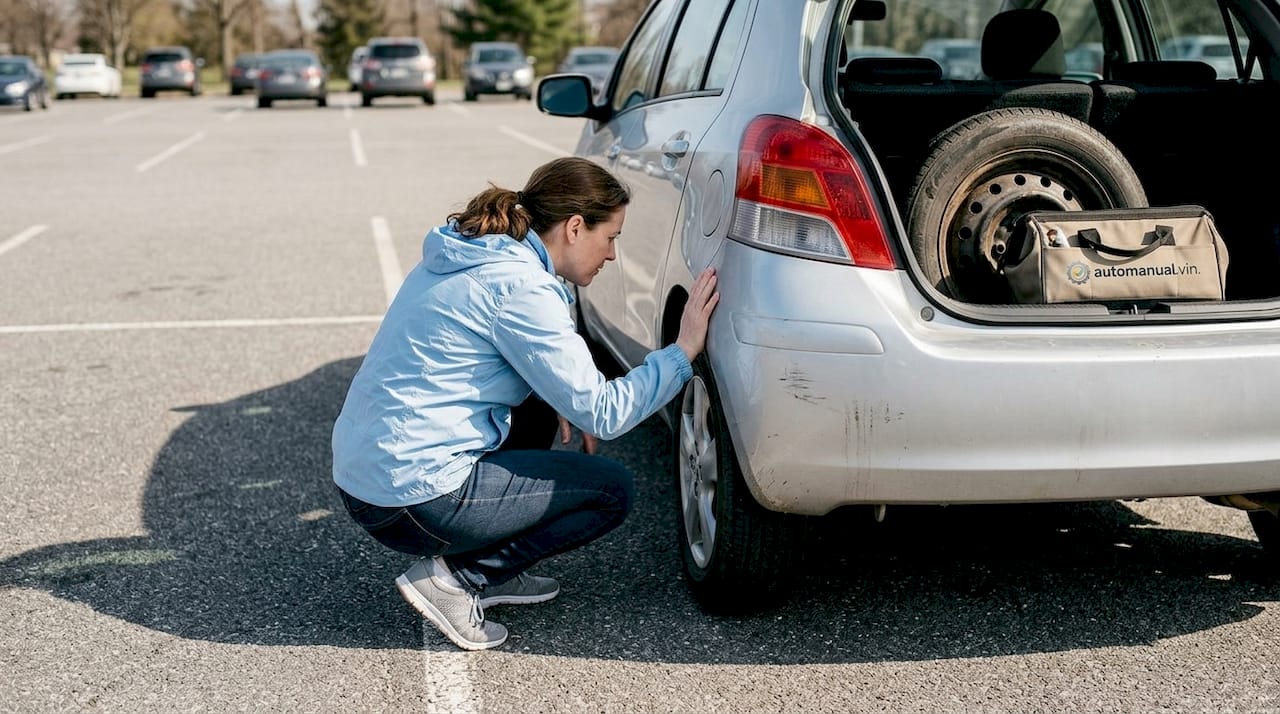
Flood damage remains particularly insidious because professional detailers can temporarily mask water exposure. Look beyond surface cleanliness to find rust on seat track bolts, water lines inside door panels, or moisture in light assemblies. Trunk spare tire wells often retain water stains that cleaning cannot remove. Electronic systems may function initially but fail progressively as corrosion spreads through wiring harnesses and control modules.
Title washing exploits differences between state regulations by registering flood or salvage vehicles in lenient jurisdictions to obtain clean titles. Cross-check titles across states using NMVTIS data to detect this fraud. Odometer rollback remains surprisingly common despite digital safeguards. Verify mileage against wear patterns on brake pedals, steering wheels, and driver seats. Electronic control modules store mileage data that mechanics can retrieve to confirm odometer accuracy.
NHTSA estimates 450,000 vehicles annually suffer odometer fraud, costing consumers over $1 billion in inflated purchase prices and unexpected repairs.
- Examine trunk and door jamb bolts for rust indicating submersion
- Check for musty odors that persist despite cleaning attempts
- Test all electrical components multiple times during inspection
- Request title history from multiple states to detect washing
- Compare reported mileage with physical wear on high-contact surfaces
- Verify mileage stored in engine control modules matches odometer
- Inspect for fresh undercoating applied to hide frame damage
| Title type | Definition | Impact on value | Resale difficulty |
|---|---|---|---|
| Clean | No major damage or total loss history | Normal market value | Easy to sell |
| Salvage | Insurance declared total loss | 20-40% below market | Very difficult |
| Rebuilt | Salvage vehicle repaired and inspected | 20-50% below market | Difficult |
| Flood | Water damage sufficient for total loss | 30-60% below market | Extremely difficult |
Choosing the right vehicle history report services
No single report provider captures every incident or repair. No single report catches all issues; combined CARFAX, AutoCheck, NMVTIS improve detection; CARFAX accesses 165K sources and 36B records for comprehensive coverage. Understanding each provider's strengths helps you build complete vehicle histories.
CARFAX dominates the market with extensive data from dealerships, service centers, and insurance companies. Their database excels at capturing routine maintenance, minor accidents, and ownership transfers. However, CARFAX may miss incidents reported only to competitors or repairs completed by independent mechanics who don't submit data. AutoCheck, owned by Experian, offers superior auction data and provides numerical scores comparing vehicles to similar models. Their reports often include wholesale transactions and fleet vehicle histories that CARFAX overlooks.
NMVTIS represents the federal government's vehicle title database, aggregating information from state DMVs, insurance carriers, and salvage yards. This service excels at detecting title brands, total losses, and odometer discrepancies but provides limited accident detail. VINCheck offers free basic searches through NMVTIS for theft and salvage status, though paid services deliver more comprehensive reporting. Combining at least two providers, preferably CARFAX or AutoCheck plus NMVTIS, maximizes your detection capability.
- CARFAX provides extensive service records and minor accident details
- AutoCheck delivers superior auction history and comparative scoring
- NMVTIS offers authoritative title brand and odometer verification
- VINCheck gives free basic theft and salvage status screening
- Private mechanics and body shops may not report to any service
- Combining multiple reports fills data gaps and improves accuracy
| Provider | Data sources | Strengths | Limitations | Cost |
|---|---|---|---|---|
| CARFAX | 165K+ sources, 36B records | Service history, ownership | May miss auctions, private repairs | $40-$50 per report |
| AutoCheck | Auctions, dealers, DMVs | Auction data, scoring system | Fewer service records | $25-$40 per report |
| NMVTIS | State DMVs, insurance, salvage | Title brands, odometer | Limited accident detail | $5-$10 per report |
| VINCheck | NMVTIS database | Free basic screening | Very limited information | Free |
Pro Tip: Request that sellers provide existing reports, then verify critical findings with your own independent vehicle history report services to catch discrepancies or outdated information.
Explore your digital car profile with AutoManual
Managing vehicle history documentation becomes simple when you centralize everything in one secure location. AutoManual's digital car profile lets you store VIN reports, inspection photos, maintenance records, and ownership documents in an organized vault accessible anytime. This transparency proves invaluable when selling your vehicle later, as verified history data commands premium prices from informed buyers.
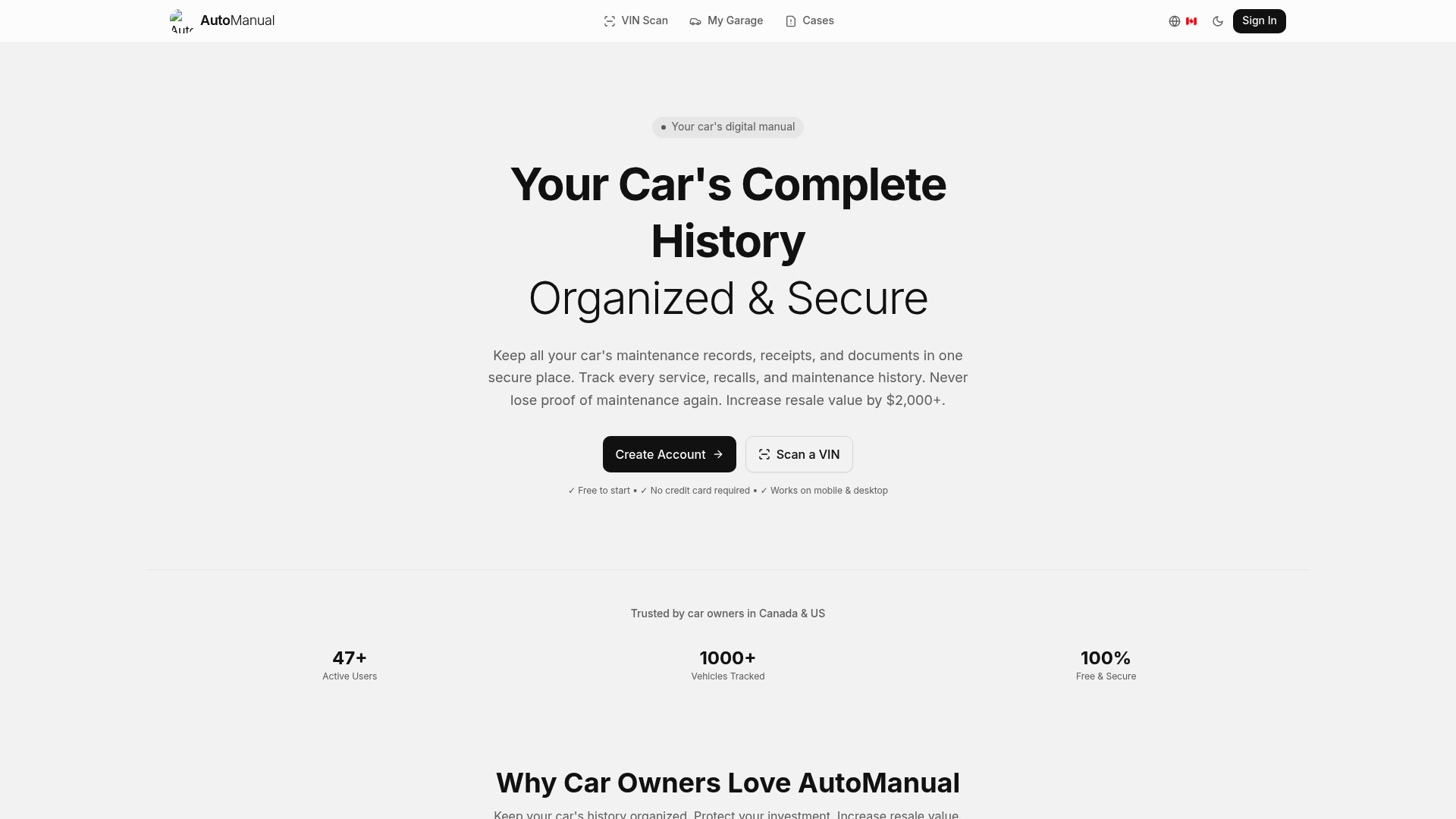
Car enthusiasts particularly benefit from maintaining detailed provenance records that preserve collection value. The platform supports quick digital car history scan capabilities, letting you access comprehensive vehicle specifications and verification data instantly. Whether you manage one vehicle or an entire fleet, having a digital car profile and vault streamlines documentation and enhances transparency throughout ownership.
FAQ
How do I verify a vehicle's VIN?
Check the VIN on the dashboard visible through the windshield, the driver door jamb sticker, and all vehicle documents for perfect consistency. Any mismatch between these locations signals potential fraud or title problems. Use online VIN check tools to confirm the VIN decodes properly and matches the vehicle's make, model, and year.
What are signs of flood damage not detected in reports?
Look for rust under floor mats and on trunk bolts, musty odors that persist despite cleaning, and water stains inside the cabin or door panels. Electrical malfunctions often appear weeks or months after purchase as corrosion spreads through wiring harnesses. Test all electronic components multiple times during inspection, as intermittent failures indicate water exposure.
Can a vehicle history report catch odometer fraud?
Reports show mileage inconsistencies and prior readings from service visits or inspections, but may miss subtle rollbacks performed between reporting events. Physical inspection of brake pedal wear, steering wheel condition, and seat deterioration helps verify mileage accuracy. Mechanics can read mileage data stored in engine control modules to confirm odometer readings match electronic records.
How reliable are vehicle history reports?
Major issues like total losses, title brands, and serious accidents appear in reports 85-90% of the time when properly reported to databases. Minor incidents, private repairs, or service performed by independent mechanics may be omitted 15-20% of the time. Combining multiple report providers with thorough physical inspection delivers the most reliable assessment.
Should I skip cars with salvage or rebuilt titles?
Salvage and rebuilt titles indicate significant past damage that may compromise safety and reliability long-term. These vehicles typically sell for 20-50% below market value but face extreme resale difficulty and higher insurance costs. Only consider rebuilt title vehicles if you have mechanical expertise to evaluate repair quality and accept substantially reduced resale value.