

TL;DR:
- Tracking car maintenance records saves money and increases resale value.
- Using digital tools simplifies maintenance logging and reminder setting.
- Consistent documentation helps prevent costly repairs and warranty denials.
Most car owners know they should keep up with maintenance, but far fewer actually track it. That gap between knowing and doing carries real consequences. 1 in 3 drivers delay or skip routine maintenance, quietly putting their safety, wallet, and car's resale value at risk. The problem is not laziness. It is that most people have never been shown what tracking actually looks like in practice, or why it pays off so dramatically. This article breaks down what maintenance tracking means, what you stand to gain, and exactly how to start today without overcomplicating it.
Table of Contents
- What does it mean to track car maintenance?
- Key benefits: Why tracking matters for every car owner
- The hidden costs and risks of not tracking maintenance
- Making it easy: Tools and strategies for tracking maintenance in 2026
- Why effective maintenance tracking is the secret weapon most car owners ignore
- Take control: Digital car maintenance tracking made simple
- Frequently asked questions
Key Takeaways
| Point | Details |
|---|---|
| Boost resale value | Well-tracked maintenance can increase your car’s resale price by up to 20 percent. |
| Reduce costly repairs | Routine tracking helps catch small issues early to avoid expensive breakdowns. |
| Increase safety | Detailed service logs reduce the risk of unexpected failures and keep you safer on the road. |
| Simplify ownership | Digital tools make it easy to organize all your vehicle’s records in one accessible place. |
What does it mean to track car maintenance?
Tracking car maintenance means keeping a record of every service, repair, and inspection your vehicle receives. That sounds simple, but most drivers confuse it with just remembering their last oil change. Memory is not a system. It is a liability.
A proper maintenance log captures the date, mileage, type of service, cost, and who performed the work. Over time, that record becomes a living document of your car's health. Keeping a detailed log enhances safety, reliability, and resale value in ways that a vague recollection simply cannot.
There are three main approaches to tracking:
- Paper logbooks: A notebook kept in the glove box. Low tech, free, and surprisingly effective if you are consistent. The downside is that paper gets lost, damaged, or forgotten.
- Digital apps and platforms: Tools like the digital car recordkeeping solutions available today let you log services from your phone, set reminders, and store receipts as photos. No more digging through the glovebox.
- Hybrid methods: Some owners keep paper receipts and scan them into a folder or app. This works well as a transition strategy if you are moving from paper to digital.
The car ownership tracking process does not need to be elaborate. At minimum, log the date, current mileage, and what was done. That three-field habit alone puts you ahead of most drivers on the road.
One of the biggest misconceptions is that dealerships or mechanics keep records on your behalf. They do, but only for the work they performed. If you switch shops, move, or buy a used car, those records may be scattered across multiple databases or simply unavailable.
Pro Tip: Start your log today with just three fields: date, mileage, and service performed. You can always add more detail later, but starting simple is what actually gets it done.
Key benefits: Why tracking matters for every car owner
Tracking maintenance is not just a paperwork habit. It is one of the highest-return habits a car owner can build. Here is what consistent tracking actually delivers.
Well-maintained vehicles routinely last beyond 100,000 to 200,000 miles, while neglected ones often fail well before that threshold. The difference is rarely luck. It is documentation and follow-through.
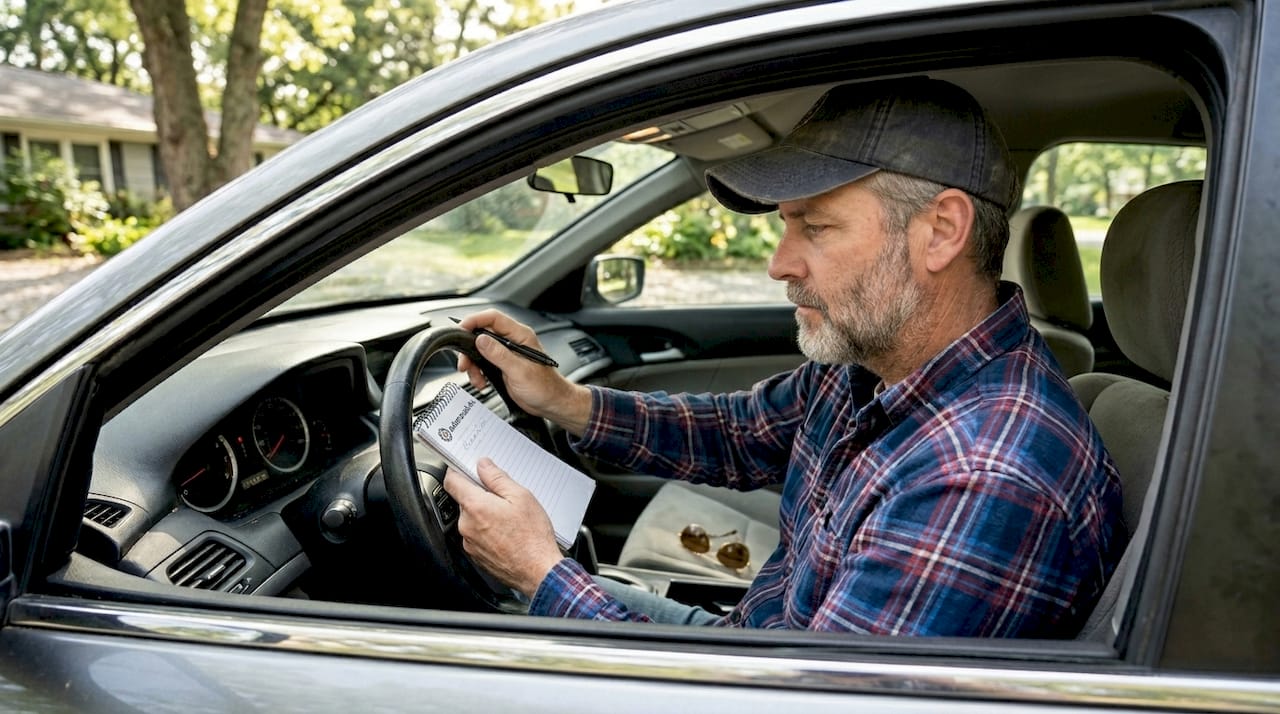
Vehicles with complete service records retain 20% more value than comparable cars without them. On a $20,000 vehicle, that is $4,000 in resale value tied directly to whether you kept a log. That number alone should change how you think about skipping a service record entry.
Tracked vs. neglected maintenance: A side-by-side comparison
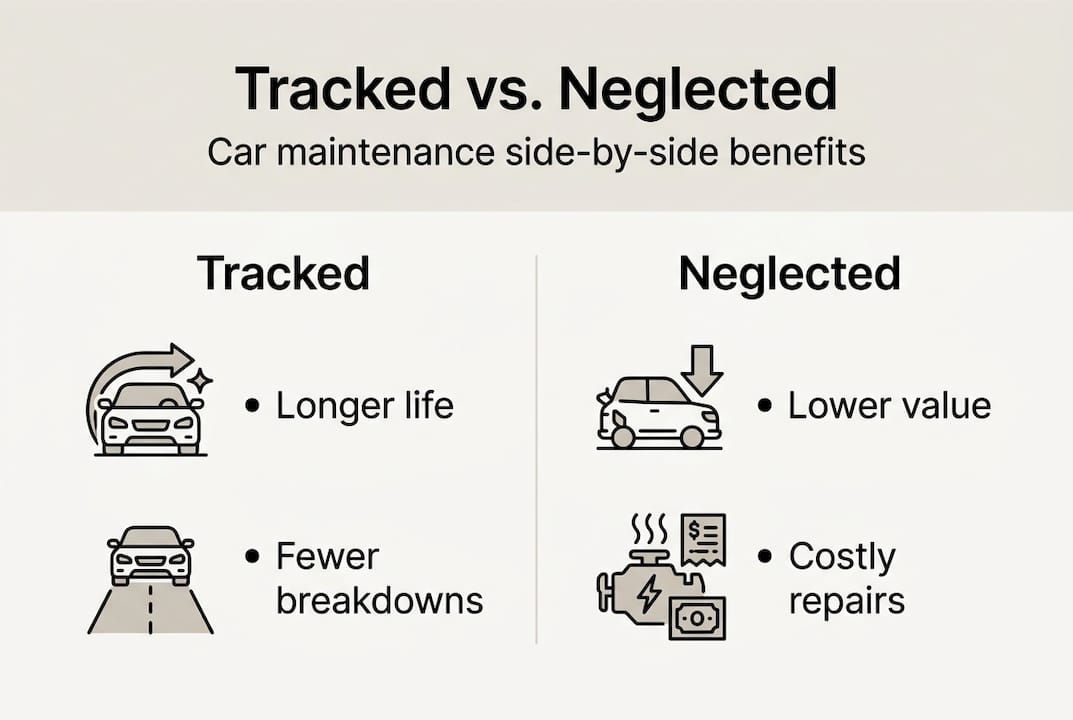
| Factor | Tracked maintenance | Neglected maintenance |
|---|---|---|
| Resale value | Up to 20% higher | Significantly lower |
| Major repair frequency | Lower, caught early | Higher, often emergency |
| Fuel efficiency | Optimized | Degrades over time |
| Warranty claim success | Supported by records | Often denied |
| Owner stress | Low | High |
Here are the five core benefits every car owner gains from consistent tracking:
- Lower long-term costs. Catching small issues early prevents expensive failures. A $75 wheel alignment, for example, can prevent a $750 suspension repair down the road.
- Better performance. Timely oil changes, filter replacements, and fluid checks keep your engine running at its best.
- Higher resale value. Buyers pay more for cars with documented histories. Learn how to maximize resale value using your service records.
- Easier warranty claims. Manufacturers require proof of maintenance to honor warranties. Records make that process straightforward.
- Increased safety. Tracked brake inspections, tire rotations, and fluid checks reduce the chance of a failure at the worst possible moment.
Using a solid maintenance checklist performance framework helps you stay consistent across all five of these areas without overthinking it.
The hidden costs and risks of not tracking maintenance
Ignoring maintenance tracking does not just cost you money at resale. It creates a cascade of risks that most car owners never see coming until they are already dealing with the consequences.
Consider what happens when you ignore a check engine light. Catalytic converter replacement averages $1,348, a cost that often traces back to an unaddressed engine issue that regular monitoring would have flagged early. That is a repair that a $30 diagnostic check could have prevented.
"Poor records can lead to denied warranty claims and significant loss in vehicle value." — CarPro
Here is a real-world cost comparison that shows why tracking pays:
| Maintenance task | Tracked cost | Neglected repair cost |
|---|---|---|
| Oil change (every 5,000 mi) | $50 to $80 | Engine rebuild: $3,000+ |
| Brake pad replacement | $150 to $300 | Rotor and caliper replacement: $800+ |
| Coolant flush | $100 | Head gasket repair: $1,500+ |
| Wheel alignment | $75 to $100 | Suspension overhaul: $750+ |
Beyond repair bills, incomplete or missing records create problems in three other areas most people overlook:
- Warranty denials. Manufacturers can and do deny claims when owners cannot prove scheduled maintenance was performed.
- Insurance complications. Some claims involving mechanical failure can be disputed if there is no maintenance history to reference.
- Resale roadblocks. Buyers and dealers discount cars heavily when records are absent, even if the car runs perfectly.
- Safety failures. Untracked wear on brakes, tires, or steering components can lead to accidents that documented inspections would have prevented.
- Avoidable breakdowns. Fluids, belts, and filters have predictable lifespans. Without tracking, you are guessing when they need attention.
Reviewing your car record archives is especially important if you bought a used vehicle, since incomplete history is one of the most common sources of unexpected repair costs for second owners.
Making it easy: Tools and strategies for tracking maintenance in 2026
The best tracking system is the one you will actually use. Here is a five-step quick start that works for any skill level.
- Choose your format. Pick a dedicated app, a cloud spreadsheet, or a physical logbook. Commit to one.
- Log your current status. Record today's mileage and every service you can recall or verify from past receipts.
- Set recurring reminders. Link reminders to mileage milestones (every 5,000 miles for oil changes, for example) or calendar dates.
- Store receipts immediately. After every service, photograph the receipt and upload it to your log before you leave the parking lot.
- Review quarterly. Spend five minutes every three months checking what is coming due and what you may have missed.
Pro Tip: Take a photo of every paper receipt the moment you get it. Your phone's camera roll becomes an instant backup that survives floods, fires, and lost glove boxes.
Digital solutions make tracking seamless and accessible, especially for owners managing more than one vehicle. Apps and platforms built for this purpose handle reminders, storage, and record sharing automatically.
For 2026, the most effective strategies combine a digital platform with a consistent habit trigger. Many drivers link their tracking habit to fuel stops or monthly bill payments. When you do it at the same time as something else you already do, it sticks.
If you want to track maintenance efficiently across multiple vehicles, a centralized digital platform beats a folder of receipts every time. And if you are buying or selling, having a complete vehicle history checklist ready to share adds immediate credibility and negotiating power.
Why effective maintenance tracking is the secret weapon most car owners ignore
Here is the uncomfortable truth: most car owners treat tracking as a chore for organized people. It is not. It is a financial strategy that happens to involve cars.
The ROI on consistent tracking is absurd when you do the math. A few minutes per service visit, multiplied over five years, can translate into thousands of dollars in avoided repairs and higher resale value. That is a better return than most savings accounts.
What surprises us most is how much peace of mind tracking delivers. When your mechanic asks about the last transmission service, you know the answer. When a buyer asks for records, you hand them over. That confidence is worth something real.
Most drivers focus on fixing problems after they appear. The ones who save money and drive smarter are the ones who prevent problems through consistent documentation. Modern cars are built to last, but only if their maintenance story is told clearly to the next mechanic, the next owner, or the insurer reviewing a claim.
Tracking is not about being a car enthusiast. It is about treating a $20,000 to $50,000 asset with the same discipline you would apply to any serious investment.
Take control: Digital car maintenance tracking made simple
You now know what tracking involves, why it matters, and how to start. The next step is putting a system in place that does the heavy lifting for you.
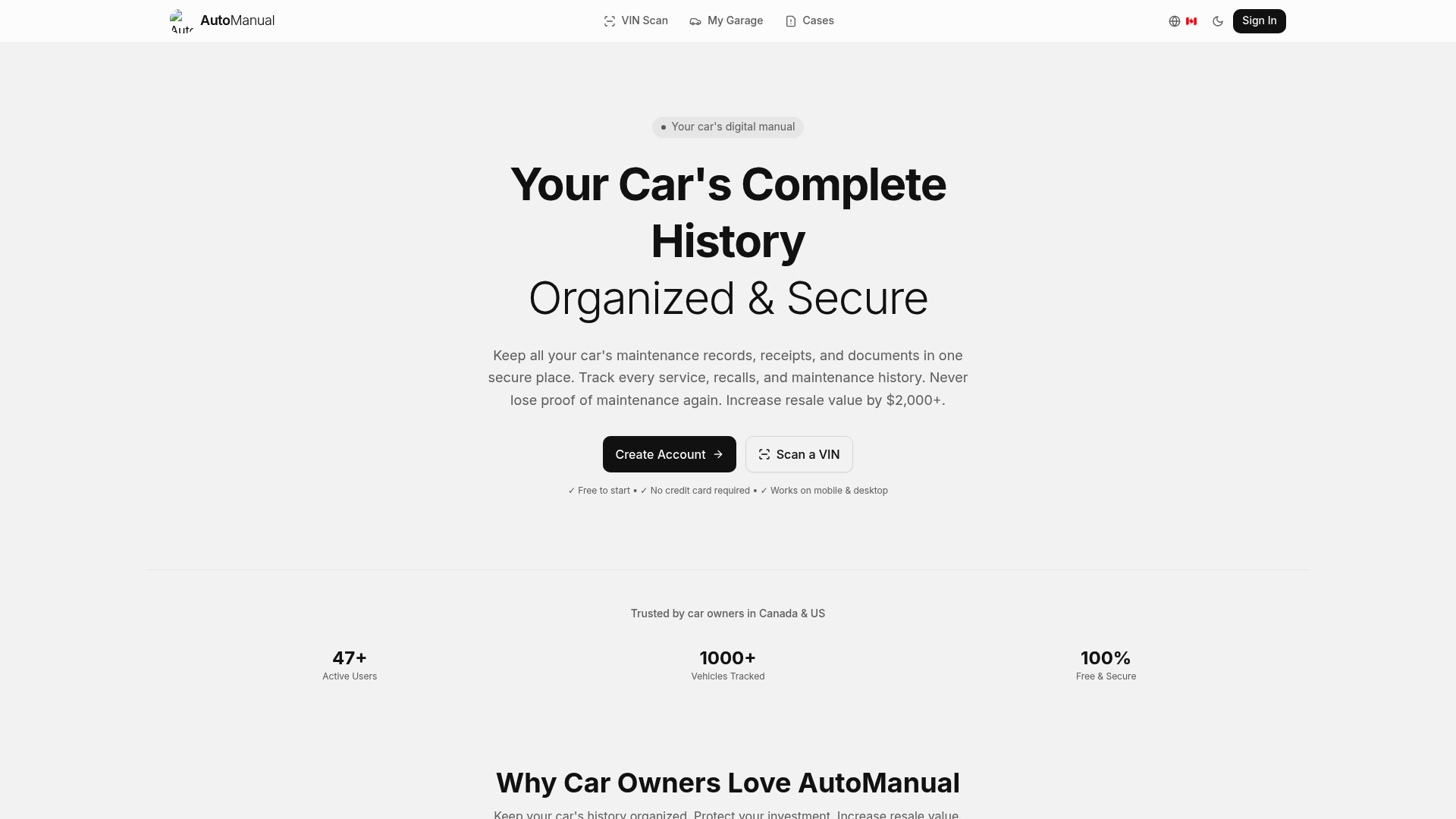
With the AutoManual platform, you can build a complete digital profile for every vehicle you own. Enter your VIN and instantly access full technical specs, then use the digital garage to log maintenance history, store documents, and track ownership details all in one place. No signup required to get started. Create your free digital car profile today and turn your maintenance records into a genuine asset that protects your car's value, supports warranty claims, and gives you total clarity every time you need it.
Frequently asked questions
What is the easiest way to start tracking car maintenance?
Use a digital app or spreadsheet to log service dates, mileage, and repairs. Digital tracking solutions make it easy to snap photos of receipts as an instant backup.
Does tracking car maintenance really boost resale value?
Yes. Vehicles with full service records retain 20% more value than those without, making documentation one of the highest-return habits for any car owner.
Can I track maintenance if I lost my original records?
Absolutely. Reconstruct what you can from past invoices and dealership records, then use a digital recordkeeping platform to build your log going forward.
How does maintenance tracking affect warranty claims?
Accurate records prove that scheduled maintenance was performed, which directly prevents warranty claim denials that manufacturers use when documentation is missing.