

TL;DR:
- Regular preventive maintenance can prevent unexpected breakdowns and save money.
- Organizing and tracking maintenance with digital tools or logs enhances vehicle care and resale value.
- Following manufacturer-recommended service intervals and seasonal checks ensures engine longevity and safety.
Unexpected breakdowns cost American drivers an average of $500 to $600 per incident, and most of them are entirely preventable. The difference between a car that runs strong at 150,000 miles and one that's limping to the shop at 80,000 often comes down to one thing: consistent, structured maintenance. Preventive maintenance reduces breakdown risk and repair costs significantly over a vehicle's lifetime. This article gives you a proven car maintenance checklist, practical tracking strategies, manufacturer schedule guidance, and seasonal tips so you can protect your investment and drive with confidence.
Table of Contents
- Core car maintenance tasks every owner should follow
- How to organize and track your maintenance routine
- Manufacturer recommendations and service intervals explained
- Situational checklist: Seasonal and mileage-based maintenance
- Our perspective: The real ROI of routine car maintenance
- Take your car care to the next level with AutoManual
- Frequently asked questions
Key Takeaways
| Point | Details |
|---|---|
| Routine checks matter | Consistent oil changes, fluid top-ups, and inspections prevent breakdowns and costly repairs. |
| Digital tracking wins | Logging maintenance in digital tools is convenient and boosts your car's resale value. |
| Manufacturer schedules | Following the official service intervals safeguards your warranty and extends vehicle life. |
| Seasonal adjustments | Tailor your checklist to weather and mileage for optimal safety and performance. |
Core car maintenance tasks every owner should follow
Now that you understand the value of a well-maintained car, start with the core actions every vehicle owner should prioritize. These aren't optional extras. They're the foundation of everything else.
Oil and filter changes are the single most impactful routine task you can do. Regular oil changes and fluid checks are fundamental to engine health, preventing sludge buildup and premature wear. Most modern vehicles need a change every 5,000 to 7,500 miles, though full-synthetic oil can stretch that to 10,000 miles depending on your model.
Tire maintenance covers three things: pressure, rotation, and tread depth. Underinflated tires reduce fuel economy by up to 0.5% for every 1 PSI drop, and worn tread dramatically increases stopping distance. Rotate your tires every 5,000 to 7,500 miles to even out wear, and replace them when tread depth falls below 2/32 of an inch.
Here are the core tasks every owner should track:
- Oil and filter change: every 5,000 to 7,500 miles
- Tire rotation: every 5,000 to 7,500 miles
- Brake inspection: every 12,000 miles or annually
- Battery test: every 2 to 3 years, replace at 4 to 5 years
- Fluid checks (coolant, brake, transmission, power steering): monthly visual check
- Cabin and engine air filters: every 15,000 to 30,000 miles
- Wiper blades: every 6 to 12 months
- Exterior and interior lights: monthly check
Brakes deserve special attention because they're your primary safety system. Listen for squealing or grinding, and never ignore a soft brake pedal. Brake fluid absorbs moisture over time, so flushing it every two years keeps hydraulic pressure consistent.
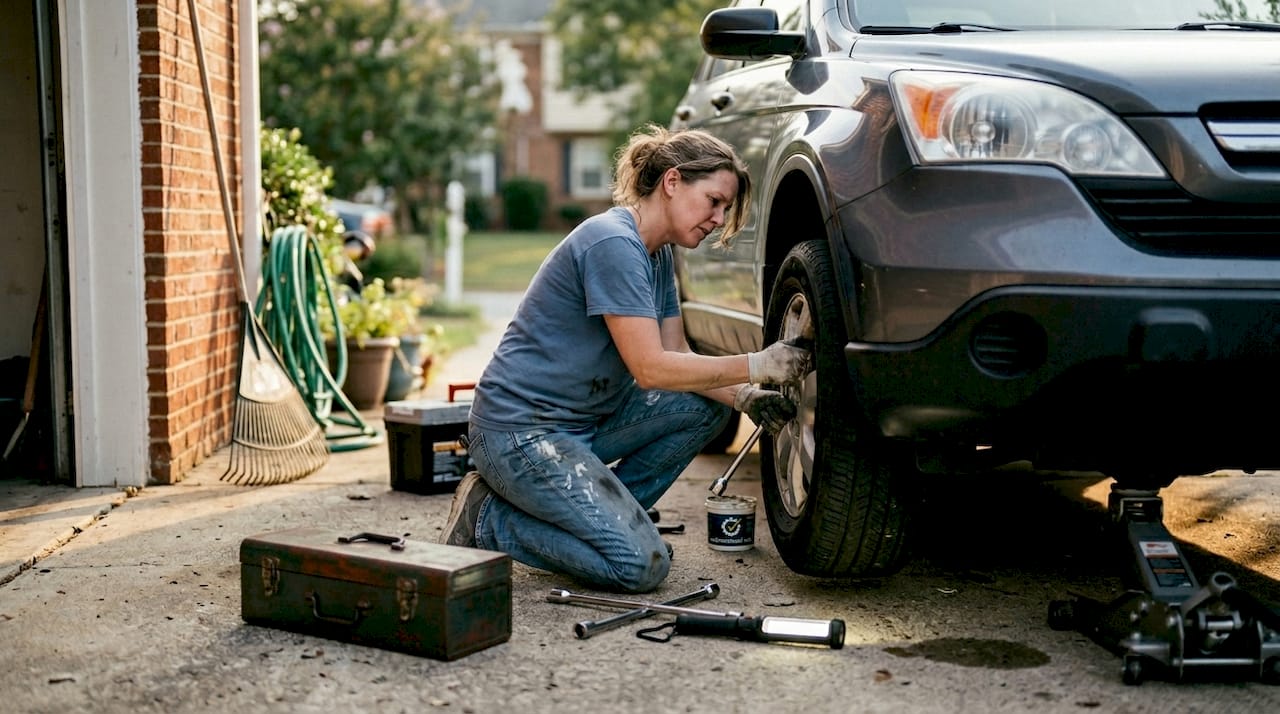
Your car's battery is often overlooked until it fails on a cold morning. Test it annually once it passes the three-year mark. Corrosion on terminals is a warning sign you can address with a wire brush and baking soda solution before it becomes a problem.
Pro Tip: Group your maintenance tasks into three buckets: monthly checks (fluids, lights, tire pressure), mileage-based tasks (oil, rotation, filters), and annual services (battery, brakes, belts). This makes the whole process feel manageable instead of overwhelming.
Finally, never underestimate your owner's manual. It's the most accurate source for your specific vehicle's needs. If you bought a used car and the manual is missing, a car manuals guide can help you locate digital versions and understand what your car actually requires. Reviewing vehicle history checks also helps you understand what past owners may have skipped.
How to organize and track your maintenance routine
Once you know what needs to be done, make it easy to stay on track with the right organization and tracking methods. Knowing the tasks is only half the battle. Remembering to do them is the other half.
Here's a practical way to build your tracking system:
- List every recurring task from your owner's manual with its interval.
- Choose a tracking method that fits your lifestyle (paper, spreadsheet, or app).
- Set calendar reminders for mileage and date-based tasks.
- Log every service with date, mileage, cost, and shop or DIY notes.
- Review your log every three months to spot gaps or upcoming services.
Digital tools make car maintenance tracking easier and more reliable than manual logs, especially for drivers managing multiple vehicles. Apps send push notifications, store receipts, and let you pull up a full service history in seconds during a resale negotiation.
Here's a quick comparison of your main options:
| Method | Cost | Ease of use | Backup options | Best for |
|---|---|---|---|---|
| Paper log | Free | Simple | None | Minimalists |
| Spreadsheet | Free | Moderate | Cloud sync | DIY enthusiasts |
| Mobile app | Free to $10/mo | Very easy | Automatic | Most drivers |
| Digital garage platform | Free | Very easy | Cloud-based | Multi-car owners |
Pro Tip: Set a recurring calendar alert every 3,000 miles or three months, whichever comes first. Label it "car check-in" and use it to review your log, check tire pressure, and scan for any warning lights. It takes ten minutes and saves hours of headaches.
Tracking also pays off when you sell. Buyers and dealers will pay more for a car with a documented car maintenance tracking history because it signals the vehicle was cared for. A clean digital recordkeeping system can realistically add hundreds of dollars to your resale price and shorten the time it takes to close a deal.
Manufacturer recommendations and service intervals explained
Staying organized is only part of the process. Understanding official recommendations ensures you're not missing critical services that protect both your engine and your warranty.
Your first stop should always be the owner's manual. It contains the exact service schedule your manufacturer engineered for your specific model, trim, and engine. If you don't have the physical copy, most brands publish digital versions on their websites, and owner's manual guide resources can point you in the right direction.
Adhering to manufacturer service intervals improves vehicle lifespan and can prevent warranty disputes. This is especially important in the first three years of ownership when powertrain warranties are active.
Here's a general comparison of service intervals for three popular brands:
| Service | Toyota | Ford | Honda |
|---|---|---|---|
| Oil change | 10,000 miles | 7,500 miles | 7,500 miles |
| Tire rotation | 5,000 miles | 7,500 miles | 7,500 miles |
| Spark plugs | 60,000 miles | 60,000 miles | 30,000 miles |
| Transmission fluid | 60,000 miles | 150,000 miles | 90,000 miles |
| Coolant flush | 100,000 miles | 100,000 miles | 60,000 miles |
"Service schedules are the roadmap for a car's long life. Follow them, and the car will reward you. Ignore them, and you're gambling with every mile."
Adapting the schedule to your driving style matters too. City driving with frequent stop-and-go traffic is harder on your engine, brakes, and transmission than highway cruising. If you drive in extreme heat, cold, or dusty conditions, most manufacturers recommend a "severe duty" schedule that shortens many intervals by 30 to 50 percent.
When comparing car models or buying used, always factor in where the vehicle is in its service cycle. A car that's 5,000 miles overdue on a transmission flush is a negotiating point, not just a maintenance note.
Situational checklist: Seasonal and mileage-based maintenance
Beyond the basics, adapt your checklist for the seasons and your specific driving patterns. Weather and usage create unique stress on your vehicle that a standard interval schedule doesn't always capture.
Winter prep checklist:
- Test battery voltage (cold weather reduces battery capacity by up to 60%)
- Check antifreeze concentration with an inexpensive tester
- Inspect wiper blades and switch to winter-rated blades if needed
- Verify tire tread depth and consider winter tires in snow-prone areas
- Check four-wheel or all-wheel drive engagement if applicable
Summer prep checklist:
- Inspect the cooling system, including hoses, clamps, and coolant level
- Test the air conditioning system before the first heat wave
- Check tire pressure more frequently (heat increases pressure and can cause blowouts)
- Inspect belts for cracking or glazing caused by heat exposure
Extreme weather and changing seasons demand specific maintenance to ensure car safety and performance. This isn't overstated. A battery that tests fine in September can fail completely in January.
Mileage milestones to watch:
- 30,000 miles: air filter, fuel filter, brake fluid flush
- 60,000 miles: spark plugs, timing belt inspection, coolant flush
- 90,000 miles: transmission service, serpentine belt replacement
- 100,000 miles: full inspection, water pump, major fluid overhaul
For road trips, run a dedicated pre-departure check: tire pressure and condition, all fluid levels, brake feel, lights, and spare tire status. Your owner's manual insight will also flag any model-specific items worth checking before extended highway driving.
Pro Tip: Print a one-page seasonal checklist and keep it in your glove box. When seasons change or a road trip comes up, you have a quick reference without needing to search online or dig through paperwork.
Our perspective: The real ROI of routine car maintenance
Here's something the automotive industry doesn't say loudly enough: the unglamorous stuff delivers the best return. Not the performance upgrades. Not the fancy diagnostics tool you bought once and forgot about. Just oil changes, tire rotations, and fluid checks done consistently.
We've seen it repeatedly. A small coolant leak caught during a routine check costs $80 to fix. Left unnoticed for three months, it becomes a blown head gasket at $1,500 or more. That's not bad luck. That's the math of neglect.
Habitual checklists also create something harder to quantify: peace of mind. You know your car. You know its history. And when it comes time to sell, that documented ownership tracking advice history tells buyers a story of a vehicle that was cared for. That story is worth real money and real trust at the negotiating table.
Skip the shortcuts. The checklist is the upgrade.
Take your car care to the next level with AutoManual
Ready to put your checklist on autopilot? Here's a tool that makes car maintenance simple and stress-free.
AutoManual is a free digital garage where you can store your full maintenance history, vehicle specs, documents, and ownership details all in one place. No signup required to get started.
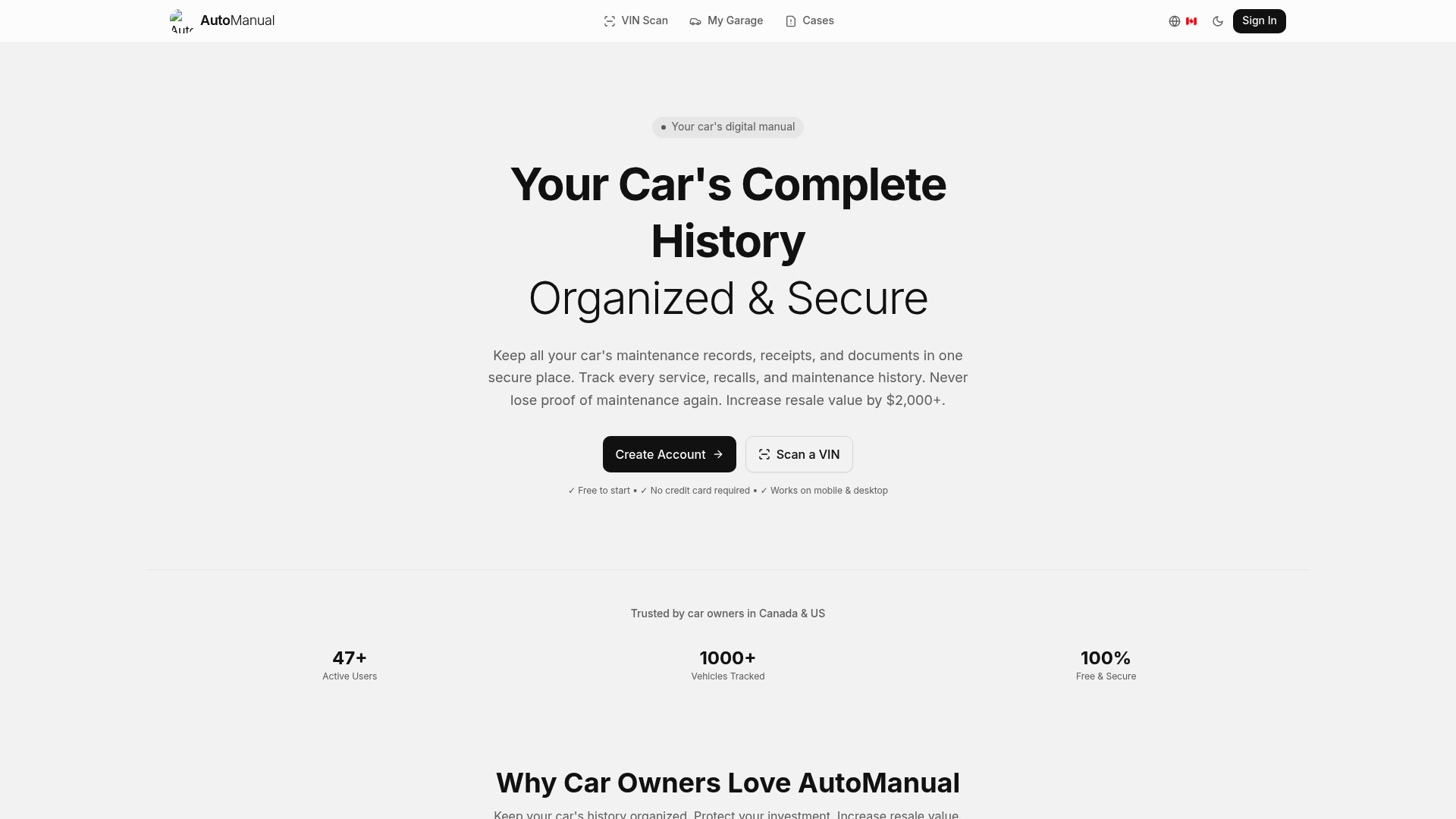
Simply create your digital car profile by entering your VIN, and AutoManual instantly pulls your vehicle's technical specs. From there, you can log every service, set reminders, and build a verified record that supports resale value and warranty claims. Whether you own one car or a whole fleet, it's the smartest way to stay ahead of maintenance and never miss a service again.
Frequently asked questions
How often should I really change my car's oil?
Most vehicles require an oil change every 5,000 to 7,500 miles, but always check your owner's manual since synthetic oil and newer engines can extend that interval to 10,000 miles.
Is digital recordkeeping better than a paper log for car maintenance?
Digital tools simplify car maintenance recordkeeping with automatic reminders, cloud backup, and instant history retrieval, making them the better choice for most drivers compared to paper logs.
What maintenance should I do before a long road trip?
A pre-trip checklist should include tire pressure, all fluid levels, brakes, battery condition, and all exterior lights before you leave.
Does following my manufacturer's service schedule affect my warranty?
Yes. Neglecting service schedules risks warranty coverage, and missing prescribed services can give manufacturers grounds to deny certain claims.