
TL;DR:
- A thorough VIN decoding process reveals the vehicle's true identity and uncovers potential fraud.
- Combining official history reports with physical inspections helps detect hidden damages and discrepancies.
- Storing verified car data digitally streamlines future references and enhances safe buying decisions.
Buying a used car based on a seller's word or a single paper record is one of the most expensive gambles you can take. Thousands of buyers every year discover hidden flood damage, rolled-back odometers, or mismatched engine specs only after the money has changed hands. The good news is that a structured spec verification process eliminates nearly all of those surprises before you sign anything. This guide walks you through every step, from locating the VIN to cross-checking physical details against official records, so you can buy with real confidence instead of crossed fingers.
Table of Contents
- What you need before you start
- Step 1: Locate and decode the VIN
- Step 2: Verify with official tools and reports
- Step 3: Inspect, cross-verify, and spot red flags
- Why spec verification beats 'gut feeling' every time
- Store, manage, and secure your car's verified specs
- Frequently asked questions
Key Takeaways
| Point | Details |
|---|---|
| Verify VIN everywhere | Always check that the VIN matches across car parts and all documents to avoid scams. |
| Use both free and paid tools | Combine official VIN decoders with paid history reports for a complete picture. |
| Inspect the car in person | Even perfect records can't replace a hands-on inspection for signs of trouble. |
| Cross-verify all findings | No single tool covers everything—use several and consider a mechanic's inspection. |
What you need before you start
Verification is only as strong as your preparation. Walking up to a car without the right tools or information is like trying to diagnose a problem without knowing the symptoms. Before you inspect anything, gather everything on this list.
Documents to collect:
- Title (original, not a photocopy)
- Registration and insurance cards
- Any service records or maintenance receipts
- Window sticker or Monroney label if still available
- Bill of sale from the current owner
Physical tools to bring:
- A flashlight (for reading VINs in dark spots and checking undercarriage)
- A notepad or phone for recording numbers
- A camera or phone for photos of every VIN plate and document
- A magnet (to detect body filler under paint, a sign of hidden damage)
The single most important piece of information you need is the Vehicle Identification Number. The primary method for verifying car specifications is decoding the VIN, a 17-character code that reveals the manufacturer, model year, engine type, and factory-installed features. No other number tells you more about a vehicle's true identity.
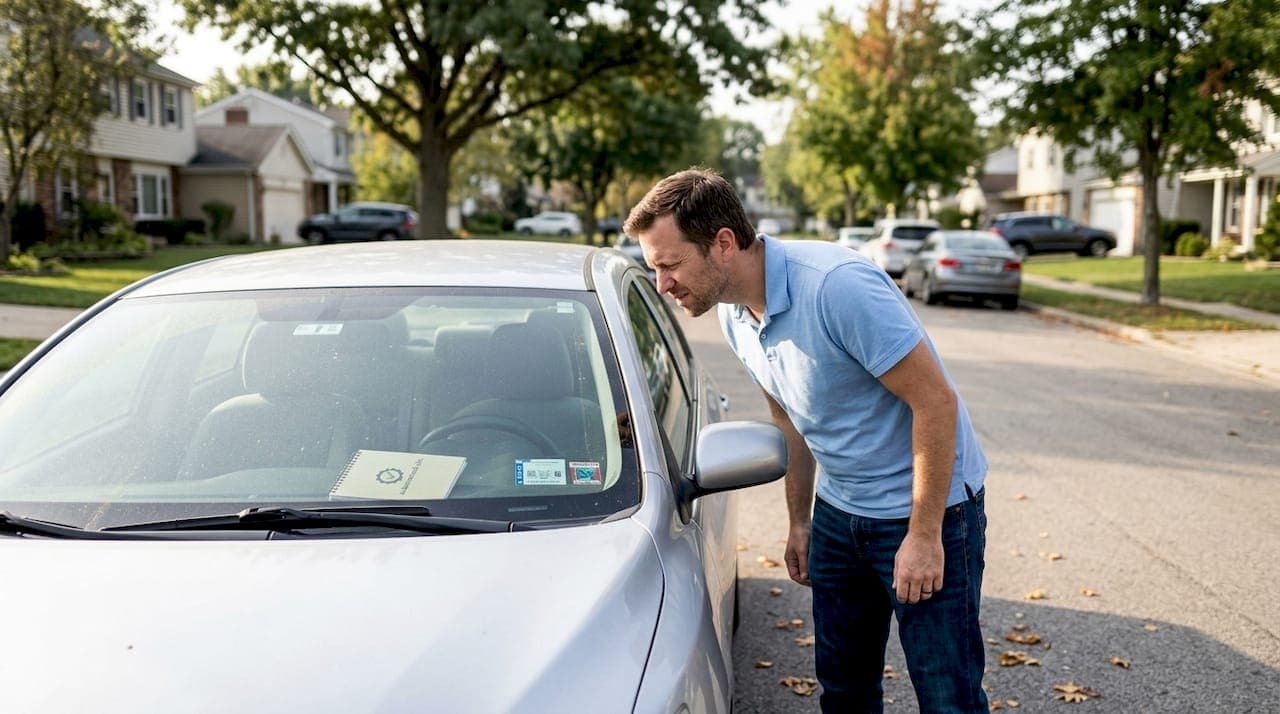
Knowing where to find the VIN is just as important as having it. You should verify VIN in multiple locations including the dashboard, door jamb, engine block, and title documents to detect cloning or fraud. A legitimate car will have the same number in every spot. A tampered one usually won't.
| VIN location | Where exactly | Why it matters |
|---|---|---|
| Dashboard | Lower left corner, visible through windshield | Most commonly checked first |
| Driver's door jamb | Sticker on the door frame | Easy to compare with dashboard |
| Engine block | Stamped on the block itself | Hardest to tamper with |
| Title and registration | Printed on official documents | Cross-reference for fraud detection |
Once you have the VIN in hand, you're ready to find car specs using free online tools. The NHTSA VIN decoder is your first stop for basic specs and open safety recalls. NMVTIS (National Motor Vehicle Title Information System) is the government database for title and salvage records. Both are free. Both are official. And together, they cover more ground than most buyers ever check. Understanding how to protect your VIN from misuse is also worth a few minutes of your time before the process begins.
Step 1: Locate and decode the VIN
With everything at hand, let's start by locking down your car's identity.
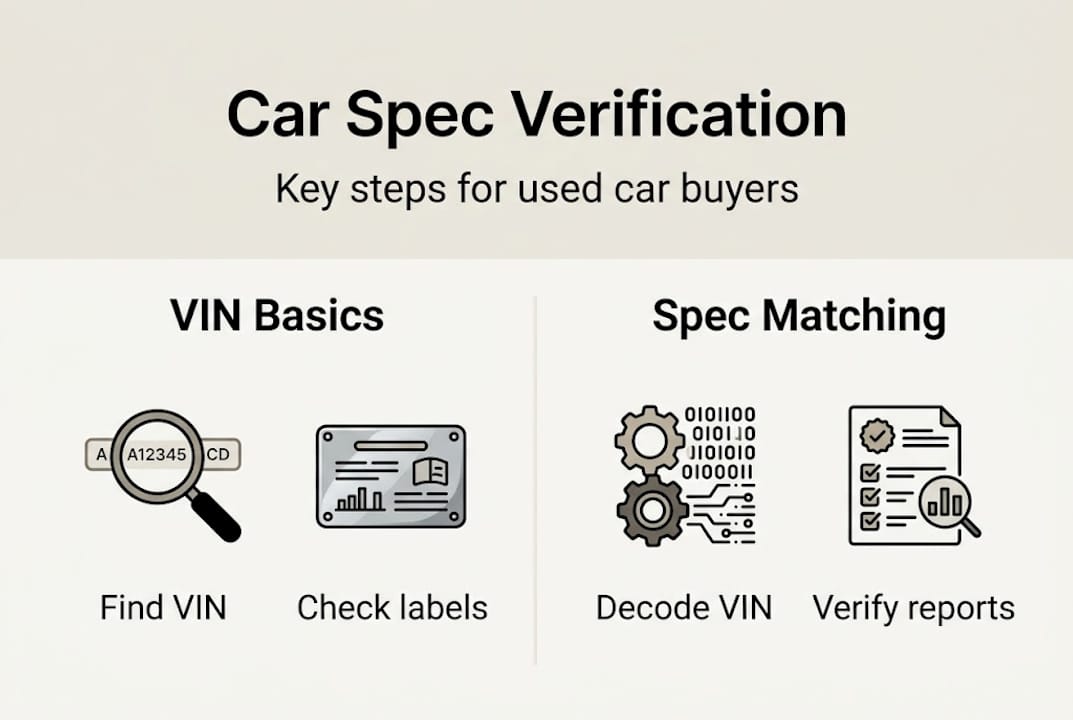
Decoding the VIN is not complicated once you understand the structure. Each position in the 17-character string carries specific information, and reading it correctly tells you whether the car in front of you matches what the seller claims.
How to decode the VIN step by step:
- Write down the VIN from the dashboard (visible through the windshield on the driver's side).
- Photograph the VIN plate so you have a permanent record.
- Check the door jamb sticker and confirm the number matches exactly.
- Check the engine block stamp. This one is harder to replace, which makes it the most reliable.
- Compare all three numbers against the title and registration documents.
If any number differs by even one character, stop. That mismatch is a serious red flag for VIN cloning or fraud, a practice where criminals place a legitimate VIN on a stolen vehicle.
Here's what each segment of the VIN actually tells you:
| VIN positions | Name | What it reveals |
|---|---|---|
| 1 to 3 | World Manufacturer Identifier (WMI) | Country and manufacturer |
| 4 to 8 | Vehicle Descriptor Section (VDS) | Model, body style, engine type |
| 9 | Check digit | Mathematical validation of the VIN |
| 10 | Model year | Year of manufacture |
| 11 | Plant code | Assembly plant location |
| 12 to 17 | Production sequence | Unique serial number |
The VIN segments at positions 1 to 3 identify the manufacturer, positions 4 to 8 cover model and engine, position 10 gives you the model year, and position 11 points to the assembly plant. Once you know this structure, you can read a VIN like a short biography of the car.
Pro Tip: The 9th digit is a checksum calculated using a specific mathematical formula. If you plug the VIN into the NHTSA decoder and it returns an error, the VIN itself may be fabricated. This is a fast, free way to catch fakes before you go any further.
For step-by-step car specs decoded from the VIN, the free NHTSA tool at vin.nhtsa.dot.gov is the most reliable starting point. It pulls directly from manufacturer data and flags any open recalls tied to that specific vehicle. Understanding how specs for smart buys work will also help you interpret what you find.
Step 2: Verify with official tools and reports
After decoding, it's time to see what deeper records have to say.
Decoding the VIN gives you the car's factory identity. But it doesn't tell you what happened to the car after it left the factory. That's where official tools and history reports come in.
The recommended order for running checks:
- Start with the free NHTSA VIN decoder for specs, safety equipment, and open recalls.
- Run the VIN through NMVTIS to check title status and salvage history.
- If the car passes both free checks, consider a paid report from Carfax or AutoCheck for a fuller picture.
- Review every entry on the report carefully, especially title transfers and odometer readings.
- Note any gaps in the service history timeline, since missing years can hide major repairs.
You can use free official tools like the NHTSA VIN decoder for specs and recalls and NMVTIS for title and salvage status before spending a dollar on paid reports.
| Tool | Cost | Best for | Limitation |
|---|---|---|---|
| NHTSA VIN decoder | Free | Specs, recalls, safety ratings | No accident or ownership history |
| NMVTIS | Free to low cost | Title, salvage, theft records | Varies by state reporting |
| Carfax | Paid | Accident history, service records | Relies on reported incidents only |
| AutoCheck | Paid | Auction records, score comparison | Less dealer network coverage |
Vehicle history reports from Carfax, AutoCheck, and NMVTIS are essential for uncovering accidents, title issues, and odometer discrepancies, while VIN decoders focus on specs.
Pro Tip: Never rely on a report the seller provides. Always run your own check directly from the official source. Sellers have been known to share outdated or selectively printed reports that omit damaging entries.
For a complete approach, follow the vehicle history checklist built for used car buyers, review the service history guide to understand what good maintenance records look like, and cross-reference findings using car record archives for any gaps the reports leave behind.
Step 3: Inspect, cross-verify, and spot red flags
You've confirmed details online. Now, see if the car matches up in the real world.
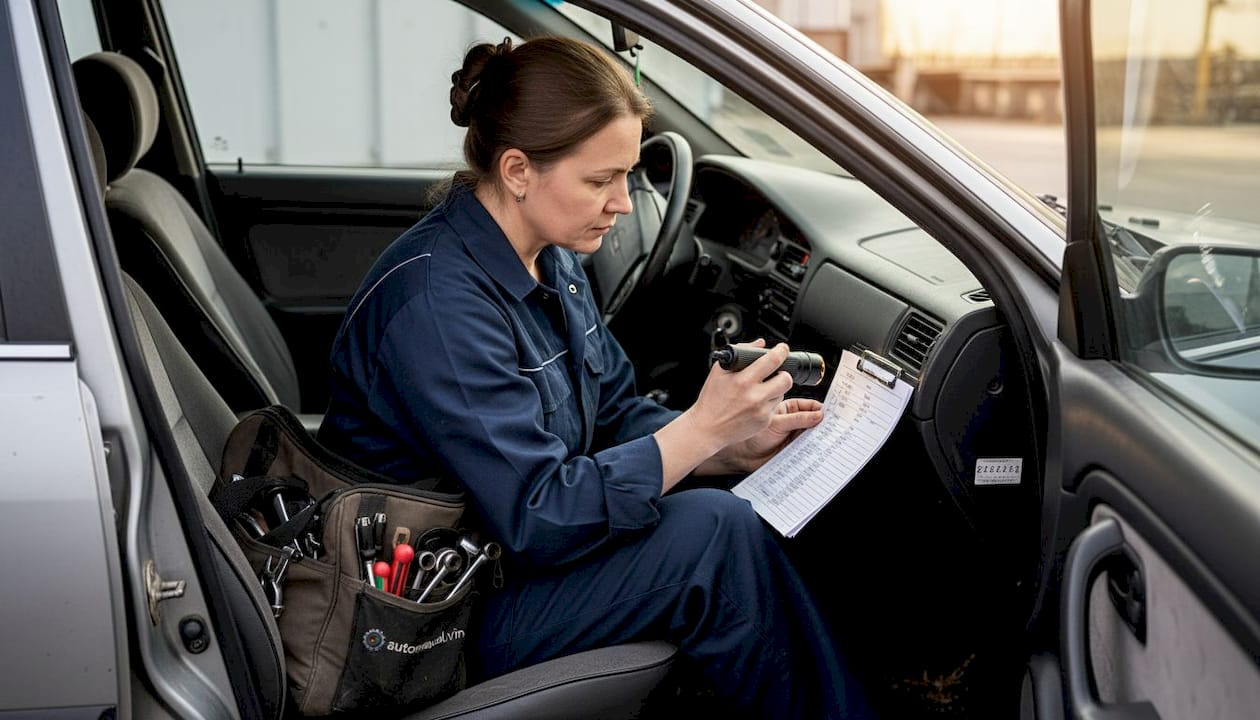
Digital records only capture what gets reported. Physical inspection catches what doesn't. These two layers together form a near-complete picture of the vehicle's true condition.
Physical inspection checklist by category:
- Exterior: Uneven panel gaps, mismatched paint sheen, overspray on trim or rubber seals
- Tires: Uneven wear patterns (suggests alignment or suspension problems), mismatched brands
- Underhood: Fluid levels and color, milky or foamy oil (coolant leak), cracked hoses, fresh paint over rust
- Interior: Musty or mildew smell (flood damage), waterlines on carpet or door panels, mismatched upholstery
- Undercarriage: Rust patterns inconsistent with age, fresh undercoating in unusual spots
- Documents: Title matches the VIN, seller name matches the title, no signs of alteration
The physical inspection checklist covers panel gaps, tire condition, engine fluids, and a test drive to catch noises and shifting problems that paperwork will never reveal.
Red flags that demand immediate caution:
- VINs that don't match across locations
- Titles with white-out, altered fonts, or lamination that hides the original text
- Odometer readings that don't align with wear on pedals, steering wheel, or seats
- Musty interior smell combined with rust under floor mats
- Seller reluctance to let you take the car to an independent mechanic
VIN cloning, title washing, odometer fraud, and flood damage are the four most common forms of used car fraud, and each leaves physical evidence that trained eyes can spot.
Cross-verification matters because up to 20% of minor incidents are never reported to insurance or official databases. That means a car with a clean history report can still carry hidden damage. Checking how specs impact buying decisions will help you weigh what you find against fair market value.
Pro Tip: Book a pre-purchase inspection with an independent mechanic, not one recommended by the seller. A $100 to $150 inspection can save you thousands by catching issues that no database will ever show.
Why spec verification beats 'gut feeling' every time
Most buyers who get burned weren't careless people. They were trusting people. They believed the seller's story, accepted the clean title at face value, or figured the car felt right during the test drive. The problem is that modern fraud is designed to pass those casual checks.
We've seen cases where a no report is 100% complete, which is exactly why cross-verifying multiple sources combined with a pre-purchase inspection by a mechanic is the only real protection, with NMVTIS being the most reliable for title status.
The process described in this guide isn't about distrust. It's about building a defense that no single data point can provide alone. Each step, the VIN check, the official tool run, the physical inspection, adds a layer that covers the gaps left by the others. Understanding how specs inform smart buying is the mindset shift that separates buyers who get great deals from buyers who get expensive lessons.
Gut feeling is useful for choosing a color. It is not a substitute for verified data when you're spending thousands of dollars.
Store, manage, and secure your car's verified specs
For those who don't want to repeat this process for every car or risk losing paperwork, here's a smarter solution.
AutoManual gives you a free digital garage where every spec, document, and verification detail lives in one place. Once you've done the hard work of verifying a vehicle, you shouldn't have to hunt for those records again.
Create a digital car profile for each vehicle you own or are considering. Store your decoded VIN results, history report summaries, inspection notes, and maintenance records all together. When it's time to sell, share the full verified profile with buyers instantly. No signup required to decode a VIN and start building your profile today.
Frequently asked questions
What's the safest way to check if a car's VIN has been tampered with?
Match the VIN in three or more locations on the car and across all documents. Any mismatch, even one character, is a red flag for cloning and should stop the purchase immediately.
Are free VIN decoders as reliable as paid history reports?
Free decoders like the NHTSA tool are accurate for specs and open recalls, but paid reports from Carfax or AutoCheck add accident history, ownership records, and odometer data that free tools simply don't cover.
Can car specs or accident history be hidden from official records?
Yes. Because no report is fully complete, some incidents go unreported entirely, which is why combining digital checks with a hands-on physical inspection gives you the most complete picture.
How do car enthusiasts get the most precise features or OEM options?
For factory-exact details, reference manufacturer sites and OEM VIN charts directly, since general history tools often omit optional packages or trim-level specifics that matter most to enthusiasts.