
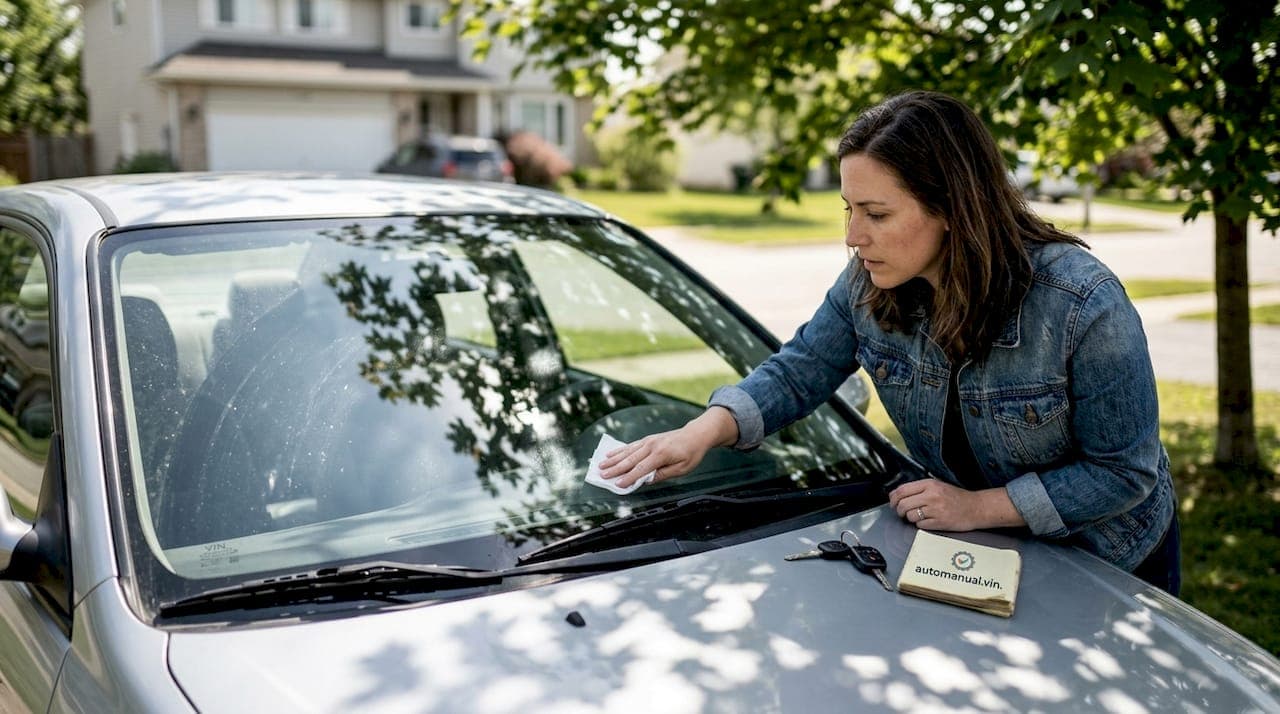
A single 17-character code holds more power over your car's value, legal standing, and safety than any paint job or interior upgrade ever could. That code is the Vehicle Identification Number, or VIN, and it is the backbone of car identity. Whether you are buying a used car, selling one, or simply trying to stay on top of ownership, understanding what your VIN reveals and how to protect it can save you thousands of dollars and serious legal headaches. This guide breaks it all down, step by step.
Table of Contents
- What is car identity and why does it matter?
- Breaking down the VIN: The anatomy of car identity
- Locating and verifying your car's VIN
- Applying car identity: Smart steps for buyers and owners
- Streamline car identity management with AutoManual
- Frequently asked questions
Key Takeaways
| Point | Details |
|---|---|
| VIN defines car identity | Understanding your vehicle’s VIN is essential for recognizing its specs, history, and authenticity. |
| Multi-location verification | Check the VIN in multiple spots and in official databases to avoid fraud and cloned vehicles. |
| Digital tools add security | Using VIN scanning apps and records simplifies ownership and protects you when buying or selling. |
| History checks are vital | Always review a car’s history tied to its VIN for smarter, safer buying decisions. |
What is car identity and why does it matter?
Car identity is not just a title document sitting in your glove box. It is the full picture of what a vehicle is, where it came from, and what has happened to it. That picture includes physical attributes like make, model, and color, legal documents like the title and registration, and most critically, the VIN.
The VIN is the internationally standardized key that ties everything together. Every legitimate vehicle manufactured since 1981 carries one, and no two vehicles share the same number. Think of it like a social security number for your car. It follows the vehicle for its entire life, from the factory floor to every owner, accident, and repair along the way.
Here is why car identity matters across every stage of ownership:
- Buying: Confirms the car is what the seller claims it to be
- Insuring: Insurers use the VIN to verify specs and set accurate premiums
- Selling: A clean, verifiable VIN history increases resale value
- Theft protection: Authorities use VINs to track and recover stolen vehicles
- Recalls: Manufacturers issue recall notices tied directly to specific VINs
One serious risk that buyers often overlook is VIN cloning. This is when a thief copies a legitimate VIN from one vehicle and attaches it to a stolen car of the same make and model. The VIN cloning risk is real, and multi-location verification combined with NMVTIS database checks are the most reliable ways to catch it before you hand over any money.
Always cross-reference the VIN on the physical vehicle with official databases before completing any purchase. A mismatch anywhere is a red flag you cannot afford to ignore.
Using a solid vehicle history checklist and understanding the car title process are two foundational steps every buyer should take before signing anything.
Breaking down the VIN: The anatomy of car identity
The VIN is not a random string of letters and numbers. Every single character has a defined meaning, standardized under ISO 3779 and ISO 3780 since 1981. Once you know how to read it, you can extract a surprising amount of information without running a single database search.
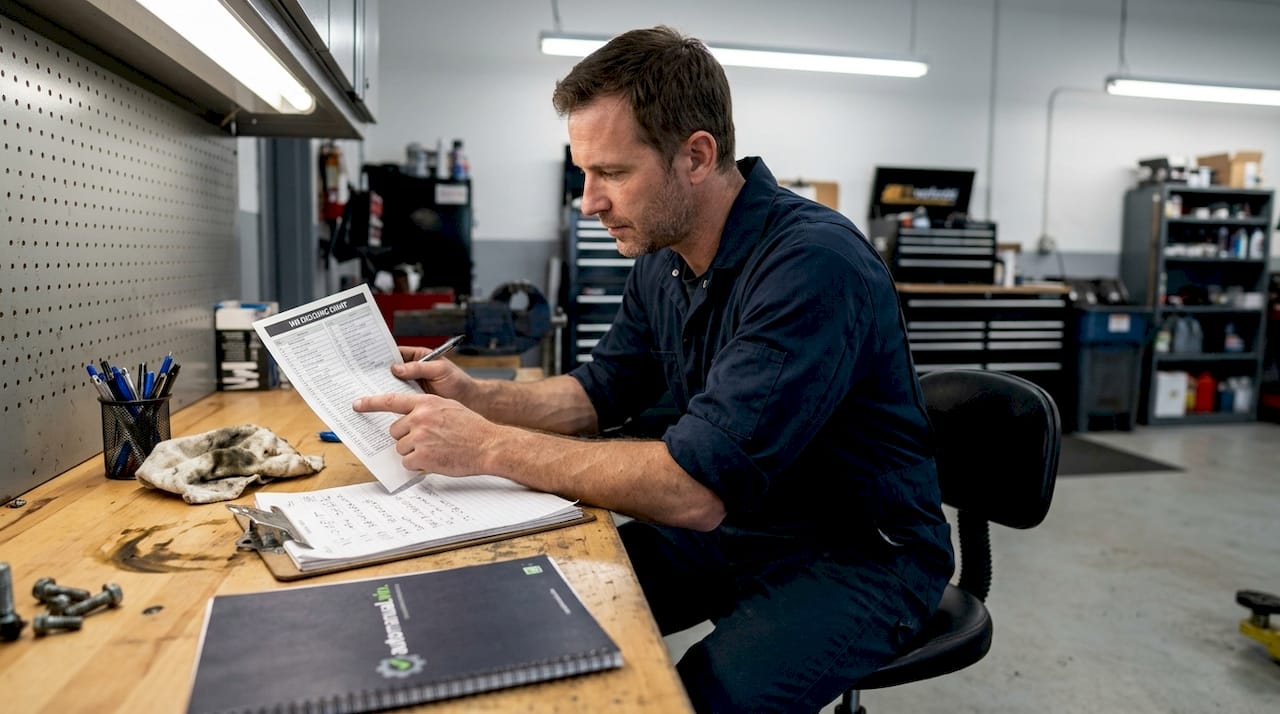
Here is how the 17-position VIN structure breaks down:
| VIN positions | Segment name | What it tells you |
|---|---|---|
| 1 to 3 | World Manufacturer Identifier (WMI) | Country of origin and manufacturer |
| 4 to 8 | Vehicle Descriptor Section (VDS) | Body style, engine type, restraint systems |
| 9 | Check digit | Mathematical validation of the VIN's authenticity |
| 10 | Model year | The year the vehicle was manufactured |
| 11 | Plant code | Which factory built the vehicle |
| 12 to 17 | Vehicle Identifier Section (VIS) | Unique serial number for that specific unit |
Let's walk through a real example. Take a VIN like 1HGCM82633A004352. Here is how to read it step by step:
- Position 1 ("1"): Country code for the United States
- Position 2 ("H"): Manufacturer code for Honda
- Position 3 ("G"): Vehicle type, in this case a passenger car
- Positions 4 to 8 ("CM826"): Specific model, body style, and engine details
- Position 9 ("3"): Check digit, used to verify the VIN is not fabricated
- Position 10 ("3"): Model year 2003
- Position 11 ("A"): Assembly plant in Marysville, Ohio
- Positions 12 to 17 ("004352"): The 4,352nd vehicle off that production line
Knowing this structure helps you spot cloned or altered VINs. If the check digit does not match the mathematical formula applied to the other 16 characters, the VIN is invalid. That is a built-in fraud detection tool most buyers never use. Pairing this knowledge with a car manuals guide and the ability to compare car models gives you a much sharper eye when evaluating any vehicle.
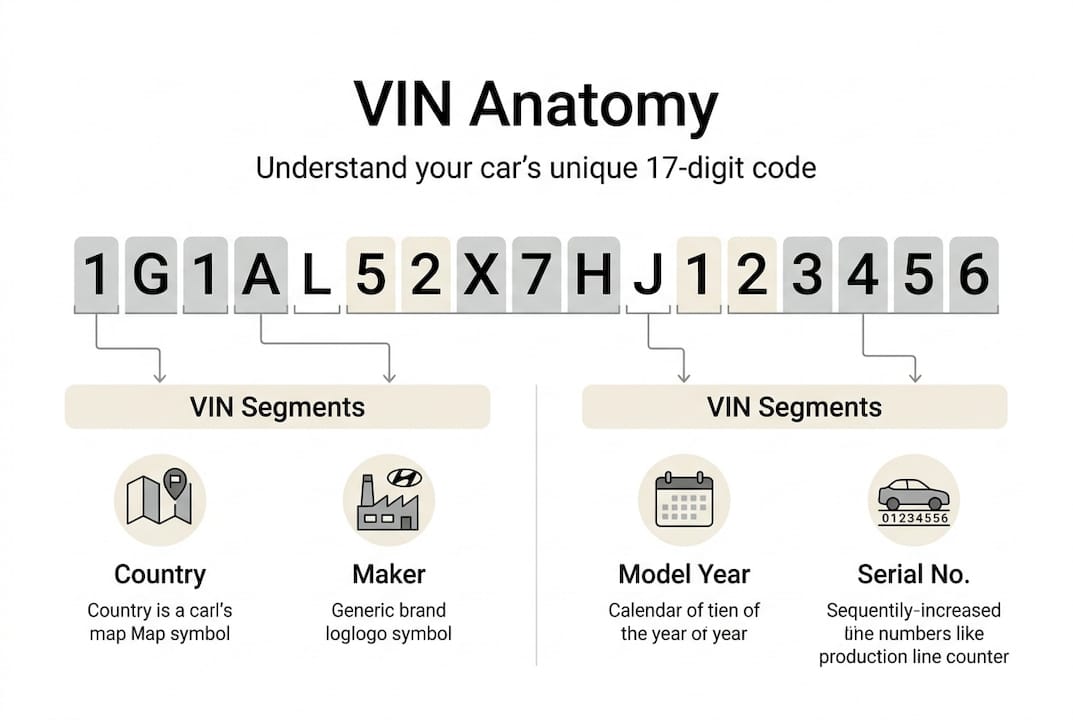
Locating and verifying your car's VIN
Knowing what the VIN means is only half the job. You also need to know where to find it and how to confirm it is legitimate.
The primary VIN locations on most vehicles include:
- Dashboard: Visible through the lower left corner of the windshield from outside the car
- Driver's door jamb: Stamped on a sticker or metal plate inside the door frame
- Engine block: Stamped directly into the metal near the front of the engine
- Vehicle frame: Often found near the firewall or under the hood
Why does it matter that the VIN appears in multiple places? Because tampering with all of them is much harder than altering just one. If the VIN on the dashboard does not match the one on the engine block, something is wrong.
Here is a comparison of physical versus digital verification methods:
| Verification method | What it checks | Best used for |
|---|---|---|
| Physical inspection | Matching stamps across all VIN locations | Spotting tampering or cloning on-site |
| NMVTIS database check | Title history, theft records, total loss reports | Pre-purchase due diligence |
| State DMV lookup | Registration and ownership records | Confirming legal ownership |
| VIN decoder tool | Specs, model year, manufacturer details | Quick identity confirmation |
| INTERPOL database | International theft records | Cross-border vehicle purchases |
According to VIN authentication experts, combining physical inspection with database cross-checks is the most reliable approach to confirming vehicle identity. No single method alone is enough.
Pro Tip: Before buying any used car, check every physical VIN location yourself and run the number through at least two independent databases. Spending 20 minutes on this can prevent months of legal and financial trouble.
Using VIN scanning tools makes the digital side of this process fast and free. Pairing that with solid car recordkeeping habits ensures you always have a verified paper trail.
Applying car identity: Smart steps for buyers and owners
Understanding car identity is valuable. Applying it consistently is what actually protects you. Whether you are buying, selling, or simply managing a vehicle you already own, here are the steps that matter most.
When buying a used car:
- Ask the seller for the VIN before you even see the car in person
- Run the VIN through a history service to check for accidents, theft, and title issues
- Physically inspect all VIN locations on the vehicle and confirm they match
- Verify the VIN against the title, registration, and insurance documents
- Use a VIN decoder to confirm the specs match what the seller is advertising
- Check the NMVTIS database for any red flags on title or total loss history
Using a detailed buyer checklist alongside these steps gives you a structured process that leaves nothing to chance.
When you already own a vehicle:
Car identity management does not stop at purchase. Ongoing ownership tracking tied to your VIN keeps your records clean and your resale value strong. Every oil change, tire rotation, and repair logged under your VIN creates a documented service history that buyers will pay more for.
Insurance claims also go smoother when your records are organized by VIN. If your car is ever stolen, having a complete digital profile makes it far easier for authorities to locate and recover it.
Pro Tip: Record every maintenance event and service appointment with the date, mileage, and service provider, all linked to your VIN. When it comes time to sell, that documented history can add hundreds or even thousands of dollars to your asking price.
Digital tools like AutoManual's VIN scanner make it easy to build and maintain this kind of organized profile without any technical expertise.
Streamline car identity management with AutoManual
You now know what car identity means, how to read a VIN, where to find it, and how to use it at every stage of ownership. The next logical step is putting a reliable system in place so you never have to scramble for this information when it matters most.
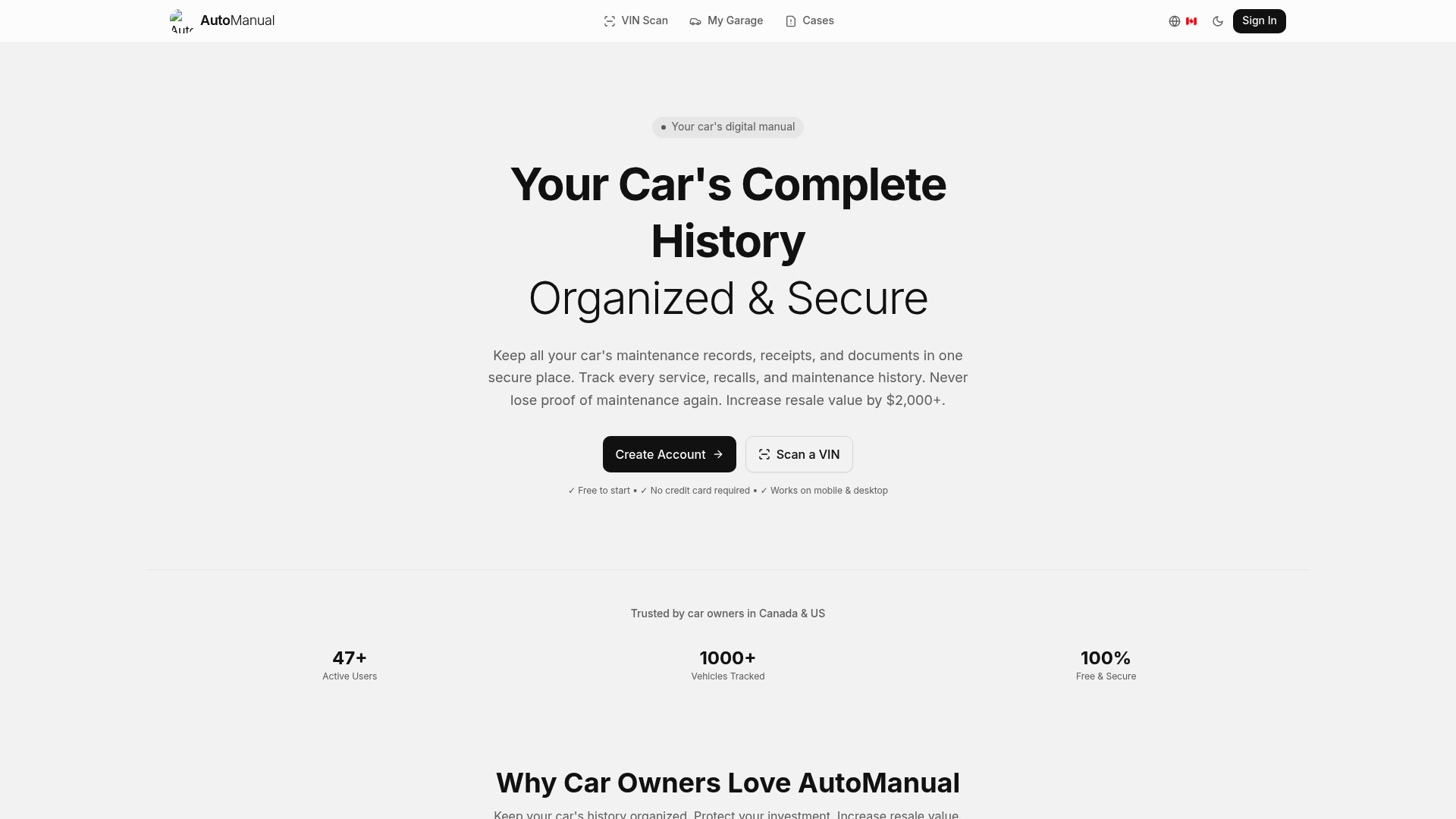
AutoManual is a free VIN decoder and digital car management platform built exactly for this purpose. Enter any VIN and instantly get full technical specs, no signup required. It also works as a digital garage where you can track all your vehicles in one place, including maintenance history, ownership documents, and service records. Whether you are verifying a car before purchase or organizing your current fleet, AutoManual's VIN scanning tool gives you the clarity and confidence to make smarter decisions every time.
Frequently asked questions
What information does a VIN reveal about a car?
A VIN reveals the manufacturer, country of origin, model year, production plant, vehicle specs, and a unique serial number. The 17-position structure encodes all of this in a standardized format used worldwide.
Where can I find my car's VIN?
Most cars have the VIN in at least four places: the lower left dashboard (visible through the windshield), the driver's door jamb, the engine block, and the vehicle frame. The standard VIN locations are consistent across most manufacturers.
Why is VIN verification important when buying a used car?
It confirms the car is not stolen, cloned, or misrepresented, and ensures the specs match what you are paying for. Physical and database checks together provide the most reliable fraud protection available to private buyers.
How can digital tools help manage car identity?
Digital platforms let you decode specs instantly, track maintenance by VIN, and store ownership documents in one place for easy access during insurance claims or resale. VIN decoding tools have made this process accessible to any car owner, not just professionals.