

TL;DR:
- Preventive maintenance and digital recordkeeping save money and extend car lifespan.
- Regular oil changes, belt inspections, and fluid checks are top priorities for cost-effective care.
- Using digital tools and proactive habits enables smarter ownership amid rising repair costs.
Keeping a car in good shape costs more every year. Average annual maintenance now sits at $900, and that number keeps climbing as the U.S. fleet ages. With repair bills rising and schedules getting busier, a reactive approach to car care is becoming a real financial risk. The good news is that a few smart, preventive habits can make a significant difference in both your repair bills and how long your car lasts. This guide walks you through the most practical maintenance strategies for 2026, from understanding what your car actually needs to using the latest digital tools to stay ahead of problems.
Table of Contents
- Understand your maintenance needs: Types and schedules
- Stay ahead with smart tracking and recordkeeping
- Prioritize these essential tasks to prevent costly repairs
- How your car's age, model, and usage affect maintenance costs
- Leverage technology: New diagnostic and maintenance tools for 2026
- Our take: Why proactive, tech-savvy car owners will win in 2026
- Simplify maintenance and safeguard your car's value
- Frequently asked questions
Key Takeaways
| Point | Details |
|---|---|
| Budget realistically | Set aside about $900 each year for maintenance, adjusting for your car’s age and model. |
| Track maintenance digitally | Use apps or digital records to prevent missed tasks and lower repair costs. |
| Prioritize preventive care | Stick to essential maintenance like fluids, filters, and belts to stop expensive issues before they start. |
| Leverage new tech | Smart diagnostics and digital reminders make car care easier and can boost your car's longevity. |
Understand your maintenance needs: Types and schedules
To save money, you first need a clear map of what your car requires. Car maintenance falls into two broad categories: preventive and corrective. Preventive maintenance means doing scheduled tasks before anything breaks. Corrective maintenance is what happens after something goes wrong. The goal is to maximize the first and minimize the second.
Understanding maintenance types explained is the first step toward smart budgeting. Most manufacturer schedules follow mileage-based intervals, though age matters just as much for older vehicles. Here's a quick look at common tasks and when they typically fall due:
| Task | Typical interval |
|---|---|
| Oil change | Every 5,000 to 7,500 miles |
| Tire rotation | Every 5,000 to 8,000 miles |
| Air filter replacement | Every 15,000 to 30,000 miles |
| Brake inspection | Every 20,000 miles or annually |
| Coolant flush | Every 30,000 miles |
| Timing belt replacement | Every 60,000 to 100,000 miles |
High-priority tasks every owner should follow closely include:
- Oil and filter changes: The single most impactful preventive task for engine life.
- Tire pressure and rotation: Uneven wear leads to early replacements and poor fuel economy.
- Brake pad inspection: Worn pads are a safety issue and damage rotors if ignored.
- Fluid level checks: Coolant, transmission fluid, and brake fluid all degrade over time.
- Battery testing: Batteries rarely give much warning before they fail.
The aging U.S. vehicle fleet is pushing the average annual cost to $900, which means skipping small preventive tasks now creates larger bills later. Using a structured car maintenance checklist removes the guesswork and keeps you on track without needing to memorize every interval.
One important nuance: manufacturer schedules are starting points, not rigid rules. If you drive in stop-and-go traffic, extreme heat, or dusty conditions, your car may need more frequent service than the handbook suggests. Adjusting your schedule to your actual driving conditions is what separates smart owners from reactive ones.
Stay ahead with smart tracking and recordkeeping
Knowing your maintenance basics is one thing. Keeping up with them is another. Without records, it's nearly impossible to know exactly when your oil was last changed, whether the transmission fluid has ever been replaced, or what that strange noise from last spring turned out to be.
Check engine repairs now average $415, and many of those repairs trace back to maintenance tasks that were simply forgotten or delayed. A good recordkeeping habit closes that gap.
Here's what to log after every service visit:
- Date and mileage at the time of service
- Work performed, including parts replaced and fluids topped or changed
- Shop or mechanic name and total cost
- Next recommended service based on the shop's guidance or the owner's manual
- Any warnings or issues flagged during the visit, even if not addressed yet
The importance of maintenance tracking goes beyond avoiding breakdowns. A clean, complete record boosts resale value because buyers and dealers can verify the car's history. It also helps you negotiate more confidently at the shop, since you'll know exactly what has and hasn't been done.
Pro Tip: If you're switching to digital recordkeeping, start by photographing every paper receipt and service sticker you already have. That backlog creates your baseline, and everything from that point forward gets logged digitally.
Good ownership tracking tips also include storing documents like registration, insurance, and warranty papers in the same digital system as your maintenance records. When everything lives in one place, there's no scrambling when you need it most.
Prioritize these essential tasks to prevent costly repairs
Once your records are in order, focus on the smartest tasks to maximize your maintenance budget. Not all maintenance is created equal. Some tasks carry massive preventive power relative to their cost, while others are more routine. Knowing which is which helps you allocate your budget wisely.
Stat to remember: Major repairs like check engine fixes now average $415. Spending $30 to $50 on routine maintenance to avoid a $415 repair is one of the clearest financial wins available to any car owner.
The five highest-impact preventive tasks are:
- Regular oil changes: Old oil loses viscosity and causes engine wear that compounds over time.
- Belt and hose inspection: A snapped timing belt can destroy an engine in seconds and often costs $1,000 or more to fix.
- Cabin and engine air filter replacement: Dirty filters hurt fuel economy and force your engine to work harder.
- Brake fluid flush: Moisture-contaminated brake fluid reduces stopping power and leads to costly brake system failures.
- Spark plug replacement: Worn plugs reduce fuel efficiency and can damage catalytic converters if left too long.
Warning signs you should never ignore include: vibrations while braking, whining sounds from the engine, dashboard warning lights that stay on, fluid spots under the car, and unusual smells like burning rubber or sweet coolant.
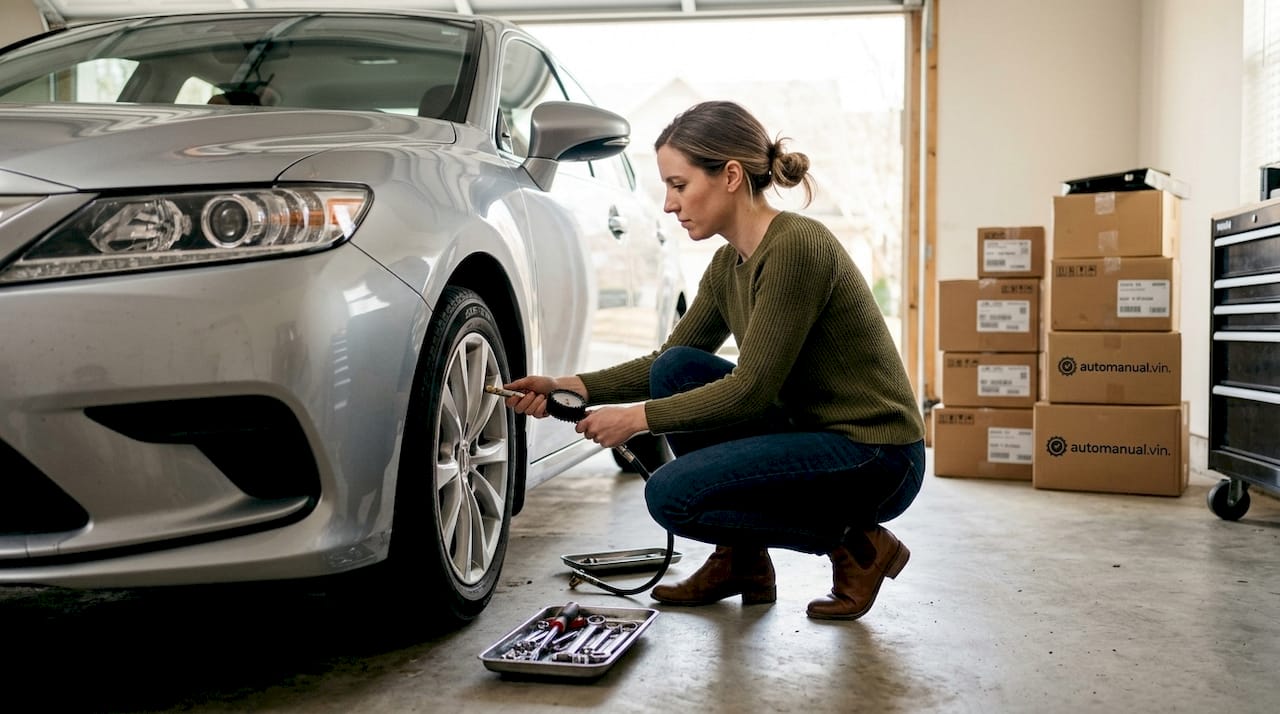
Pro Tip: Cross-reference your car's service schedule from the maintenance step-by-step guide with what's actually in your owner's manual. Manufacturers sometimes differ from generic advice, and your car's actual manual always wins.
If you've lost your manual or bought a used car without one, a car manuals guide can help you track down the right documentation for your specific model and year.
How your car's age, model, and usage affect maintenance costs
Not all cars cost the same to keep healthy. Here's what matters most when planning your maintenance budget.
As the U.S. fleet ages, reaching $900 annually on average, the gap between maintaining a newer vehicle and an older one becomes more obvious. Here's a realistic comparison:
| Factor | Newer vehicle (under 5 years) | Older vehicle (over 10 years) |
|---|---|---|
| Typical annual maintenance cost | $500 to $700 | $900 to $1,500+ |
| Parts availability | Easy | Can be limited |
| Warranty coverage | Often yes | Rarely |
| Failure frequency | Low | Higher |
| Tech integration | Built-in diagnostics | Requires external tools |
"The best time to start proactive maintenance is before you notice any problems. The second best time is right now."
High-mileage drivers face compounding wear that accelerates timelines on every interval. If you drive 20,000 miles per year, your oil change schedule isn't the same as someone driving 8,000. Your usage dictates your schedule, not just your car's age.
For older cars, the smartest strategy is to compare models and costs before investing heavily in a vehicle that may not justify the repairs. Some models have exceptional parts availability and long track records of reliability. Others become expensive to maintain past a certain mileage threshold.
A complete service history tips guide can help you understand what to look for if you're evaluating a used car or planning to sell your own. And archiving car documents properly protects both your investment and your ability to prove maintenance history at resale time.
Leverage technology: New diagnostic and maintenance tools for 2026
Today's innovations make car care easier than ever, if you know what to use. Rising maintenance costs industry-wide have pushed more car owners toward digital solutions, and the tools available in 2026 are genuinely impressive even for people who don't consider themselves car enthusiasts.
Here are four practical tech tools worth adding to your maintenance routine:
- OBD-II diagnostic adapters: These plug into a port under your dashboard (all cars from 1996 onward have one) and connect to a smartphone app. They read diagnostic trouble codes before your check engine light even triggers, giving you a head start on potential problems.
- Maintenance reminder apps: Apps like Carfax Car Care or AutoManual let you input your car's details and schedule automated reminders for upcoming service intervals based on your actual mileage.
- Tire pressure monitoring apps: While many newer cars have built-in sensors, older vehicles can use Bluetooth-enabled valve cap sensors that sync to your phone for real-time readings.
- Digital garage platforms: Tools that let you manage all your vehicles in one place, storing specs, service records, and documents digitally so you never lose track of what's been done.
Getting started doesn't require technical knowledge. If you can use a smartphone, you can use these tools. Many car finder apps also layer in vehicle history and reliability data, which helps you make smarter decisions about both buying and maintaining your current car. The key is picking one or two tools and using them consistently rather than collecting apps you never open.
Our take: Why proactive, tech-savvy car owners will win in 2026
Here's an uncomfortable truth: most car owners still wait for something to break before they act. That's not a personal failing; it's just how most of us were taught to think about cars. But in 2026, with repair bills climbing and parts costs up, the reactive approach is genuinely expensive.
What we see is a clear divide forming between owners who use tracking for value and safety and digital records proactively and those who rely on memory and luck. The first group catches problems early, maintains resale value, and rarely faces a $400-plus surprise repair. The second group spends more over time and gets less for their car when they sell.
The barrier to joining the first group has never been lower. You don't need mechanical skill. You need a consistent habit, a few good digital tools, and the willingness to schedule an appointment before a warning light demands it. The data, the technology, and the savings all point in the same direction.
Simplify maintenance and safeguard your car's value
If you're ready to put these tips into action, AutoManual makes it easier than ever to start.
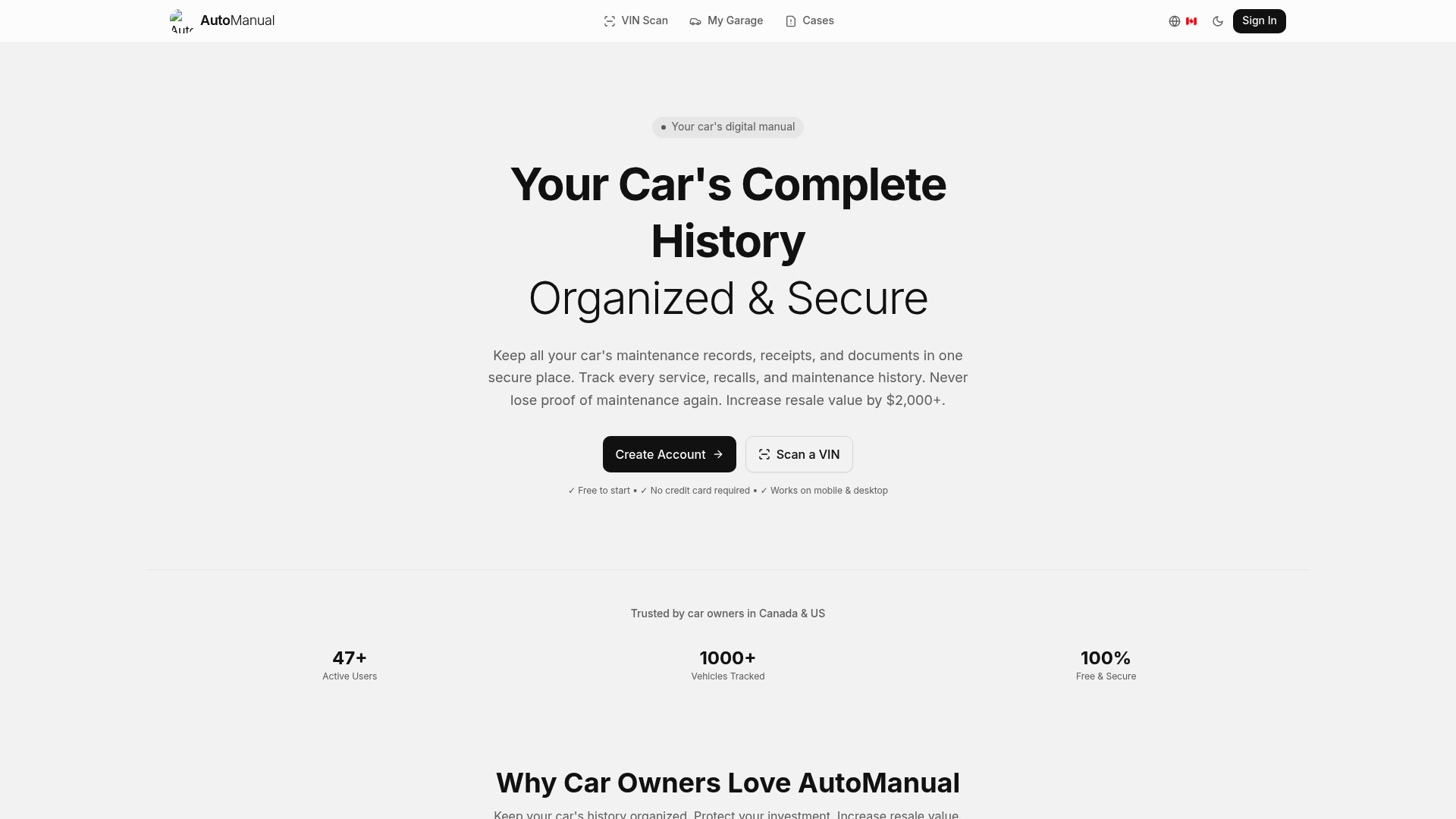
AutoManual is a free platform where you can decode any VIN instantly to get full technical specs, no signup required. It also works as a digital garage, letting you track maintenance history, store documents, and manage ownership details for all your vehicles in one place. When everything is organized, staying proactive stops feeling like a chore. Build your car's digital profile today and take the first step toward smarter, more affordable car ownership in 2026.
Frequently asked questions
How much should I budget for car maintenance in 2026?
Plan on around $900 per year for the average U.S. vehicle, but costs may be higher for older cars or luxury models.
What is the most important maintenance task for my car?
Regular oil changes, fluid checks, and replacing belts and filters are essential to prevent expensive repairs.
How can I reduce my yearly maintenance expenses?
Stay proactive with preventive maintenance, keep accurate records, and use digital tools to avoid costly surprises. Early attention to problems consistently saves money over time.
Are digital maintenance tools worth it?
Yes. Adopting digital solutions helps you track tasks, schedule reminders, and catch issues early, making upkeep easier and more cost-effective.