

Most car buyers spend over 12 hours researching a vehicle yet still walk away unsure if they got a fair deal. That gap between effort and confidence is exactly where modern car finder tools step in. 88% of buyers research vehicles online before ever visiting a dealership, yet many still miss critical spec details, price trends, or hidden history issues. This article breaks down what car finder tools actually do, which features matter most, and how you can use them to make faster, smarter, and more confident buying decisions.
Table of Contents
- Why car finder tools matter for buyers today
- Core features of modern car finder tools
- How car finder tools enhance decision-making
- Tips for making the most of car finder tools
- Managing multiple cars and records with digital tools
- Start your smarter car search today
- Frequently asked questions
Key Takeaways
| Point | Details |
|---|---|
| Saves time | Car finder tools streamline research, saving hours by matching your exact needs quickly. |
| Enhances accuracy | Advanced features and AI increase confidence by improving the accuracy of pricing and specs. |
| Centralizes management | Digital platforms make it easy to track, maintain, and organize multiple vehicles and records. |
| Empowers decisions | In-depth data on condition, trends, and history helps you make smarter buying choices. |
Why car finder tools matter for buyers today
The used car market has exploded in complexity. Thousands of listings across dozens of platforms, each with different pricing, condition descriptions, and spec details, make it nearly impossible to compare vehicles without a structured approach. Car finder tools were built to solve exactly this problem.
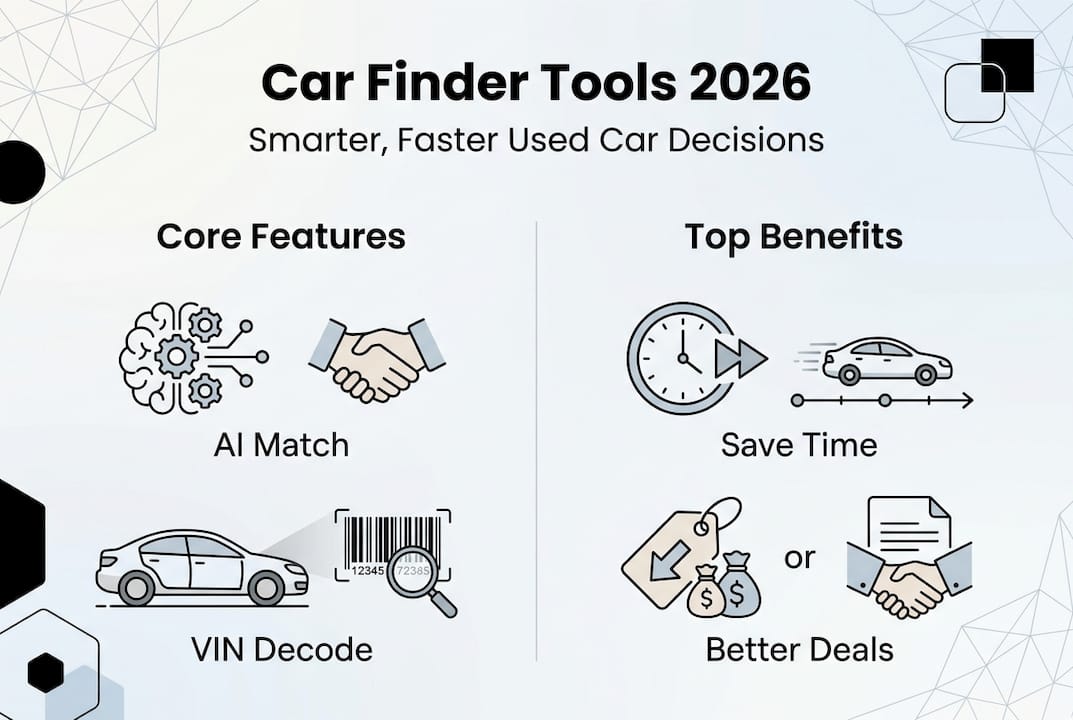
Modern platforms AI-match buyers to vehicles based on budget, location, and desired features in seconds. Instead of manually filtering through hundreds of listings, you get a curated shortlist that actually fits your needs. That alone saves hours of frustrating scrolling.
"The right tool doesn't just find you a car. It finds you the right car at the right price, with the data to back it up."
Here's what centralized car finder tools help you do faster:
- Filter by must-have features like AWD, towing capacity, or fuel type
- Compare pricing across regions to spot overpriced listings instantly
- Access condition summaries without calling every seller individually
- Compare car models side by side using standardized spec data
- Identify market trends before making an offer
The result is less confusion, fewer wasted test drives, and a much clearer picture of what your money actually buys.
Core features of modern car finder tools
Not all car finder tools are built the same. The best ones combine several powerful features that work together to give you a complete picture of any vehicle you're considering.
Modern tools include inventory maps, AI recommendations, condition reports, price trend graphs, VIN decodes, and predictive analytics. That's a lot of ground covered in one platform.
Here's a quick comparison of what separates basic search tools from advanced car finder platforms:
| Feature | Basic search tool | Advanced car finder |
|---|---|---|
| Inventory search | Yes | Yes, with interactive maps |
| AI recommendations | No | Yes, budget and location aware |
| Condition reports | No | Yes, detailed equipment data |
| Price trend graphs | No | Yes, with resale forecasting |
| VIN decoding | No | Yes, instant spec lookup |
| Predictive analytics | No | Yes, value and depreciation |
Here's how to use these features in a logical order during your search:
- Start with AI-powered inventory search to build your shortlist
- Review condition and equipment reports for each candidate
- Check price trend graphs to understand fair market value
- Run a VIN decoder to pull full technical specs instantly
- Cross-reference vehicle history reports for accidents, title issues, and service records
- Use predictive analytics to estimate future resale value before you commit
Pro Tip: Always run the VIN decode before scheduling a test drive. You'll know the exact trim level, factory options, and original specs before you even see the car in person. This prevents sellers from misrepresenting what's actually included.
How car finder tools enhance decision-making
Features are only useful if they change outcomes. Here's where car finder tools genuinely move the needle for buyers.
Price transparency is the biggest win. When you can see a vehicle's price history alongside comparable listings, overpaying becomes much harder. Granular equipment data improves price prediction accuracy by 3.27% MAE, which translates to real dollars saved on a $25,000 purchase.
"Data-backed buying isn't just for professionals. Any buyer with the right tools can negotiate from a position of knowledge."
Here's how each core benefit maps to a real buying outcome:
| Benefit | What it prevents | Real-world impact |
|---|---|---|
| Value prediction | Overpaying | Stronger negotiation position |
| AI spec matching | Wrong trim or features | No post-purchase regret |
| Condition reports | Hidden mechanical issues | Fewer surprise repair bills |
| Price history graphs | Seasonal price traps | Buy at the right time |
| Comprehensive vehicle records | Title fraud or odometer rollback | Legal and financial protection |
Accuracy matters too. AI systems that analyze detailed equipment lists, not just make and model, produce far more reliable valuations. A base trim and a fully loaded version of the same car can differ by $8,000 or more. Tools that account for those differences protect you from paying loaded prices for a stripped-down vehicle.
Efficiency is the third major gain. Instead of spending a weekend visiting dealerships, you can eliminate 80% of candidates from your couch. That's not laziness. That's smart resource allocation.
Tips for making the most of car finder tools
Knowing the tools exist is one thing. Using them well is another. Here's how to get the most out of every search session.
- Cross-verify title and accident data with official sources like your state DMV or NMVTIS. Tools centralize information, but cross-verification remains essential for accuracy on critical records.
- Use at least two platforms for price validation. One platform's algorithm may favor certain regions or listing types. Comparing two gives you a more honest market picture.
- Run a VIN decode on every serious candidate. You'll catch spec mismatches, recall status, and factory option discrepancies before wasting time on a test drive.
- Save your searches and revisit them weekly. Price drops, new listings, and market shifts happen fast. Organized saved searches let you track maintenance digitally and spot trends over time.
- Watch for red flags. Mismatched VIN specs, inconsistent mileage across listings, or a history that skips years are all warning signs worth investigating before you proceed.
Pro Tip: Build a simple spreadsheet with your top five candidates. Log the VIN, asking price, mileage, and any red flags. This turns your research into a structured ownership tracking process that's easy to review before making a final call.
Here are the most common mistakes buyers make even when using car finder tools:
- Trusting a single platform's valuation without checking competitors
- Skipping the VIN decode because the listing looks clean
- Ignoring equipment-level details that affect real-world value
- Failing to check recall status before purchase
- Not saving search history, which makes it impossible to track price changes
Avoiding these mistakes takes less than 20 extra minutes per vehicle. That's a small investment compared to the cost of a bad purchase.
Managing multiple cars and records with digital tools
For car enthusiasts and multi-car households, the challenge isn't just finding one good vehicle. It's keeping track of everything across several cars at once. Digital car management tools solve this in ways that a folder of paper receipts simply can't.
A central dashboard lets you store specs, maintenance records, insurance documents, and ownership details for every vehicle you own. No more digging through glove compartments or trying to remember when the last oil change happened.
Here's what a well-organized digital garage gives you:
- Automated service reminders so nothing slips through the cracks
- Recall alerts tied directly to each vehicle's VIN
- Registration renewal tracking across multiple cars
- A complete digital recordkeeping guide approach that makes resale documentation effortless
- Total cost of ownership tracking, including depreciation over time
When it's time to sell, a buyer who sees a complete, organized digital history is far more likely to pay full asking price. Documented maintenance builds trust instantly. Centralizing vehicle management requires diligent recordkeeping to stay accurate long-term, but the payoff at resale time is significant.
Pro Tip: Add every car to your digital garage the day you buy it. Enter the VIN, upload the purchase documents, and log the current mileage. Starting clean makes every future update take less than two minutes.
For enthusiasts tracking project cars, daily drivers, and weekend vehicles simultaneously, this kind of organized system is the difference between knowing your fleet and guessing about it.
Start your smarter car search today
Everything covered in this article points to one practical next step: stop searching blind and start using tools built for exactly this kind of research. AutoManual gives you free, instant access to full vehicle specs the moment you enter a VIN. No account required, no paywalls, no waiting.
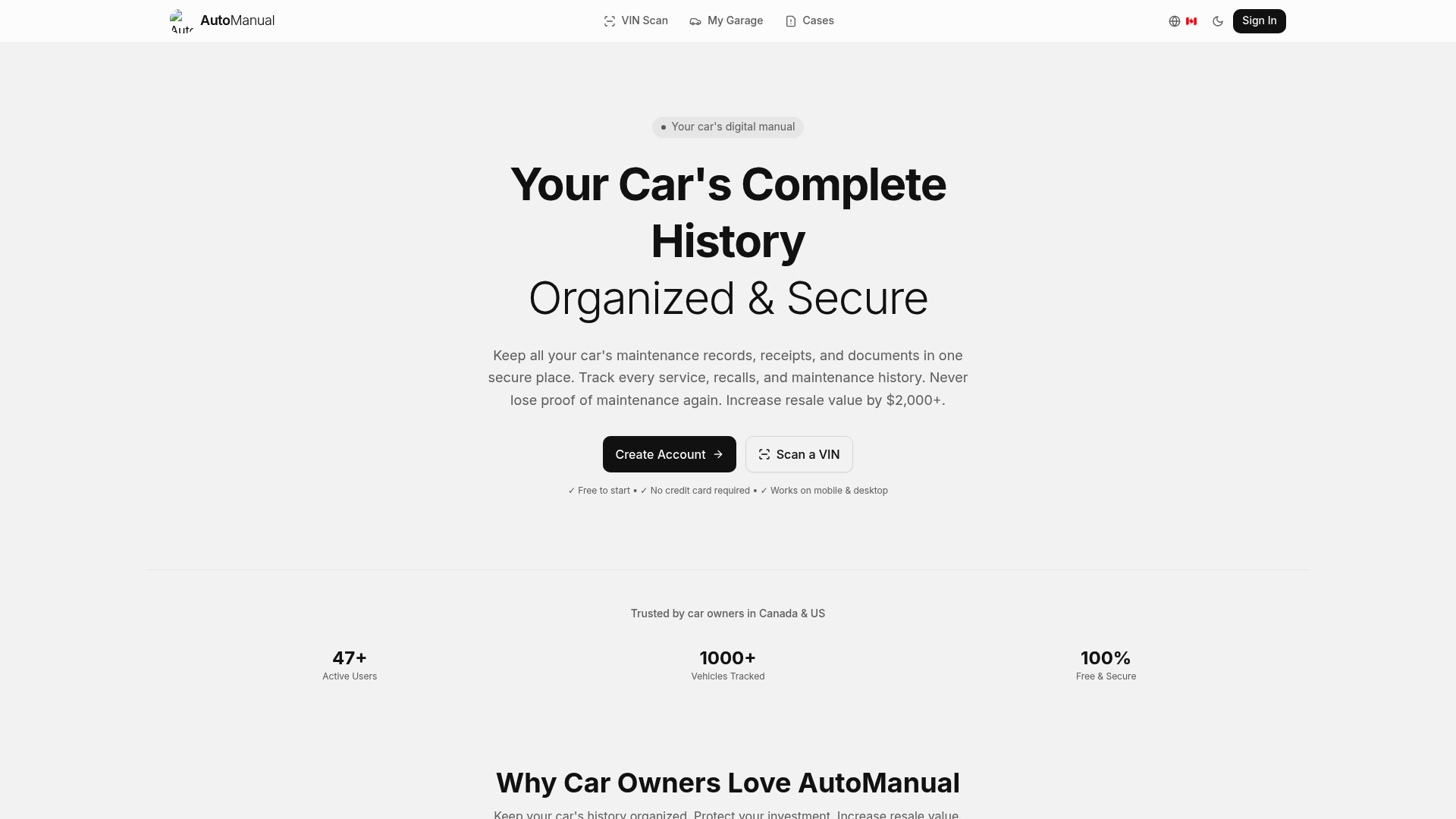
You can scan and manage with AutoManual to decode any VIN and pull complete technical specs in seconds. For buyers managing more than one vehicle, you can create your digital car vault to store maintenance records, documents, and ownership details all in one place. Whether you're evaluating your next purchase or organizing the cars you already own, AutoManual puts the data you need right at your fingertips, completely free.
Frequently asked questions
What does a car finder tool do?
A car finder tool matches your budget and preferences with available vehicles using AI, then delivers detailed specs and history data instantly so you can evaluate options without visiting every listing manually.
How accurate are AI-based car finder tools?
Granular equipment data improves AI price prediction accuracy by 3.27% MAE, meaning these tools produce valuations that are meaningfully closer to true market value than basic estimates.
Can car finder tools help manage multiple cars?
Yes. Centralizing vehicle management through digital tools lets multi-car owners track specs, maintenance schedules, and important documents for every vehicle from a single dashboard.
Should I still check vehicles in person after using a tool?
Absolutely. Digital tools narrow your shortlist and surface red flags, but a physical inspection and independent mechanic check are still essential before finalizing any used car purchase.