

TL;DR:
- Checking comprehensive car records helps detect hidden issues and fraud before purchasing.
- Vehicle history reports, titles, service logs, liens, and emissions records provide essential vehicle insights.
- Combining multiple records sources offers the best protection and full vehicle history understanding.
Buying a used car without checking its full record history is like trusting a stranger's word on a handshake deal. One document rarely tells the whole story. Sellers can present a clean-looking car with a hidden salvage title or undisclosed flood damage. Owners who never track their service records often lose thousands in resale value or miss critical repairs. The good news is that multiple record sources work together to give you a complete, accurate picture of any vehicle. Understanding which records to check, and when, is the single smartest move you can make as a buyer or owner.
Table of Contents
- What are car records and why they matter
- Title and registration records
- Vehicle history reports (VHR): What's inside%3A-what's-inside)
- Service, maintenance, and repair records
- Liens, emissions, and other specialized records
- Comparison table: Which car records matter most in different situations
- Our perspective: The honest truth about car records
- Easily manage all your car records in one place
- Frequently asked questions
Key Takeaways
| Point | Details |
|---|---|
| Use multiple records | Combining DMV, VHR, and maintenance records reveals a car’s true story. |
| Check for liens and recalls | Lien and recall records prevent costly surprises for buyers and owners. |
| Keep records organized | Storing all documents, both digital and physical, increases resale value and eases ownership transfers. |
| Physical inspection is essential | A thorough in-person check often reveals issues missing from paper and digital records. |
What are car records and why they matter
Car records are official and third-party documents that reflect a vehicle's legal status, ownership history, mechanical condition, and financial standing. Think of them as a paper trail that follows every car from the factory floor to your driveway. They exist because no single party knows everything about a vehicle's past. Dealerships don't always see private repair work. Insurance companies don't always report minor accidents. That's why different car record types serve different purposes and fill different gaps.
Here's why car records matter:
- Fraud prevention. Records expose VIN cloning, odometer rollbacks, and title washing before you hand over money.
- Ownership confirmation. A clean title with no active lien means the seller actually has the right to sell.
- Condition validation. Maintenance logs and service receipts reveal how well a car was cared for over time.
- Legal protection. Emissions certifications and registration records confirm the vehicle is road-legal in your state.
- Hidden issue detection. Major structural repairs or insurance write-offs often only appear in formal documentation.
The six main categories every buyer and owner should know are: title, registration, vehicle history reports (VHR), service and maintenance records, lien records, and emissions records. Each one targets a specific blind spot.
Pro Tip: Even a pristine-looking vehicle can hide a branded title or a prior major repair that only shows up in records. Never skip the paper check just because the car looks good in person.
Now that you know the significance of car records, let's break down each main type and how to use them.
Title and registration records
The title is the most fundamental car record. It legally proves who owns the vehicle and transfers with each sale. Registration confirms the car is lawfully allowed on public roads in a given state. These two documents form the official baseline for any transaction.
When reviewing title and registration records, check for:
- Ownership transfers. Multiple owners in a short period can signal problems or a car used hard and sold quickly.
- State-to-state history. Cars moved across several states may have had damage repaired in states with looser disclosure laws.
- Title brands. Salvage, flood, rebuilt, lemon law buyback, and junk titles are all serious red flags that affect safety and insurability.
- Lien notations. An active lien means a lender still has a legal claim to the vehicle, even if the seller acts like they own it free and clear.
- Theft flags. A title search can reveal if the car was ever reported stolen and recovered.
You can request title and registration records directly from your state DMV portal, which provides official registration, title history, and lien data. In California, for example, this involves submitting form INF 70. These records focus on statutory information and won't tell you everything about mechanical history.
Always verify that what the seller tells you matches what the title actually says. If a seller claims the car was never in an accident but the title is branded as rebuilt, walk away.
A great resource to cross-reference before purchase is the car title guide for buyers, which explains every title brand and what it means for your ownership rights.
With title and registration records setting the official baseline, let's look at how Vehicle History Reports provide a broader picture.
Vehicle history reports (VHR): What's inside
Vehicle History Reports, or VHRs, pull data from a wide range of sources: state DMVs, insurance companies, police departments, auto auctions, dealerships, and repair shops. Providers like Carfax, AutoCheck, and the National Motor Vehicle Title Information System (NMVTIS) combine these inputs to show you what a title alone cannot.
Key information a solid VHR reveals:
- Major accidents reported to insurance or police
- Total loss, flood, and fire designations from insurance carriers
- Mileage discrepancies that suggest odometer rollback fraud
- Open safety recalls that haven't been addressed
- Multi-state registration history showing geographic movement
- Auction records that may reveal prior fleet or rental use
| Feature | NMVTIS | Private VHRs (Carfax/AutoCheck) |
|---|---|---|
| Cost | Free or low cost | Paid (typically $25 to $45) |
| Coverage | Title brands, total loss, theft | Accidents, service, mileage, recalls |
| Data sources | Government and insurance | DMV, auctions, dealers, insurers |
| Common gaps | Limited service/repair data | Unreported private repairs |
| Best for | Initial dealbreaker check | Full pre-purchase due diligence |
The real limitation of any VHR is that not every event gets reported. Private repairs, unreported fender benders, and cash transactions between individuals often stay invisible. That's why the vehicle history checklist approach works better than relying on one report alone.
Pro Tip: Always run a free NMVTIS or NICB check before spending money on a paid VHR. If a dealbreaker like a stolen title or total loss shows up for free, you just saved $40 and a lot of headache.
For buyers who want to go even deeper, following spec verification steps ensures the vehicle's physical details actually match what the VHR and title say.
The value of VHRs is amplified when paired with maintenance records. Here's why service documentation matters.
Service, maintenance, and repair records
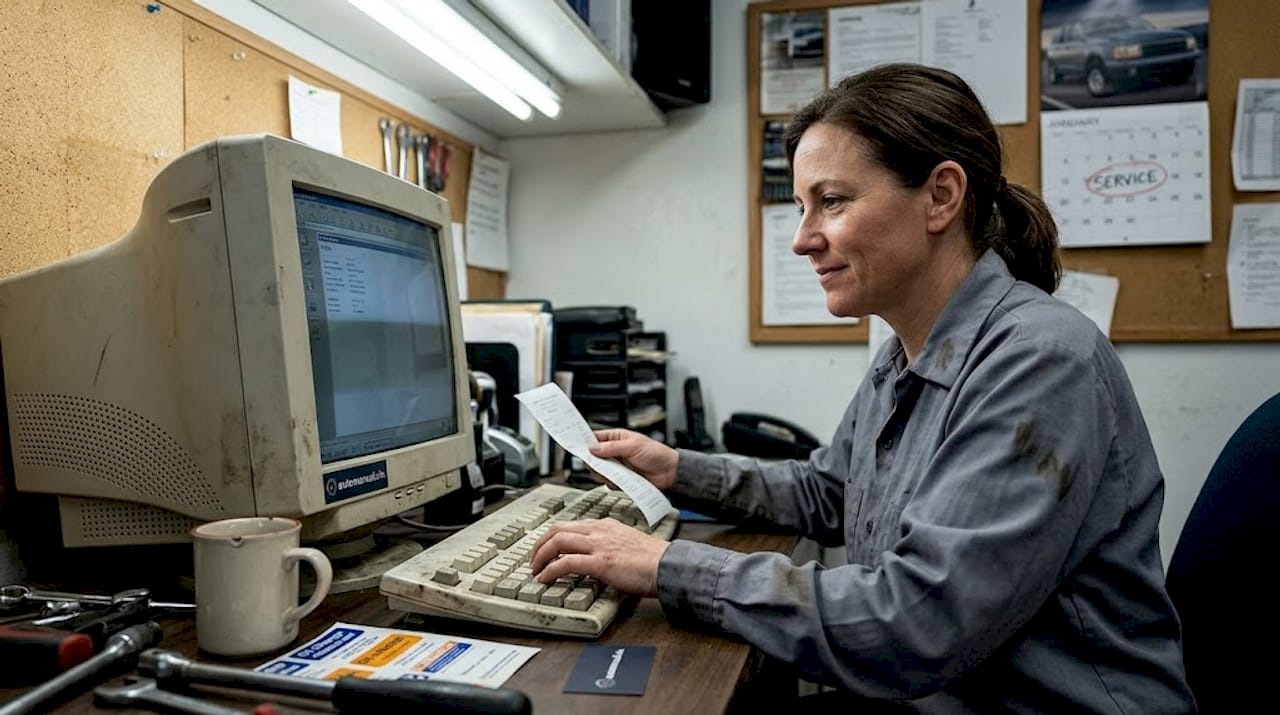
Service records are the real-world diary of a vehicle's mechanical life. They document every oil change, brake job, timing belt replacement, recall repair, and unexpected fix performed over the car's lifetime. No government database or VHR can replicate this level of detail.
Service records come in several formats:
- Paper receipts from independent repair shops
- Dealer service logs printed or available through the dealership's portal
- Digital maintenance tracking via apps or platforms that store records electronically
Why does collecting these records matter so much? Physical service receipts complement DMV and VHR data by confirming routine care and repairs, giving anyone reviewing the car a full maintenance picture that official records simply don't provide.
| Vehicle age / Mileage | Minimum records to keep |
|---|---|
| 0 to 3 years / under 36,000 mi | Oil changes, tire rotations, warranty work |
| 3 to 7 years / 36K to 100K mi | All above plus brake, battery, and filter work |
| 7+ years / 100K+ miles | Full service history including major component replacements |
For buyers, a seller who hands over a thick folder of organized receipts is signaling real pride of ownership. The importance of maintenance history when buying used is hard to overstate since it can reveal chronic issues like repeated coolant leaks or transmission problems that never made it into any official database.
Using digital recordkeeping tips helps owners build and maintain this paper trail automatically, making it easy to hand off at the time of sale.
Alongside service logs, lien and emission records fill further gaps and prevent major legal surprises.
Liens, emissions, and other specialized records
A lien is a legal claim a lender holds against a vehicle until a loan is fully repaid. If you buy a car with an active lien and the previous owner defaults on their loan, the lender can repossess the vehicle, even from you. This is one of the most dangerous and avoidable buying mistakes.
Emissions or smog test certificates confirm the vehicle meets state environmental standards. Many states require a current passing emissions test before allowing registration or transfer of ownership.
Other specialized records worth requesting:
- Open safety recall status. The NHTSA database shows any unresolved manufacturer recalls.
- Theft recovery documentation. If a car was stolen and returned, you want written proof the title reflects that history.
- Warranty records. Transferable warranties add value; expired or voided ones may signal tampering.
- Import and export records. Vehicles brought in from other countries may have different safety standards.
Official DMV records are the most reliable source for lien status and registration history. For emissions, your state's environmental agency or DMV will have the most current test results on file.
Pro Tip: Always request a written lien release letter and a current emissions certification from the seller before closing any deal. These two documents protect you from inheriting someone else's debt or failing your first registration attempt.
If you want a smarter system for managing all car records in one place, or need guidance on archiving car documents for easy future access, those resources walk you through practical setups.
Now that you know the full record landscape, see how they all compare and which to prioritize for different scenarios.
Comparison table: Which car records matter most in different situations
Not every record deserves the same attention in every scenario. Here's how to match effort to your actual goal:
| Situation | Title | VHR | Service records | Lien | Emissions |
|---|---|---|---|---|---|
| Buying used | Critical | Critical | High | Critical | High |
| Selling your car | Important | Helpful | High | Must clear | Required |
| Re-registering | Required | Not needed | Not needed | Must clear | Required |
| Ongoing ownership | Reference | Optional | Critical | Not applicable | Required at renewal |
As buyers should use both official DMV records and VHRs, plus physical receipts, for a fully rounded view, the table above reflects that layered approach.
Quick recommendations by audience:
- Used car buyers: Start with NMVTIS, then get a full VHR, verify the title, request a lien check, and ask for service records before making any offer.
- Sellers: Clear any active liens, gather your service records, and get a current emissions cert to command top dollar.
- Current owners: Focus on building your service record file and keeping emissions certs current. The vehicle history checklist is useful for periodic self-audits.
- Registration only: Title and emissions are the two non-negotiables. Everything else is secondary.
Service records are critical for maintaining a car and maximizing resale value, but they won't help you register a vehicle. Match the records you pursue to the task at hand.
Our perspective: The honest truth about car records
Most buyers fall into one of two traps. They either over-rely on a single paid VHR as if it's the final word, or they skip formal records entirely and trust their eyes and a test drive. Both approaches leave serious money and risk on the table.
The uncomfortable truth is that no single record source is complete. VHRs miss private repairs. DMV records miss mechanical issues. Service logs can be faked or lost. Even a spotless CarFax doesn't mean a car wasn't rebuilt after a flood in a state with weak disclosure laws.
The best outcomes we've seen come from stacking sources: official title plus VHR plus physical service receipts plus a pre-purchase inspection by an independent mechanic. That last point matters more than people realize. A mechanic can find frame damage, hidden rust, or mismatched paint that no database will ever flag.
For owners, the discipline of tracking records digitally from day one makes every future decision, from selling to insuring to trading in, faster and more profitable. Records aren't just paperwork. They're leverage.
Easily manage all your car records in one place
Knowing which car records to collect is only half the battle. The other half is keeping them organized and accessible when you actually need them, whether you're negotiating a sale, registering a new vehicle, or reviewing your car's history before a road trip.
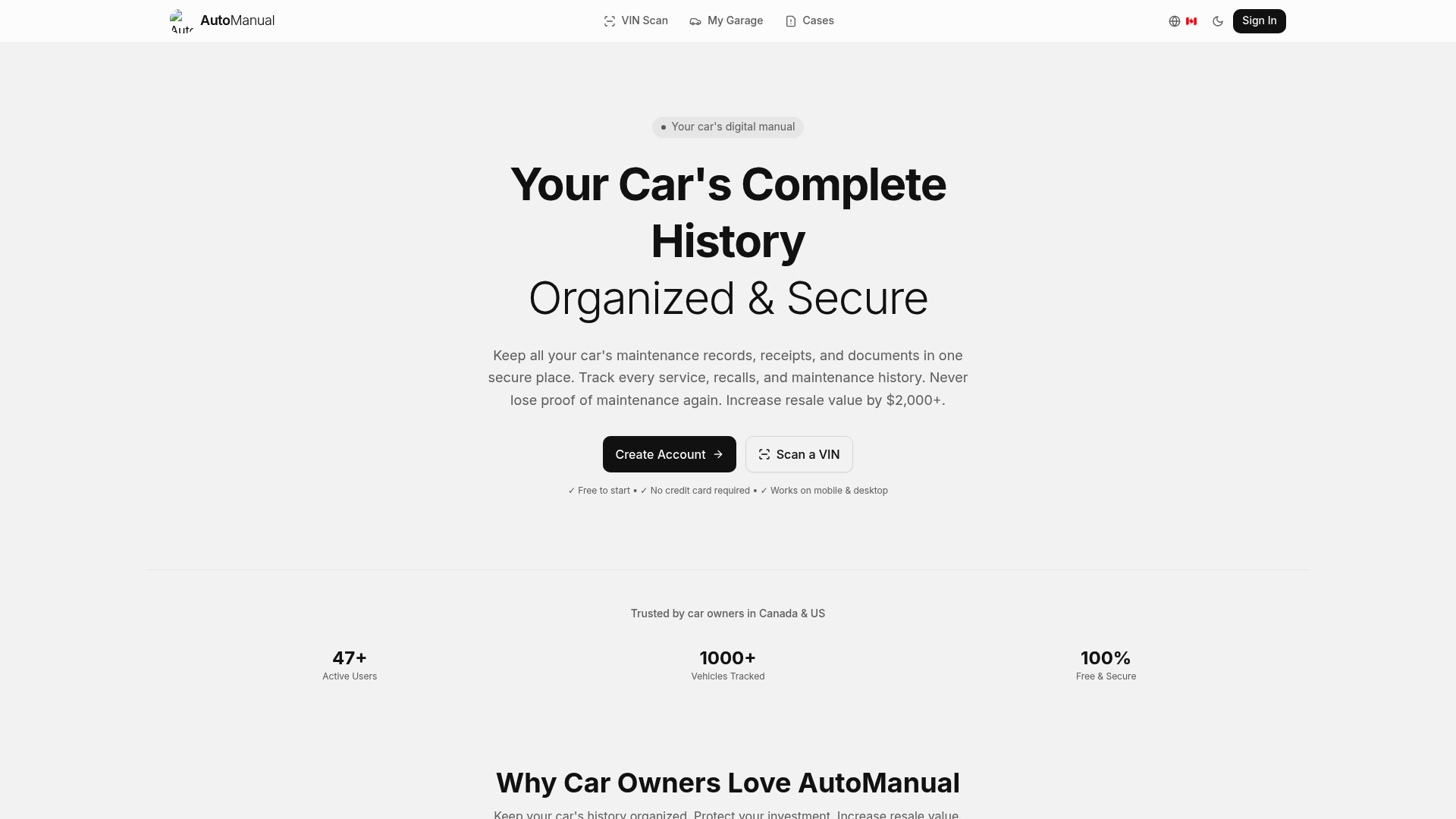
AutoManual's free platform lets you organize your car records in one centralized digital space, no signup required. Store your title documents, VHR copies, service receipts, lien releases, and emissions certs all in one profile. When you use AutoManual's digital profile, every VIN you enter instantly returns full technical specs alongside a structured space to build your ownership history. It's the smartest way to manage every record type covered in this article, from your first purchase check to your final resale.
Frequently asked questions
What's the difference between a title and vehicle history report?
A title documents legal ownership and transfer history, while a vehicle history report aggregates accident data, mileage readings, and service events across multiple sources. Official DMV records focus on statutory information, and VHRs add the broader context.
How do I check for active liens on a car?
Request an official lien record directly from your state DMV or ask the seller to provide a written lien release; physical documents are the safest proof for high-value purchases.
Do service and maintenance records matter for resale?
Yes. Complete maintenance records significantly boost resale value and give prospective buyers real confidence in the vehicle's condition and care history.
Which records are most important for used car buyers?
Used car buyers should prioritize title history, a free NMVTIS/NICB check for dealbreakers, a full paid VHR, and physical service receipts together for the strongest protection against fraud and hidden damage.