
TL;DR:
- A car manual is essential for safe operation, maintenance, and troubleshooting.
- Proper use of the manual extends vehicle lifespan and reduces repair costs.
- Digital tools like AutoManual can help organize and access manual information easily.
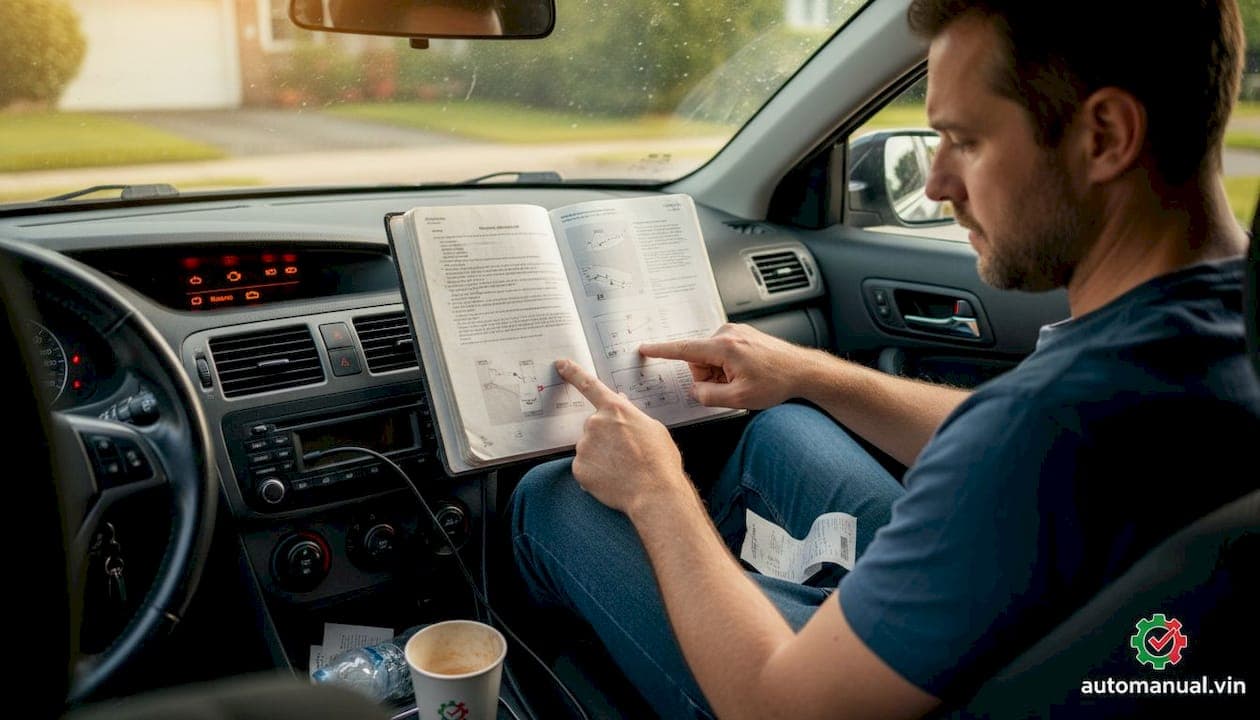
Most drivers treat their car manual like fine print on a warranty card: technically important, practically ignored. It sits in the glove box, untouched for years, while owners pay for services they could have done themselves or miss warning signs that cost thousands to fix later. That glove box book is actually your most direct line to your vehicle's safe operation, and proper use of the manual extends vehicle lifespan and reduces crash risk. This guide breaks down what a car manual is, what's inside it, and how to use it so your car runs better, longer, and safer.
Table of Contents
- What is a car manual?
- Key sections of a car manual explained
- Why using your car manual matters
- Practical tips for getting the most from your car manual
- The truth about car manuals: Overlooked tool for smart car ownership
- A smarter way to manage your car manual
- Frequently asked questions
Key Takeaways
| Point | Details |
|---|---|
| Car manual basics | Your car manual is the official guide to operating, maintaining, and troubleshooting your vehicle. |
| Key sections | Important sections cover maintenance schedules, warning symbols, and essential safety features. |
| Real benefits | Consulting your manual improves safety, cuts costs, and extends your car’s life. |
| Digital convenience | Digital solutions make accessing and tracking manual guidance easier than ever. |
What is a car manual?
A car manual is the official document produced by the vehicle manufacturer that explains how to operate, maintain, and troubleshoot your specific car. You might hear it called an owner's manual, a user guide, a glove box book, or a vehicle handbook. Whatever the name, it's the same thing: a reference written specifically for your make, model, trim level, and model year.
Manufacturers write these documents with input from engineers, safety teams, and legal departments. That means every recommendation inside, from oil viscosity to tire pressure, is calibrated for your exact vehicle. Aftermarket guides exist too, but they're generalized. The official manual is the one you should trust first.
So what does a car manual actually contain? Here's a quick overview of what you'll typically find:
- Operating instructions: How to start the car, use the infotainment system, adjust mirrors, and engage safety features
- Maintenance schedule: Exact intervals for oil changes, filter replacements, brake inspections, and more
- Dashboard symbols: A visual guide to every warning light and indicator on your instrument cluster
- Fluid specifications: Recommended types and capacities for engine oil, coolant, brake fluid, and transmission fluid
- Tire information: Correct tire size, load rating, and recommended pressure for front and rear tires
- Troubleshooting guidance: Step-by-step instructions for common problems like a dead battery or overheating engine
- Safety features: How airbags, traction control, and child seat anchors work in your specific vehicle
As outlined in AutoManual's car specs guide, a car manual contains essential information on maintenance, component details, and troubleshooting that no other single document provides. It's not just a booklet. It's the technical blueprint for your ownership experience.
Digital versions are increasingly common. Many manufacturers now offer downloadable PDFs or dedicated apps. Some newer vehicles display manual content directly on the infotainment screen. Whether you prefer paper or pixels, the key is knowing where your manual is and how to access it when you need it.
Key sections of a car manual explained
Once you know what a car manual is, understanding its layout makes navigation much easier. Most manuals follow a predictable structure, and knowing where to look saves you time when something goes wrong at 7 a.m. on a Tuesday.
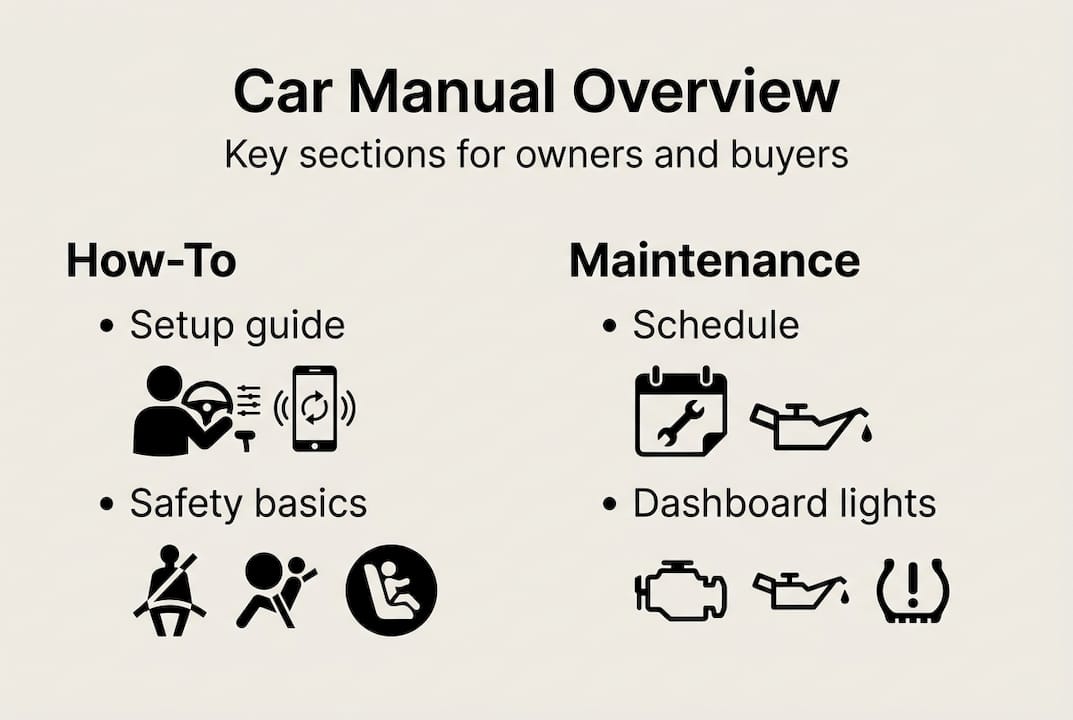
Maintenance schedule section is arguably the most valuable part of the manual. It tells you exactly when to change your oil, rotate your tires, replace spark plugs, and flush your coolant. These intervals are based on engineering data, not guesswork. Skipping or delaying them leads to accelerated wear.

Dashboard symbols are another critical section. Modern cars can display dozens of warning lights, and not all of them mean "pull over immediately." Your manual categorizes them by urgency: red means stop soon, yellow means monitor, green or blue means informational. Misreading these can lead to either panic or dangerous neglect.
Here's a quick comparison of manual formats to help you choose what works best for you:
| Format | Pros | Cons |
|---|---|---|
| Printed manual | Always accessible, no battery needed | Can be lost, damaged, or worn |
| PDF download | Searchable, easy to store digitally | Requires a device and internet access |
| Manufacturer app | Interactive, often updated automatically | App may be discontinued or unsupported |
| Third-party digital service | Centralized storage, shareable | May not cover all makes and models |
Other sections worth knowing:
- Fluid types and specs tables: Lists the exact grade and quantity for every fluid in your vehicle
- Tire pressure charts: Often broken out by load conditions (solo driver vs. full passenger load)
- Basic troubleshooting: What to do if the engine won't start, a tire goes flat, or the battery dies
- Safety features and child seat instructions: Covers LATCH anchors, airbag deactivation, and seatbelt pretensioners
For a more detailed guide to using your car manual, including tips on navigating both digital and print versions, it's worth bookmarking a reliable resource before you need it. The manual is only useful if you can find the right section fast.
Why using your car manual matters
Knowing what's inside your manual is one thing. Actually using it is where the real payoff happens.
The safety case is straightforward. Your manual tells you how to respond to recalls, how to test your safety systems, and how to correctly install child restraints. These aren't trivial details. Following your manual directly reduces crash risk and extends the life of your vehicle. That's not marketing language. That's documented outcome data.
The financial case is just as strong. Consider what you spend annually on maintenance versus what you'd spend if you followed the manual's schedule precisely:
| Maintenance task | Average cost (DIY) | Average cost (shop, skipped too long) |
|---|---|---|
| Oil change | $30 to $60 | $4,000+ engine repair |
| Tire rotation | $0 to $20 | $800+ premature tire replacement |
| Coolant flush | $20 to $40 | $1,500+ head gasket repair |
| Brake inspection | $0 (visual) | $600+ rotor and caliper replacement |
Those numbers aren't worst-case scenarios. They're common outcomes when basic maintenance gets skipped. Your manual is the cheapest insurance policy you already own.
"A well-maintained vehicle isn't just safer. It's a financial asset. Every service interval you follow is a repair bill you're avoiding."
Pro Tip: Cross-reference your manual's maintenance schedule with a maintenance types guide to understand the difference between preventive, predictive, and corrective maintenance. Knowing the category helps you prioritize when budget is tight.
Longevity is the third benefit. Engines that receive properly specified oil at the right intervals last significantly longer than those that don't. Transmissions that get fluid changes on schedule rarely fail before 150,000 miles. These aren't coincidences. They're the result of following engineered specifications. Pairing your manual with a system for tracking your car maintenance creates a feedback loop that compounds over time.
Practical tips for getting the most from your car manual
To put all these benefits into practice, here's how to actually use your car manual day-to-day without it feeling like homework.
- Find your manual right now. If it's in the glove box, great. If not, search your manufacturer's website for a PDF version. Download it and save it somewhere you'll actually find it.
- Tab the maintenance schedule. Use a sticky note or a physical tab to mark this section. It's the one you'll return to most often.
- Record every service you perform. Date, mileage, and what was done. This takes two minutes and pays off enormously at resale time.
- Cross-check before any repair shop visit. Know what your manual recommends before someone tells you what your car "needs."
- Review dashboard symbols before a long trip. A five-minute scan prevents a roadside emergency from becoming a crisis.
- Update your digital records after every service. Paper logs get lost. A digital record doesn't.
Pro Tip: Proper manual use helps maximize resale value by giving future buyers documented proof that the car was cared for. A folder of receipts backed by a manual-aligned service history is worth real money at trade-in.
Common mistakes to avoid:
- Discarding the manual when buying used (always request it or download it immediately)
- Relying solely on the dealership to track your service history
- Ignoring the manual's fluid specifications and using whatever's on sale
- Forgetting to update records after DIY maintenance
Using a maintenance checklist for car owners alongside your manual creates a reliable system. And if you're ready to go fully digital, digital maintenance tracking tips can help you build a record that travels with the vehicle, not just with you.
The truth about car manuals: Overlooked tool for smart car ownership
Here's what most guides won't say: the car manual isn't just a reference document. It's a signal of how seriously you take ownership. Dealers know this. Seasoned buyers know this. When a used car comes with a complete, annotated manual and a matching service history, it commands a higher price. Not because of sentiment, but because it proves the car was operated correctly.
Most owners lose their manual within the first year. They rely on memory, habit, or whatever the service advisor recommends. The real cost of that approach doesn't show up immediately. It shows up at 80,000 miles when the transmission starts slipping, or at trade-in when the dealer cuts $2,000 off the offer because there's no documented history.
Smart owners treat the manual as part of the car itself. They digitize it, reference it regularly, and use it as the foundation for driving smarter with your manual. In an era where everything is digital and searchable, there's no excuse for not having your manual accessible within 30 seconds.
A smarter way to manage your car manual
If keeping track of your car manual feels like one more thing to manage, AutoManual was built to solve exactly that problem.
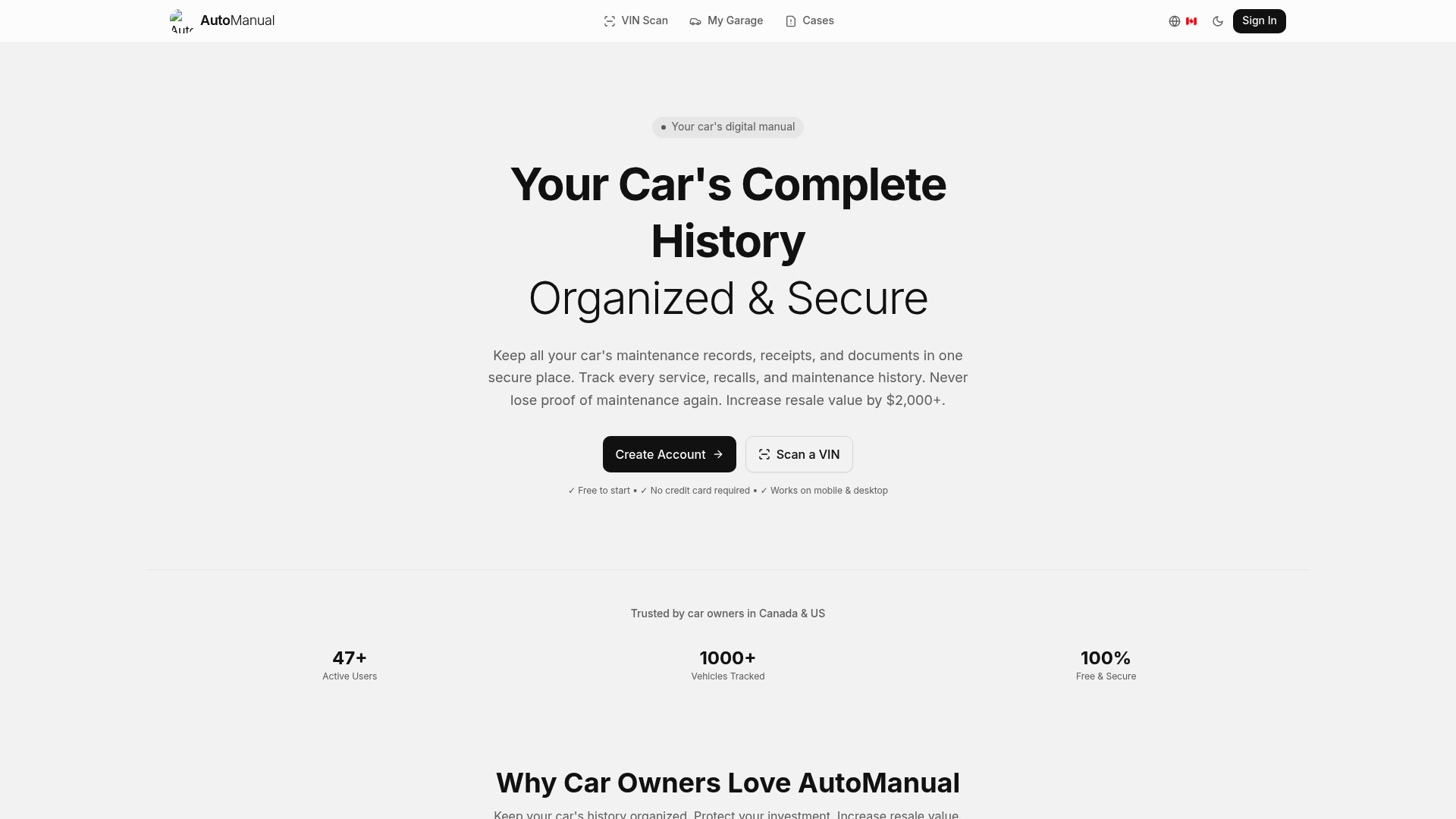
With AutoManual's digital car profile and vault, you can store your vehicle's specs, maintenance history, and documents all in one place. Enter your VIN and instantly pull up full technical specs with no signup required. It's a digital garage that keeps everything organized: service records, ownership details, and the specs your manual references. Whether you're a daily driver or managing multiple vehicles, AutoManual makes it easy to stay on top of your car's needs without digging through a glove box.
Frequently asked questions
Do I really need to keep my car manual?
Yes, your car manual is your primary reference for safe operation, scheduled maintenance, and troubleshooting. Following it directly extends vehicle lifespan and reduces crash risk.
What if I've lost my original car manual?
You can usually download a digital copy from your manufacturer's website, or use a digital car manual service to access the information you need quickly.
Which sections of the car manual are most important?
Focus on the maintenance schedule, dashboard symbols, and safety instructions first. As noted in AutoManual's car specs guide, manuals include schedules, component details, and troubleshooting guidance that cover the most critical ownership scenarios.
Does following the car manual really help with resale value?
Yes. Documented maintenance aligned with your manual's schedule increases resale value and gives future buyers confidence in the vehicle's history.