
TL;DR:
- Effective car collections are built around a clear purpose, theme, and organization.
- Documentation, provenance, and storytelling significantly increase a collection’s value.
- Scaling a collection requires deliberate planning, proper storage, and record-keeping.
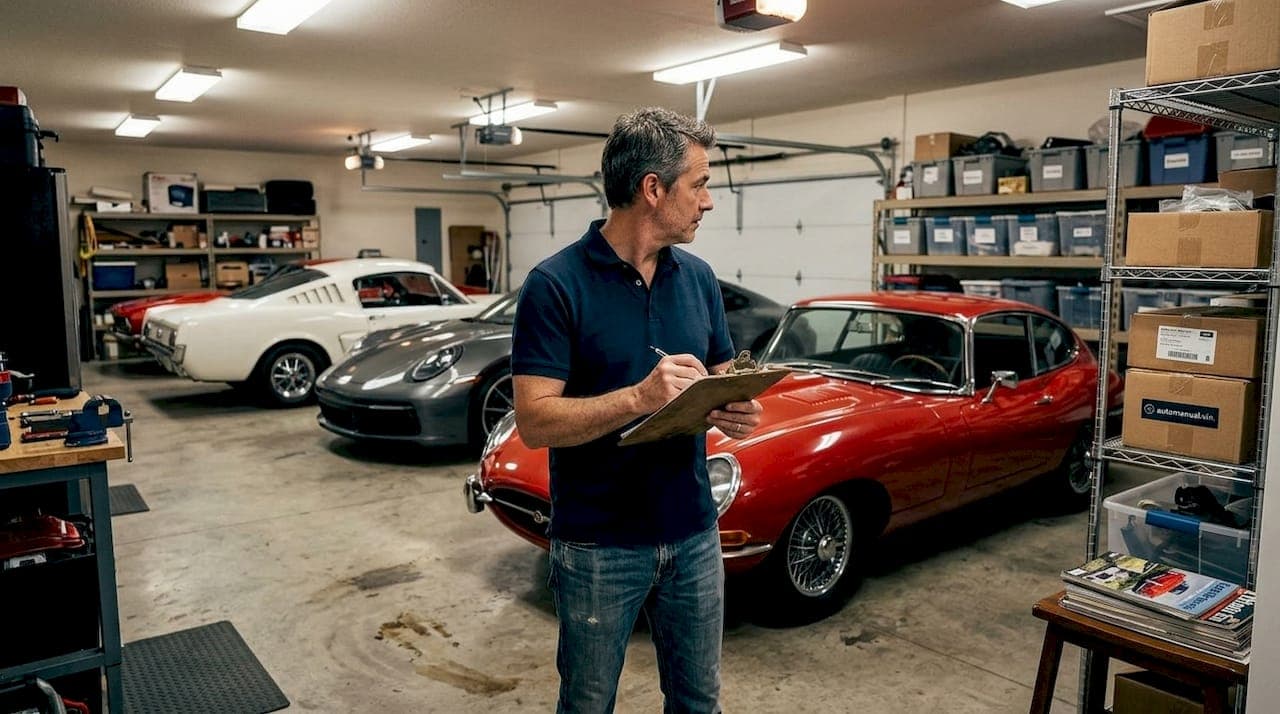
Deciding what to add next to your car collection is harder than it sounds. The real challenge isn't finding cars you love. It's building something that holds together as a whole, tells a story, and grows in value over time. The world's most famous collectors and museums have already solved this problem in fascinating ways. Some went for sheer volume. Others zeroed in on a single brand or era. All of them made deliberate choices. This article breaks down those choices, shows you what's possible at every scale, and gives you a practical framework to define and grow your own collection.
Table of Contents
- How to define your car collection goals
- Private collections: Legendary personal car stables
- Museum benchmarks: Public collections for every enthusiast
- Choose your style: Comparison of collection approaches
- Expert perspective: What most collectors miss when curating their car collection
- Next steps: Secure and showcase your own collection digitally
- Frequently asked questions
Key Takeaways
| Point | Details |
|---|---|
| Famous collections inspire | Studying renowned collections helps you set clear goals for your own car collecting journey. |
| Themed curation matters | Both museums and private owners use themes and narratives to add meaning and value to their vehicles. |
| Organization is essential | Digital recordkeeping and documentation are key for managing, preserving, and growing a valuable collection. |
| Scale presents challenges | As your collection grows, maintenance, display, and provenance become more complex. |
How to define your car collection goals
With inspiration in mind, the first step is understanding how to set a vision for your collection. Before you buy another car, it helps to get honest about why you're collecting in the first place. The answer shapes everything, from what you buy to how you store it.
Collectors tend to fall into a few core motivations:
- Investment: Acquiring vehicles that appreciate over time, focusing on rarity and condition.
- Passion for specific models: Deep loyalty to a marque, era, or body style.
- Historical preservation: Saving vehicles that represent important moments in automotive history.
- Public display or legacy: Building something others can see, learn from, or inherit.
Most collectors blend two or three of these. Knowing which one leads your thinking keeps you from buying impulsively and ending up with a garage full of cars that don't connect.
From there, you choose a theme. Common approaches include brand-focused collections (all Ferraris, all Mustangs), era-specific collections (1950s American muscle, pre-war European), motorsport collections (race cars and related memorabilia), rarity-driven collections (limited production runs, one-of-a-kind builds), and diversity-focused collections that span styles and decades.
Museums offer a masterclass in themed curation. Museum examples like Petersen Automotive Museum provide public benchmarks for how to build around a concept rather than just accumulating vehicles. Their rotating exhibits show that even a large collection benefits from editorial discipline.
Practical factors matter just as much as vision. Space is the obvious one, but maintenance schedules, insurance, and documentation are equally important. A car you can't properly maintain or prove the history of loses value fast.
Pro Tip: Start your collection with a car portfolio management system before you add more vehicles. Tracking specs, service history, and ownership details from day one makes every future decision easier and every car more valuable.
Good digital car recordkeeping isn't glamorous, but it's the difference between a collection and an inventory. One tells a story. The other just takes up space.
Private collections: Legendary personal car stables
Once you know your goals, examining what famed individual collectors have accomplished can help shape your vision. Some of the most jaw-dropping collections in history were built by private individuals with a clear sense of purpose and an almost unstoppable drive to acquire.
Harold LeMay is the gold standard. His collection exceeded 3,000 vehicles, earning recognition from Guinness World Records as the largest private car collection ever assembled. LeMay wasn't chasing a single theme. He collected everything from antique cars to trucks to motorcycles, building a sprawling archive of American automotive life. His collection eventually became the foundation for a public museum in Tacoma, Washington.
Don Baskin took a different approach. He
stored across 400,000 square feet of warehouse space in Tennessee. His focus skews toward rare Corvettes and American performance cars, with an emphasis on motorsport heritage and Americana. Baskin's collection is less about breadth and more about depth within a specific cultural lane."The best collections don't just show cars. They show why those cars mattered."
What both collectors share is a commitment to documentation and provenance. As a collection grows, the paperwork becomes as important as the metal. Knowing a car's full ownership chain, its race history, or its factory build sheet can double its value. Checking vehicle history for rare cars before any purchase is non-negotiable at this level.
Scaling large also brings real challenges:
- Maintenance logistics: Hundreds of vehicles need regular attention to stay in condition.
- Storage costs: Climate control, security, and space add up fast.
- Insurance complexity: Agreed-value policies for large collections require detailed records.
- Resale documentation: Buyers of significant cars want complete car record archives before they commit.
The takeaway isn't that you need 3,000 cars. It's that intentionality and organization are what separate a legendary collection from a cluttered warehouse.
Museum benchmarks: Public collections for every enthusiast
While private collections can be vast, museums provide structured and educational inspiration for any collector. The way a great museum organizes and presents cars teaches you something that no auction catalog ever will: how to make a collection mean something.
Three museum models stand out as useful benchmarks:
| Museum | Vehicles on display | Focus | Collection style |
|---|---|---|---|
| LeMay America's Car Museum | 350+ | Broad American automotive history | Large generalist |
| Petersen Automotive Museum | 300+ | Pop culture, innovation, motorsport | Rotating themed exhibits |
| Umberto Panini Maserati Museum | 100+ years of models | Single brand heritage | Brand-specific depth |
The LeMay Museum displays 350+ cars, the Petersen Museum holds 300+ vehicles with rotating exhibits, and the Maserati Umberto Panini collection spans over 100 years of Maserati models. Each takes a completely different editorial approach, and each works.
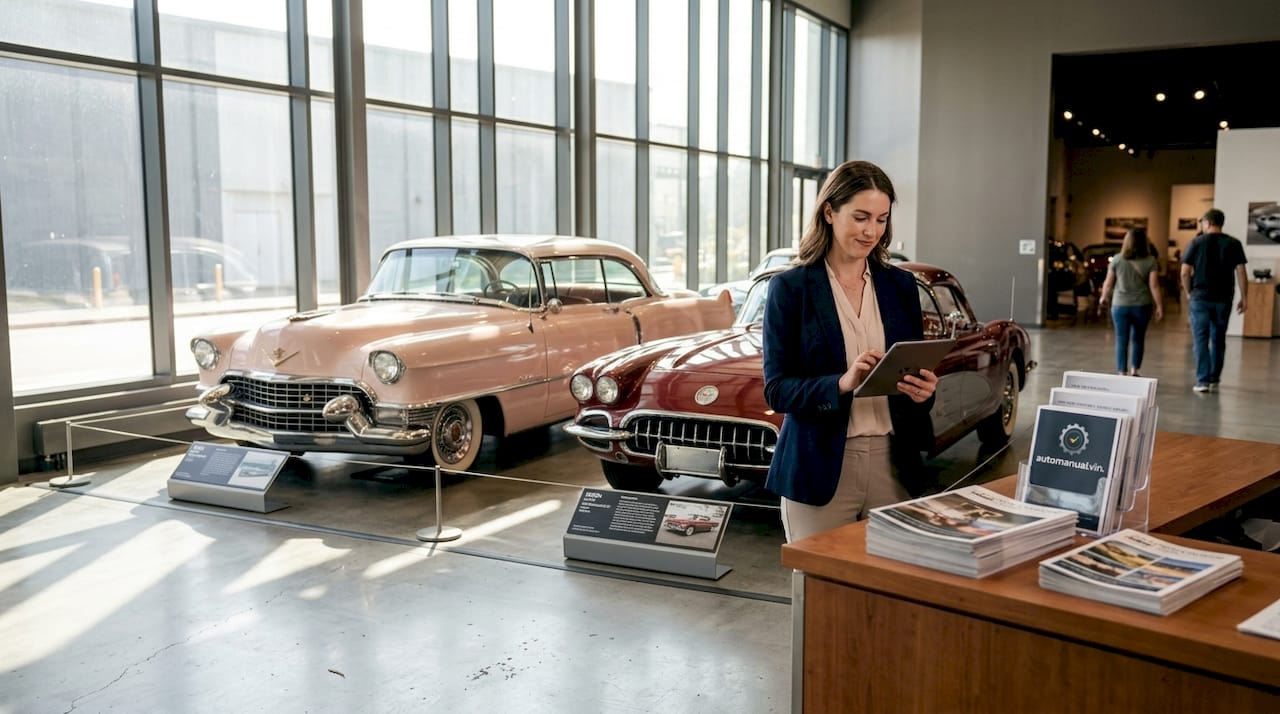
What museums do brilliantly is use curation to tell a story. The Petersen doesn't just park cars in rows. It builds themed vaults and galleries that create an experience. The Panini collection makes you feel the full arc of a single brand's evolution. Even a small private collector can borrow this thinking.
Practical lessons from museum curation:
- Preservation over display: Not every car needs to be seen. Some need to be protected first.
- Rotation keeps things fresh: Cycling vehicles in and out of display prevents stagnation.
- Context adds value: Labels, photos, and stories turn a car into an artifact.
- Archiving car documents is part of the preservation strategy, not an afterthought.
Pro Tip: Even if your collection is just five cars in a home garage, treat each one like a museum piece. Create a file for every vehicle with photos, service records, and provenance notes. Future buyers, and future you, will thank you for it.
Choose your style: Comparison of collection approaches
Given so many examples, here's how to compare approaches and make your decision. No single collection style is right for everyone. The best approach is the one that matches your resources, your goals, and honestly, your personality.
| Collection type | Typical size | Access | Maintenance demand | Best for |
|---|---|---|---|---|
| Private generalist | 10 to 3,000+ | Personal | High | Passion-driven collectors |
| Private specialized | 5 to 500 | Personal | Medium to high | Brand or era enthusiasts |
| Public museum | 100 to 350+ | Public | Very high | Legacy and education goals |
| Themed private | 10 to 100 | Personal | Medium | Storytelling and investment |
Museum collections set public curation standards, while massive private collections like LeMay and Baskin highlight what personal vision can achieve without institutional structure.
Here's a stepwise process to choose your direction:
- Write down your primary motivation. Investment, passion, legacy, or education. Pick the one that drives you most.
- Audit what you already own. Look for patterns. You may already have a theme without realizing it.
- Set a realistic scale. How much space, money, and time can you actually commit?
- Pick a theme or decide to go broad. Both work. Just decide intentionally.
- Build your documentation system first. Start organizing car collections before you add more vehicles.
Most collectors naturally blend approaches over time. You might start with a passion for a single brand and gradually expand into related eras or motorsport history. That evolution is healthy. The key is staying deliberate rather than reactive.
Preparing for next steps means thinking about where your collection will live, how it will be maintained, and how you'll prove its value when the time comes to sell, donate, or pass it on.
Expert perspective: What most collectors miss when curating their car collection
Before you start planning or growing your own collection, consider this perspective based on experience. The collectors who end up with truly remarkable garages aren't always the ones with the biggest budgets. They're the ones who thought about story before they thought about scale.
The most common mistake is chasing headlines. A rare car with no documentation, no service history, and no clear provenance is just an expensive problem. Volume without organization creates the same issue at scale. Harold LeMay's collection became legendary partly because it eventually found a permanent home with proper curation. Without that, 3,000 cars is just a logistical nightmare.
The uncomfortable truth is that the value of a collection lives in its records as much as its metal. Staying on top of maintenance for diverse collections isn't just about keeping cars running. It's about building a paper trail that proves condition and care over time.
Collect for enjoyment first. Build for legacy second. Document everything from the start. That's the formula that separates a collection worth talking about from one that just fills a warehouse.
Next steps: Secure and showcase your own collection digitally
Now that you know what's possible, take action to preserve and highlight your own vehicles. The collectors and museums in this article all share one thing: they know exactly what they own, where it came from, and what condition it's in. That knowledge is what makes a collection valuable.
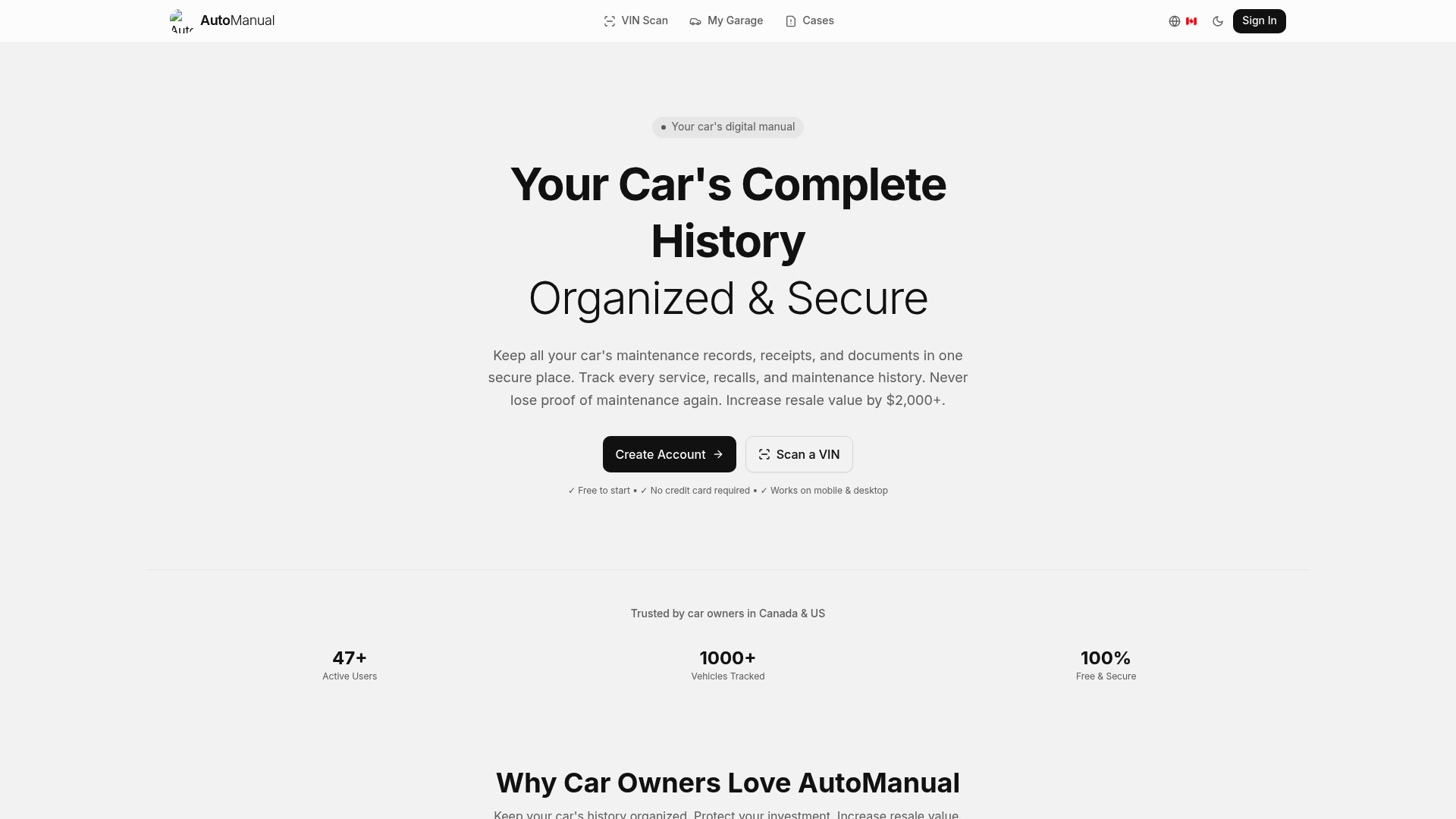
Digitizing your records is the fastest way to close the gap between where you are and where the best collectors operate. AutoManual gives you a free digital garage where you can track every vehicle's specs, maintenance history, documents, and ownership details in one place. No signup required to get started. You can scan your collection using any VIN and instantly pull full technical specs. Whether you have two cars or two hundred, the platform grows with you and keeps everything organized and accessible.
Frequently asked questions
What is considered a large car collection?
A large car collection typically means owning 100 or more vehicles, with some private collectors exceeding 1,000 cars. Harold LeMay's collection exceeded 3,000 vehicles, recognized by Guinness as the largest private collection at the time.
How do car museums differ from private collections?
Car museums curate vehicles for public display and education, while private collections reflect personal taste and may not be open to the public. The Petersen Automotive Museum holds 300+ vehicles with rotating exhibits, while the LeMay Museum displays 350+ cars focused on American automotive history.
What makes a car collection valuable?
Value comes from uniqueness, historical significance, condition, documentation, and how well the collection tells a coherent story that connects individual vehicles to something larger.
How can I start building my first car collection?
Define your theme, set a budget, and begin tracking each car's history and value from the start. Museum examples provide public benchmarks for themed curation that any first-time collector can learn from.