

TL;DR:
- Proper documentation of car modifications safeguards warranties, insurance claims, and resale value.
- Detailed records should include part details, installation dates, costs, photos, and receipts.
- Digital apps and organized logs make tracking modifications easier and more reliable than paper notes.
Most car owners spend thousands on modifications and upgrades, then keep zero records of what was done. That gap costs real money. Without documentation, insurers can deny claims, dealers can challenge warranties, and potential buyers may lowball you because they can't verify the work. Digital apps are now primary tools for tracking car customization and maintenance records, yet most enthusiasts still rely on memory or a crumpled receipt in the glove box. This guide walks you through exactly what to record, the best tools to use, and how to protect yourself legally and financially every time you modify your vehicle.
Table of Contents
- What are car customization records — and why do they matter?
- What should be included in your customization log?
- Choosing the best tool: Apps vs. spreadsheets vs. notebooks
- Real-world scenarios: Compliance, insurance, and resale with mods
- The hidden upside (and risk) of diligent customization records-of-diligent-customization-records)
- Make recordkeeping effortless with AutoManual
- Frequently asked questions
Key Takeaways
| Point | Details |
|---|---|
| Protect your investment | Thorough records prove value, support claims, and smooth the resale process. |
| Choose smart tracking | Digital apps automate logging and reminders, making recordkeeping nearly effortless. |
| Include all details | Document modifications with dates, receipts, photos, and part numbers for maximum coverage. |
| Disclosure is critical | Share accurate records with insurers and buyers to avoid denial and boost trust. |
What are car customization records — and why do they matter?
Car customization records are a complete paper trail of every modification, upgrade, or repair performed on your vehicle. Think of them as a biography for your car. Every changed part, every install date, every dollar spent, and every photo taken before and after work is completed. Together, these details build a picture that protects you in situations most owners never anticipate.
Here is what a complete customization record covers:
- Parts and components installed, including brand name, part number, and whether OEM or aftermarket
- Installation date and odometer reading at the time of the modification
- Cost of parts and labor, with receipts or invoices attached
- Who did the work, whether a certified shop, dealership, or DIY
- Warranty information tied to the part or installer
- Before-and-after photos to document the vehicle's condition
- Any compliance or emissions notes if the mod affects regulated systems
Why does this matter beyond simple organization? Because modifications can void your warranty if you can't prove the work was done correctly and with appropriate parts. Documentation is the only thing standing between you and a denied warranty claim.
Insurance is another pressure point. Undisclosed modifications can lead to claim rejection at the worst possible moment. If your turbocharged engine causes a collision and your insurer finds out it was never disclosed, the claim can be denied outright. Knowing the benefits of tracking car maintenance goes beyond routine oil changes. It's a legal shield.
"Documentation is not just good practice. It is the difference between a paid claim and a rejected one."
On the resale side, detailed records consistently help owners maximize resale value by giving buyers verifiable confidence in the vehicle's condition and quality of work. A buyer who can see every modification, who performed it, and what it cost is far more likely to pay a premium price than one who is guessing.
Pro Tip: Create a dedicated folder, physical or digital, for every vehicle you own. Label it clearly with the VIN and year. This habit takes five minutes to set up and saves hours during insurance claims or sale negotiations.
What should be included in your customization log?
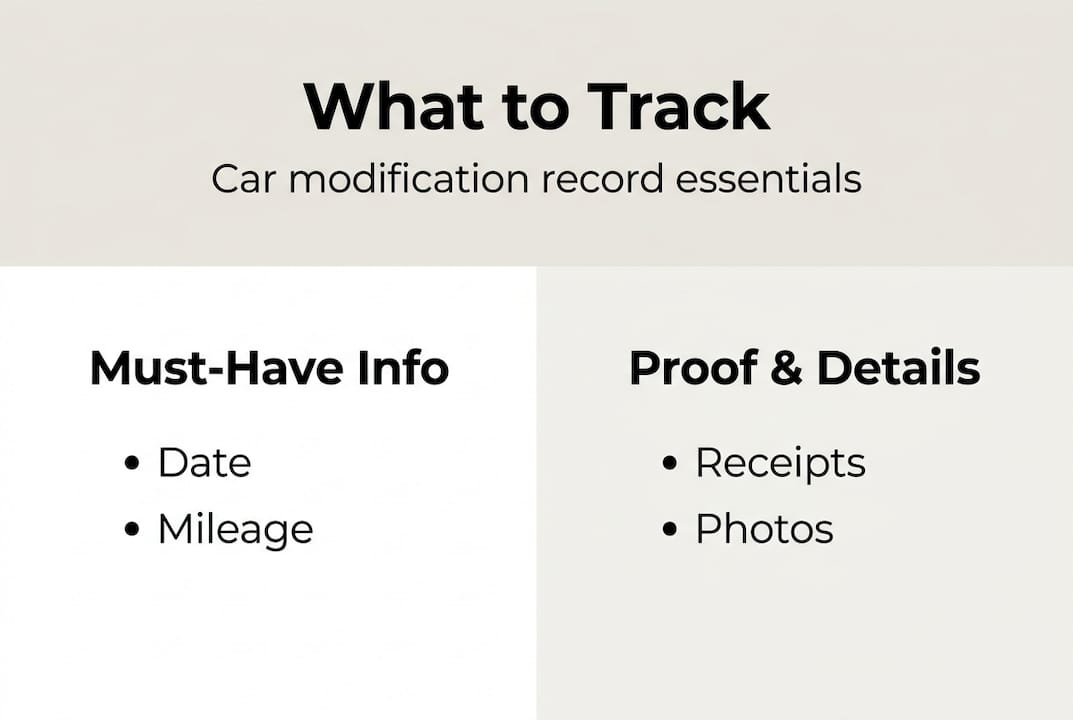
Knowing you need records is one thing. Knowing exactly what to capture is where most owners get stuck. Structured logs with specific fields are what mechanics and fleet managers have recommended for years, and vehicle maintenance logs should include date, mileage, service description, costs, part numbers, VIN, photos, and receipts.
Here is a working checklist of fields every customization log entry should capture:
- Date of modification or service
- Odometer reading at time of work
- Description of modification, including whether cosmetic, performance, or safety
- Part name, brand, and model or part number
- Cost breakdown: parts and labor separately
- Installer name and contact, shop license if applicable
- Warranty details for the part or labor
- Receipt or invoice, digitally scanned or photographed
- Before-and-after photos from multiple angles
- Notes on compatibility or known issues post-installation
Below is a sample log structure you can use immediately:
| Modification | Date | Installer | Mileage | Cost | Receipt on file |
|---|---|---|---|---|---|
| Cold air intake | 03/12/2026 | Speed Shop Co. | 42,100 | $380 | Yes |
| Coilover suspension | 05/28/2026 | DIY | 45,300 | $1,200 | Yes |
| Vinyl wrap (hood) | 07/01/2026 | Wrap Masters | 47,800 | $650 | Yes |
| Brake pad upgrade | 08/15/2026 | Brake Pro Shop | 50,200 | $220 | Yes |
This structure works for both cosmetic and performance modifications. You can track maintenance efficiently when fields are consistent and every entry follows the same format. Consistency is the difference between a log you can actually search and a pile of disconnected notes.
For fleet operators or anyone managing multiple vehicles, fleet log solutions offer scalable frameworks worth referencing. Even for personal use, the structure translates directly.
Pro Tip: Always photograph the part packaging alongside the installed component. This gives you part number verification and a timestamp without extra effort, and it's powerful evidence during warranty disputes.
If you ever need to reference past entries when buying or selling, car record archives can make the entire process faster and less stressful for everyone involved.
Choosing the best tool: Apps vs. spreadsheets vs. notebooks
You have three realistic options for managing your records: mobile apps, spreadsheets, or physical notebooks. Each has a genuine use case, but the differences in reliability and functionality are significant.
Mobile apps are built specifically for this task. Tools like Track My Mods support cloud backup, multi-vehicle profiles, photo attachments, document uploads, and automated service reminders. Apps automate reminders and analytics and support multi-vehicle tracking in ways that spreadsheets simply cannot match at scale. Gearboxe is another option popular among performance enthusiasts for categorizing modifications by type.
Spreadsheets (Google Sheets or Excel) offer flexibility with no subscription cost, but they require manual upkeep and have no native reminder system. One missed update and your log drifts out of sync with reality.
Notebooks are the most fragile option. Fire, water, or a lost bag wipes everything out instantly.
Here is a direct comparison:
| Feature | App | Spreadsheet | Notebook |
|---|---|---|---|
| Cloud backup | Yes | Partial | No |
| Photo attachments | Yes | Limited | No |
| Multi-vehicle support | Yes | Manual | Difficult |
| Automated reminders | Yes | No | No |
| Search/filter records | Yes | Yes | No |
| Cost | Free to paid | Free | Low |
For a deeper look at your options, popular car maintenance apps reviews break down features across the most used platforms in 2026.
Here is how to choose based on your situation:
- One vehicle, light modifications: A well-organized spreadsheet works fine
- Multiple vehicles or active build: A dedicated app is worth it
- On-the-go logging after track days: Mobile app with offline mode is essential
- Business or fleet use: Explore the digital solutions alternatives built for multi-vehicle management
Also check out the digital recordkeeping guide for a deeper breakdown of transitioning from analog to digital records.
Pro Tip: Enthusiast apps let you tag entries by modification category (suspension, engine, exterior) so you can pull a complete history of one system in seconds during a buyer walkthrough or insurance call.
Real-world scenarios: Compliance, insurance, and resale with mods
Abstract advice lands differently when you see it play out in real situations. Here are the scenarios where customization records actually save or cost you money.
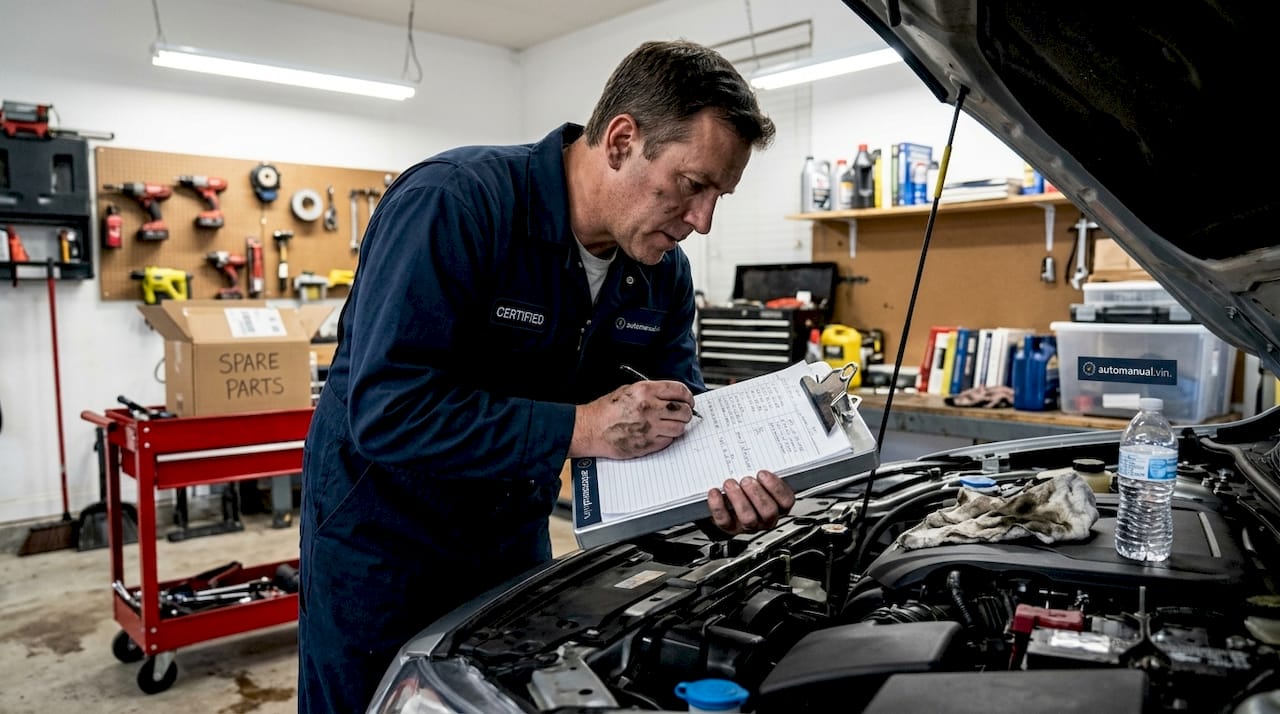
Selling a modified car: A buyer interested in your turbocharged hatchback wants proof the turbo was installed correctly and the supporting fuel system was upgraded to match. Without records, you are asking them to trust your word. With records, the conversation moves to price, not risk. Proper documentation lets you prove repairs, avoid claim denial, and support a stronger resale price.
Filing an insurance claim: You are in an accident. Your insurer discovers your car has lowered suspension and an aftermarket exhaust. If those mods were never disclosed, the insurer can argue the modifications contributed to the incident or were misrepresented at policy signing. Performance mods can void coverage if undisclosed, and without documentation showing the work was disclosed and professionally installed, you have no defense.
Dealer warranty challenge: You bring a modified vehicle in for a drivetrain warranty repair. The dealer notices the aftermarket intake and rejects the claim. Your receipts showing a reputable installer and OEM-compatible parts give you grounds to push back.
Here is how risk varies by modification type:
| Mod type | Warranty risk | Insurance risk | Resale impact |
|---|---|---|---|
| Performance (turbo, ECU) | High | High | Positive with records |
| Suspension (coilovers) | Medium | Medium | Positive with records |
| Cosmetic (wrap, wheels) | Low | Low to medium | Neutral to positive |
| Safety (brakes, lights) | Low | Low | Positive |
For emissions and safety inspections, refer to the car spec verification guide to confirm which modifications require disclosure in your state.
"Disclosure is not optional. It is the contractual obligation most owners overlook until it costs them thousands."
The pattern is consistent: documentation protects you across every scenario. The absence of it leaves you exposed.
The hidden upside (and risk) of diligent customization records
Here is what most guides will not tell you: meticulous records can occasionally work against you.
A buyer who sees every single modification, every performance upgrade, and every issue that was corrected might walk away overwhelmed. Some buyers want a clean, simple car, not a documented build sheet. Dealers sometimes use a long modification list to justify lower trade-in offers rather than higher ones. So yes, records give you power, but knowing your audience determines how much you share.
The real risk most owners face is not too many records. It is inconsistent ones. A log that shows three years of careful documentation and then goes silent for 18 months raises more suspicion than no log at all. Gaps invite questions you cannot answer.
Streamline your car ownership tracking with a system that prompts you to log consistently, not just when you remember. The goal is not a perfect archive. It is a reliable one.
Curate what you share. For private buyers, show everything. For insurers, disclose required modifications with supporting documentation. For dealers, present a clean summary. Digital tools make this filtering easy.
Make recordkeeping effortless with AutoManual
If the scenarios above convinced you that records matter, the next step is building a system that actually sticks.
AutoManual is a free digital car management platform that makes this straightforward. Enter any VIN to instantly pull full technical specs, then use the digital garage to log modifications, upload receipts and photos, and keep everything organized in one place. No subscription needed to get started. Whether you are managing a weekend build or tracking routine maintenance across multiple vehicles, scan your VIN and start building a record that actually protects your investment. The documentation that takes minutes to log today can be worth thousands when you sell, file a claim, or challenge a warranty denial tomorrow.
Frequently asked questions
What's the best app for tracking car customization records?
Apps like Track My Mods, CARFAX Car Care, and Drivvo are strong choices because they combine modification logs, service records, and receipt storage in one place. Drivvo has surpassed 1.5M downloads, reflecting how widely car owners have adopted digital tracking tools.
Do I need to keep receipts for every modification?
Yes, especially for performance or safety-related modifications. Keep receipts and photos along with dyno sheets if applicable, since these are your primary defense during insurance reviews and warranty disputes.
Will modifications void my car insurance or warranty?
Performance upgrades increase risk and may void coverage or warranty if undisclosed, but documenting and disclosing modifications to your insurer and dealer in writing provides significant legal protection.
How do car customization records improve resale value?
Detailed records give buyers proof of quality workmanship and part authenticity, which directly builds trust. Records boost buyer confidence and support a higher asking price by removing doubt from the transaction.